Get a Video Gap Analysis for your company · See which videos could have the biggest pipeline impact
See Where Your Competitors Are Winning With Video Get a custom Video Gap Analysis for your company · See which videos could have the biggest pipeline impact
Thanks - our team will review your website and put together your personalized Video Gap Report. Expect it atthe email address you provided within 2 business days.
We'll put together a personalized report showing where video could have the biggest impact, how your competitors are using it, and specific opportunities for your team. You'll get strategic recommendations, not generic advice.
Thank you! Your submission has been received!
Oops! Something went wrong while submitting the form.
How to Build a Customer Advocacy Program That Produces Real Marketing Assets
How to build a customer advocacy program that turns satisfied customers into references, reviewers, and video testimonials for your brand
August 11, 2026
Most B2B companies know their happy customers could do more for them. A strong reference call here, a case study there, maybe a review on G2. But without a structured system for identifying, engaging, and activating those customers, advocacy happens randomly. The results are thin and hard to scale.
A customer advocacy program changes that. It gives marketing and customer success teams a repeatable framework for turning satisfied customers into active participants in your growth through references, reviews, testimonials, case studies, and other forms of customer proof.
And buyers are actively looking for that proof. According to TrustRadius buyer research, 77% of buyers read user reviews during their buying journey, and nearly half seek out customer review content directly on vendor websites.
This guide covers what a customer advocacy program is, why it matters for B2B marketing teams, how to build one from scratch, and what to measure once it is running.
What Is a Customer Advocacy Program?
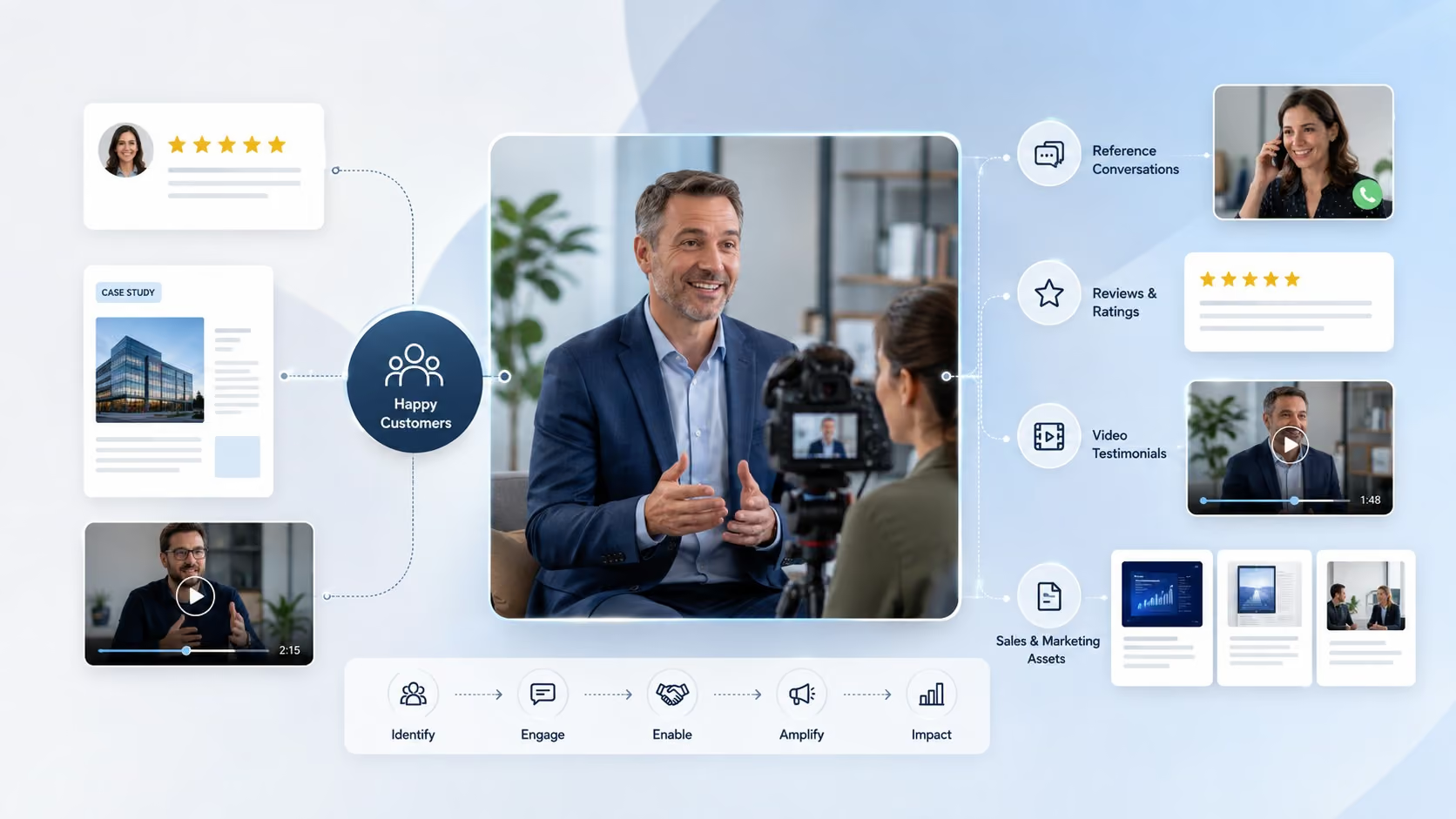
A customer advocacy program is a structured initiative that identifies happy customers and engages them in activities that support your sales and marketing goals. Those activities typically include providing references, participating in case studies, recording video testimonials, writing reviews, speaking at events, and sharing content on social media.
The difference between a program and ad hoc requests is consistency. Instead of scrambling for a reference every time sales needs one, the program maintains a roster of willing advocates, tracks participation, and makes it easy to match the right customer to the right opportunity.
For B2B companies with longer sales cycles and buying committees, that structure matters. Buyers want proof from people who have already faced similar problems, evaluated similar options, and lived with the results.
A customer advocacy program gives you a way to capture and use that influence deliberately rather than leaving it to chance.
Why B2B Teams Need a Customer Advocacy Strategy
B2B marketing teams already create content at scale. Blog posts, webinars, whitepapers, ad campaigns. But some of the most persuasive content comes from customers, not the brand.
Here is why a customer advocacy strategy deserves dedicated attention:
Buyer trust has shifted. Prospects want to hear from people with firsthand experience. A well-told customer story answers a question your sales team cannot answer on its own: does this actually work for someone like me?
Sales teams need proof at every stage. A single case study on the website is not enough. Reps need industry-specific references, short video clips for outreach emails, customer quotes for proposals, and success stories tailored to specific objections. A program builds a library of those assets over time. If you need inspiration for the types of stories worth capturing, these customer testimonial examples show how different formats can support different sales situations.
Customer proof compounds. One reference call helps with one deal. One video testimonial can become a homepage feature, LinkedIn clips, a sales deck slide, a paid ad, and a written case study. The more customers you activate, the broader your library of usable proof becomes.
Advocacy can deepen customer engagement. Asking customers to participate gives them another way to engage with your team and share the results they have achieved. Done well, it can strengthen an already positive relationship while giving the customer additional visibility and recognition.
How to Build a Customer Advocacy Program in 6 Steps
1. Define What You Need From Advocates
Before recruiting anyone, clarify what your sales and marketing teams actually need. Common advocacy activities for B2B companies include:
Knowing the mix helps you recruit the right customers and set realistic expectations for participation.
2. Identify and Qualify Advocates
Not every satisfied customer is a good fit for every type of advocacy. The strongest candidates usually share a few characteristics:
They have achieved meaningful results with your product or service
They are comfortable sharing their experience
Their company and role match the profile of buyers you want to reach
They have internal approval, or the authority, to participate
Start with customers your account managers or customer success team already know are happy. NPS scores, renewal data, support history, product usage, and expansion activity can all help identify potential advocates.
Build a simple tracking list. For each potential advocate, note their industry, company size, use case, willingness to participate, and which activities they have agreed to. This becomes the backbone of your program.
3. Make the Ask Easy
One of the biggest barriers to advocacy is friction. Customers may want to help, but they are busy. The more work your team handles, the easier it is for them to say yes.
For reviews, send a direct link to the appropriate review platform and explain what to expect. Avoid scripting the response or steering customers toward a particular sentiment. The goal is an honest review, not a predetermined one.
For video testimonials, handle the logistics. Send interview topics in advance, schedule the session, manage production, and handle editing. The customer should mainly need to show up and share their experience.
For references, brief the advocate on who they will be speaking with and what topics the prospect cares about. A short prep email can make the conversation easier for everyone.
Across all of these activities, the goal is simple: remove the guesswork, handle the logistics, and respect the customer's time.
4. Create a Content Capture System
A customer advocacy program should produce usable marketing and sales assets, not a folder of disconnected quotes and interviews.
A single customer interview can generate a full-length video case study, short social clips, a written case study, pull quotes for the website, a slide for the sales deck, and email-ready testimonial content.
Planning for those outputs before the interview helps you capture what you need in one session instead of repeatedly going back to the customer.
Build an internal content library organized by industry, use case, buyer persona, and funnel stage. The goal is to make every asset easy for sales to find when they need it. If your team has already built a sales enablement content library, your advocacy program should feed directly into it.
5. Recognize and Reward Advocates
Customer advocacy works best when it feels like a partnership, not a transaction.
Simple ways to recognize advocates include:
Send a personal thank-you from a company leader after they participate
Share the finished content with them before it goes live
Feature them in a customer spotlight on your blog or LinkedIn
Invite them to relevant events, advisory boards, or beta programs
Offer early access to new features or services
Formal incentives can also make sense for some programs, especially when they compensate customers for their time. Just make sure rewards do not become contingent on positive feedback, particularly with third-party review programs.
The goal is to recognize the customer's contribution without making the advocacy feel bought or scripted.
6. Track and Measure Results
A customer advocacy program should have clear KPIs tied to both program health and business outcomes.
Program health metrics:
Number of active advocates
Participation rate
Advocate pipeline by industry, company size, and use case
Content output metrics:
Number of new video testimonials, case studies, and reviews produced per quarter
Content coverage across industries and personas
Asset usage by the sales team
Revenue impact metrics:
Deals influenced by advocacy content
Win rate on deals where customer proof was used
Pipeline velocity for deals with advocate involvement
These metrics help justify continued investment and identify gaps in your coverage. If your program produces plenty of SaaS testimonials but nothing for healthcare buyers, that gap becomes a clear next priority.
Customer Advocacy Program Examples
Customer advocacy programs can take several forms depending on what your sales and marketing teams need most.
Customer-led storytelling programs. Workday, for example, has described its customer advocacy program as a structured effort to turn satisfied customers into advocates while keeping the customer, rather than the vendor, at the center of the story.
Structured reference programs. B2B companies can maintain a formal roster of advocates segmented by industry, company size, and use case. When sales needs a reference, the customer marketing team matches the prospect with a relevant advocate and manages the introduction.
Video testimonial campaigns. Companies investing in professional testimonial video production can batch customer stories around an annual conference, customer event, or geographic region. Capturing several advocates within one production cycle can create months of sales and marketing content while reducing the logistical burden on the internal team.
Review generation programs. B2B software companies often build recurring processes for requesting reviews after successful onboarding, renewals, or other positive customer milestones. The advocacy team manages outreach and participation while allowing customers to give honest, independent feedback.
Customer advisory boards. Some companies invite experienced customers into a formal advisory group. These customers provide product feedback, test new features, and may also become willing participants in case studies, events, references, and testimonials as the relationship develops.
The strongest programs share the same basic traits: they have an owner, a repeatable process, clear expectations, and a way to measure what the program produces.
How Customer Advocacy Marketing Connects to Video
Video can be one of the most valuable formats a customer advocacy program produces.
Written quotes are useful. Reviews build credibility on third-party platforms. But a well-produced video testimonial lets a prospect see and hear a real person describe their experience, results, and perspective in their own words.
That makes customer video especially useful when buyers are comparing options, evaluating risk, or looking for evidence that a solution has worked for a company like theirs.
Video also fits naturally into a broader B2B video marketing strategy, where customer stories can support everything from awareness and demand generation to sales enablement and late-stage decision making.
The challenge is that video takes more coordination than a quote or review. That is where the program structure helps. When you already have a qualified pool of willing advocates, a content capture plan, and a production partner handling logistics, producing customer videos becomes much more repeatable.
Companies that repurpose their testimonial videos get even more value from each interview. One customer conversation can become short clips, web content, sales assets, social posts, ads, written case studies, and other derivative content.
Getting Started
You do not need a platform, a dedicated team, or a large budget to start a customer advocacy program. You need a group of strong customer candidates, a clear ask, and a plan for what you will do with the content they help you create.
Start with three steps:
Identify your strongest candidates based on results, relationship strength, relevance to your target buyers, and willingness to participate.
Choose one or two advocacy activities that solve an immediate marketing or sales need. That might be video testimonials, reviews, reference calls, or case studies.
Create a simple tracker, even if it is only a spreadsheet, to manage outreach, participation, permissions, and content produced.
As the program grows, you can add more advocates, expand into new activities, and build internal processes to keep it running.
The companies that get the most value from customer advocacy marketing treat it as an ongoing source of customer proof rather than a one-time campaign.
Your advocacy program identifies the customers. We handle the production.
CaseLeap helps B2B teams turn willing advocates into polished video testimonials, case studies, and customer proof assets your sales team will actually use. On-site or remote, one story or a full library.
A customer advocacy program is a structured system for engaging happy customers in activities that support your sales and marketing goals. Common activities include providing references, recording video testimonials, writing reviews, participating in case studies, and speaking at events.
How is customer advocacy different from customer success?
Customer success focuses on helping customers achieve their goals with your product or service. Customer advocacy focuses on giving successful customers opportunities to share those experiences with prospective buyers and the broader market.
The two functions work closely together because successful customer relationships create the foundation for advocacy.
What are the most important customer advocacy KPIs?
The most important KPIs depend on your goals, but common ones include the number of active advocates, content assets produced per quarter, advocate participation rate, deals influenced by advocacy content, asset usage by sales, and win rates on deals where customer proof was used.
How many advocates does a B2B company need?
There is no universal number. The right size depends on your customer base, industries, use cases, sales volume, and how often you plan to ask customers to participate.
A better goal is enough active advocates to cover your major buyer segments without repeatedly relying on the same handful of customers.
How do you get customers to participate in an advocacy program?
The most effective approach is to ask directly, make the value and expectations clear, and reduce the work required from the customer.
For video testimonials, that means handling interview preparation, scheduling, production, and editing. For reference calls, it means providing context before the introduction. For reviews, it means making the submission process easy without scripting what the customer should say.
The easier and more respectful the process feels, the easier it is for customers to participate.
Build trust and accelerate conversions
Contact us today. We'd love to help you supercharge your sales conversions.