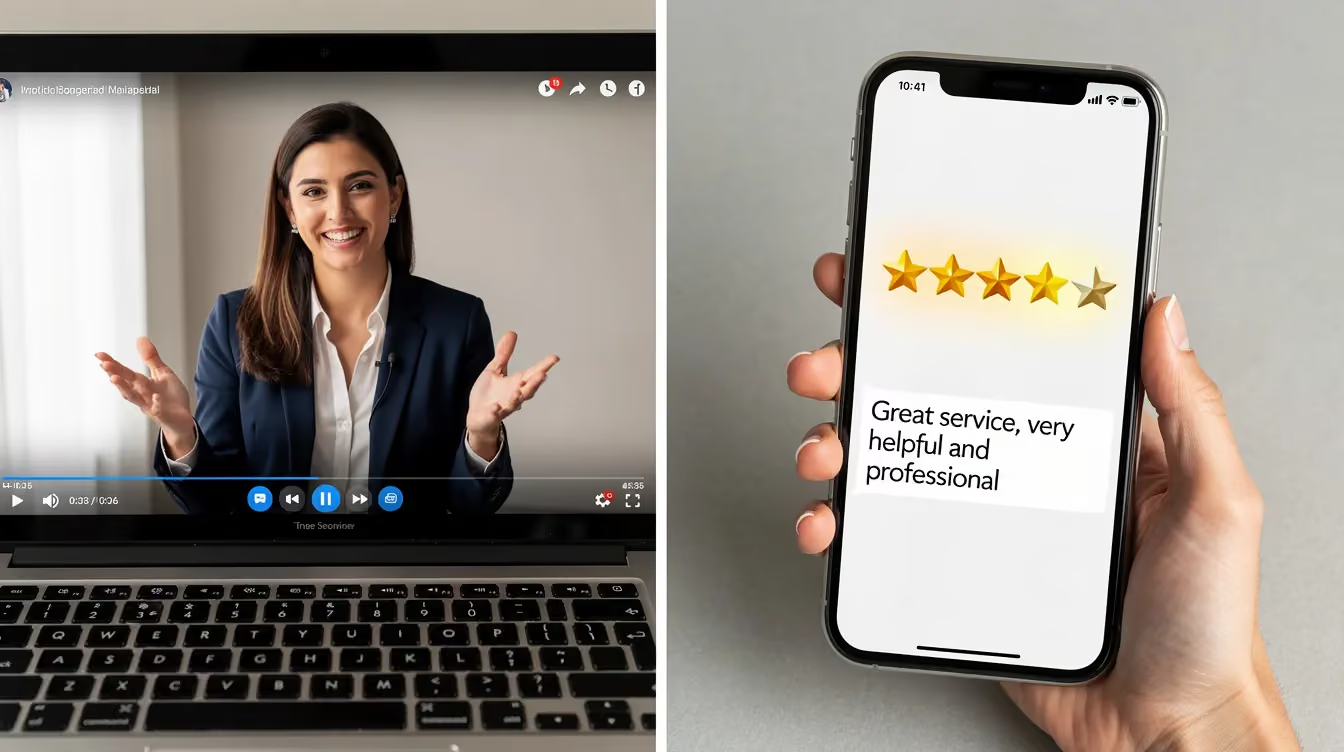
Get a Video Gap Analysis for your company · See which videos could have the biggest pipeline impact
See Where Your Competitors Are Winning With Video Get a custom Video Gap Analysis for your company · See which videos could have the biggest pipeline impact
Thanks - our team will review your website and put together your personalized Video Gap Report. Expect it atthe email address you provided within 2 business days.
We'll put together a personalized report showing where video could have the biggest impact, how your competitors are using it, and specific opportunities for your team. You'll get strategic recommendations, not generic advice.
Thank you! Your submission has been received!
Oops! Something went wrong while submitting the form.
Testimonial Video: How to Collect Customer Testimonials That Build Trust
Learn how to collect testimonial videos that build trust, improve conversion rates, and drive revenue with real customer stories and proven formats.
July 7, 2026
Testimonial Video: How to Collect Customer Testimonials That Build Trust
When buyers evaluate your company, they are not looking for marketing promises. They are looking for proof.
In B2B environments especially, trust is built through evidence. Case studies, customer feedback, and social proof reduce risk and shorten decision cycles. Among all formats, a professionally produced testimonial video remains one of the most effective tools for building credibility, supporting sales conversations, and converting potential customers into paying customers.
But not all video testimonials perform equally. A casual customer clip and a strategically produced testimonial video serve very different purposes.
This guide explains how to collect video testimonials that actually support marketing efforts, improve sales conversations, and turn satisfied customers into scalable growth assets.
What Is a Testimonial Video?
A testimonial video features real customers sharing their positive experiences with your product or service in their own words. In a business context, it is structured proof designed to demonstrate tangible benefits, not just praise.
Unlike written testimonials that sit quietly on a website, customer video testimonials:
Capture genuine reactions
Showcase real people
Add a human touch to your brand
Highlight specific metrics and outcomes
Build trust faster than traditional sales pitches
A strong testimonial video focuses on the customer’s journey: their challenges, their decision-making process, and the results achieved. It turns feedback into a compelling narrative that resonates with your target audience.
Why Customer Testimonials Build Trust Faster Than Sales Pitches
Marketing claims are expected. Customer proof is persuasive.
When potential customers hear from happy customers describing their own challenges and time saved, skepticism drops. The emotional impact of real people speaking authentically carries more weight than even the most polished brand story.
Video testimonials outperform written testimonials because they:
Convey tone, confidence, and emotion
Capture natural flow and authentic testimonials
Hold the viewer’s attention longer
Make success stories feel relatable
In competitive markets, building credibility is often the difference between generating more leads and losing prospects to competitors.
For marketing teams, testimonial video is not just content. It is structured social proof that demonstrates measurable results.
Testimonial Video vs Case Study Video
Testimonial videos and case study videos both showcase customer success, but they serve different strategic purposes.
A testimonial video is typically 60 - 120 seconds and focuses on emotional impact, credibility, and high-level outcomes. It’s designed to build trust quickly on product pages, in paid ads, and within email campaigns.
A case study video is longer and more detailed. It often includes multiple stakeholders, implementation context, and a deeper breakdown of specific challenges and measurable results. These are useful during late-stage evaluation or procurement discussions.
In many cases, the most efficient strategy is capturing both formats during the same production. A short testimonial cut can drive awareness and engagement, while a longer case study version supports sales conversations and decision-making.
Customer Testimonials vs Written Testimonials
Written testimonials still have value. They are quick to scan and easy to place on product pages.
However, video testimonials offer several advantages:
Written Testimonials
Static quotes
Limited emotional impact
Easier to ignore
Minimal context
Video Testimonials
Real customers speaking in their own words
Strong emotional impact and human touch
Visually engaging and harder to dismiss
The strongest marketing efforts combine both. Share testimonials in written form for clarity and reinforce them with video for credibility and persuasion.
How to Collect Video Testimonials the Right Way
Collecting customer video testimonials is not about turning on a camera and hoping for positive feedback. It requires strategy before production.
1. Choose the Right Customers
Focus on satisfied customers whose stories align with your target audience.
Ask:
Do they represent different target customers you want more of?
Can they speak to specific challenges?
Do they have measurable results?
The most effective testimonial video highlights a customer’s journey from pain points to tangible benefits.
2. Structure the Conversation
Avoid scripts. Instead, guide customers with prompts that encourage genuine reactions.
Structure interviews around:
The initial problem
Why they chose your product or service
What changed after implementation
Specific metrics or time saved
Advice for new customers considering your solution
This ensures the testimonial remains authentic while still forming a compelling narrative.
3. Use the Right Tools and Production Approach
There are multiple ways to collect video testimonials:
On-site professional shoots
Guided remote capture
Video testimonial software
While video testimonial software can save time for remote collection, sound quality and editing process still matter. Poor audio or weak visuals reduce perceived quality and undermine building credibility.
A polished final product that is visually appealing reinforces the professionalism of your brand.
How Much Does a Testimonial Video Cost?
Testimonial video pricing depends on scope, production quality, and distribution needs.
Typical ranges in B2B environments:
Guided remote testimonial capture: $2,500–$5,000
On-site professional production: $6,000–$12,000
Multi-customer testimonial campaigns: $25,000+
Cost drivers include location, crew size, number of deliverables, editing process complexity, and post-production enhancements.
The key question is not just “What does it cost?” but “What is the ROI?” When testimonial videos increase conversion rates, support sales enablement, and generate more leads, the investment becomes easier to justify.
Where to Use Testimonial Videos for Maximum Impact
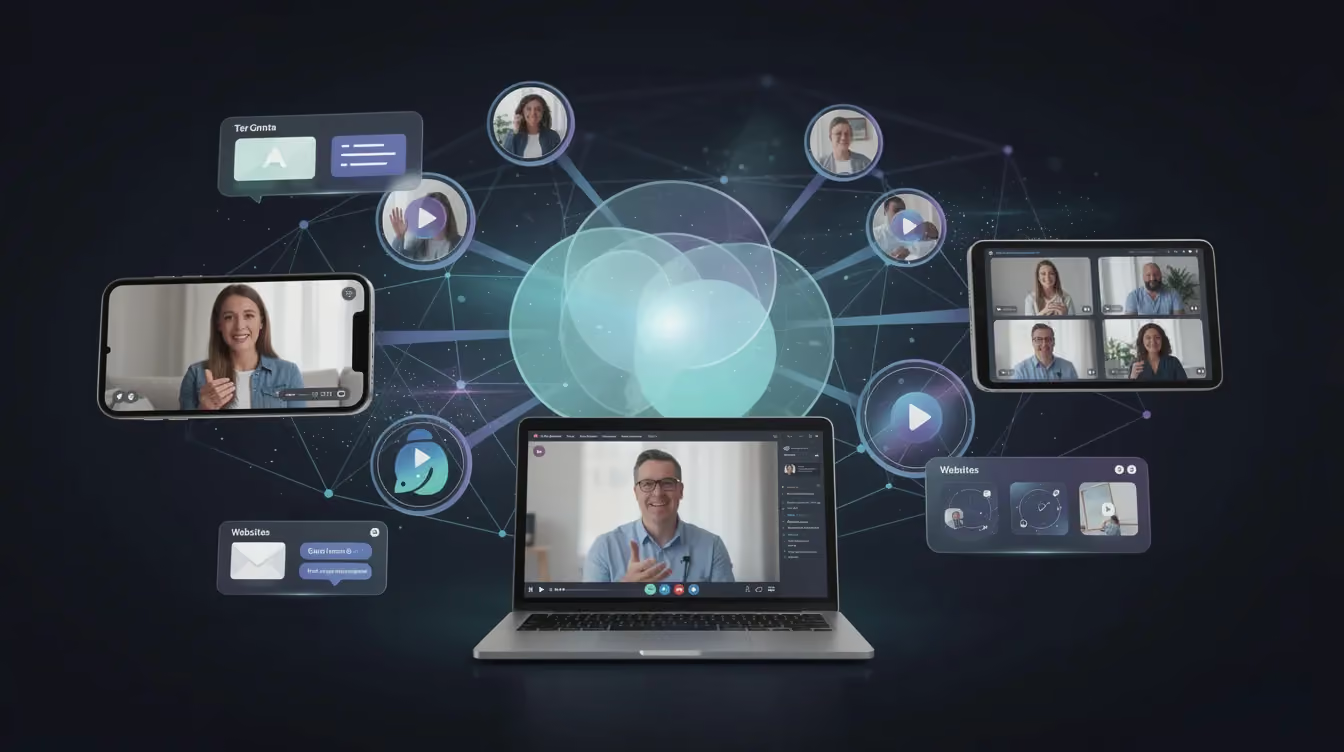
A testimonial video should not live in one place. It should support your full marketing ecosystem.
Product Pages
Embedding customer video testimonials on product pages increases trust at the moment of decision. Seeing positive experiences tied directly to your product or service helps convert potential customers into more customers.
Paid Ads
Short testimonial clips perform well in paid ads across social channels. They immediately establish social proof and capture the viewer’s attention with real voices instead of brand messaging.
Email Marketing and Email Campaigns
Including video testimonials in email marketing can significantly improve engagement. Sales teams can share testimonials in outreach to reinforce credibility and address specific challenges.
Sales Materials
Testimonial videos strengthen proposals, sales materials, and follow-up sequences. When prospects see companies like theirs succeeding, objections soften.
Types of Testimonial Videos to Consider
Not all testimonial videos serve the same purpose. The format should match your target audience and funnel stage.
1. Short Social Clips (15–30 seconds)
Designed for paid ads and social channels. These focus on one clear outcome or pain point to capture the viewer’s attention quickly.
2. Standard Customer Interview (60–120 seconds)
The most common format. A structured conversation covering the customer’s journey, challenges, and measurable results. Ideal for product pages and email campaigns.
3. Case Study-Style Testimonial (3–5 minutes)
A deeper breakdown of implementation, specific challenges, and tangible benefits. Often includes multiple stakeholders. Best for sales conversations and late-stage evaluation.
4. Compilation Testimonials
A montage of short clips from different satisfied customers. Builds strong social proof and works well on homepage sections.
The Emotional Impact of Authentic Testimonials
Even in data-driven industries, buying decisions are influenced by emotion.
Authentic testimonials:
Show genuine reactions
Demonstrate positive experiences
Add a human touch to complex solutions
Reinforce your brand without relying on hype
The combination of emotional impact and specific metrics creates a powerful trust signal. It shifts the conversation from “Why should we believe you?” to “How quickly can we implement this?”
For businesses investing in growth, testimonial video becomes a core part of the brand story.
Common Mistakes to Avoid
Before launching a testimonial campaign, avoid these pitfalls:
Over-Scripted Sales Pitches Customers reading lines feel unnatural. Authentic testimonials perform better when customers speak in their own words.
No Specific Metrics “Great service” is not persuasive. Specific challenges and tangible benefits are.
Poor Sound Quality Audio issues distract from the message and reduce credibility. Always prioritize clear audio.
Misaligned Target Audience If your testimonial features a company unlike your ideal customer, it weakens relevance.
Under-Distribution Producing a video without deploying it across websites, paid ads, social channels, and email campaigns wastes opportunity.
How to Measure the Impact of Testimonial Videos
To evaluate testimonial performance, connect video directly to measurable outcomes.
Track metrics such as:
Conversion rates on pages featuring testimonials Engagement rates in email campaigns
Click-through rates in paid ads
Demo requests influenced by video
Sales cycle length
Number of leads generated
When testimonial content is aligned with business objectives, it becomes part of a predictable growth system rather than a creative experiment.
A Simple ROI Model for Testimonial Videos
To evaluate ROI clearly:
Document your current conversion rates and sales cycle length.
Launch testimonial-enhanced product pages or campaigns.
Track lift in demo requests, pipeline velocity, or close rates.
Attribute influenced revenue over 6–12 months.
If a testimonial campaign contributes to even one additional enterprise deal, it can often pay for itself.
This is why high-quality customer video testimonials are not just brand assets. They are revenue assets.
Frequently Asked Questions
How long should a testimonial video be?
For most B2B use cases, 60–120 seconds works best. Shorter cuts can be used for paid ads and social channels.
How many testimonials does a company need?
Ideally, you should collect testimonials representing different target customers and industries. A small library of 5–10 strong testimonials can support multiple marketing efforts.
Can testimonial videos increase sales?
Yes. When deployed across product pages, paid ads, and sales materials, testimonial videos can build trust and generate more leads. See more proof on this B2B Video Statistics post!
What’s the best way to collect video testimonials?
You can use remote tools or professional production services. For higher-stakes deals, professional production ensures strong sound quality, compelling storytelling, and a polished final product.
Turn Customer Success Into a Scalable Growth Engine
Testimonial video is not about showcasing happy customers for vanity.
It is about building a repeatable system for collecting, editing, and distributing customer proof that drives measurable business outcomes.
When executed strategically, testimonial videos:
Build trust
Strengthen brand credibility
Support sales conversations
Improve conversion rates
Help generate more customers
The difference between one-off testimonials and consistent revenue impact is structure, production quality, and strategic deployment.
If you're evaluating testimonial video as part of your growth strategy, explore CaseLeap’s video pricing estimator to understand scope and budget. From remote testimonial capture to on-site filming, our team helps design a testimonial program aligned to your goals.
Start by estimating your project and speaking with a strategist to map out the right approach for your business.
Build trust and accelerate conversions
Contact us today. We'd love to help you supercharge your sales conversions.