Get a Video Gap Analysis for your company · See which videos could have the biggest pipeline impact
See Where Your Competitors Are Winning With Video Get a custom Video Gap Analysis for your company · See which videos could have the biggest pipeline impact
Thanks - our team will review your website and put together your personalized Video Gap Report. Expect it atthe email address you provided within 2 business days.
We'll put together a personalized report showing where video could have the biggest impact, how your competitors are using it, and specific opportunities for your team. You'll get strategic recommendations, not generic advice.
Thank you! Your submission has been received!
Oops! Something went wrong while submitting the form.
B2B Video Marketing: How to Use Video Across the Entire Buyer Journey
Learn which video types work at each buyer stage and how to use video to attract, educate, and convert your target audience
July 7, 2026
B2B Video Marketing: How to Use Video Across the Entire Buyer Journey
B2B buyers today watch video before they read your website, before they book a demo, and often before they know your company exists.
That is why B2B video marketing has become one of the most important strategies in modern B2B marketing. Video helps companies attract attention, explain complex products, and build trust with decision makers long before a sales call happens.
And yet most B2B marketing teams still treat video as an afterthought. A brand video here, a product clip there, with no real strategy connecting it to pipeline.
Why B2B Buyers Watch More Video Than You Think
B2B video marketing is the use of video content to attract, educate, and convert business buyers. It covers every stage of the buyer journey, from brand awareness at the top of funnel to customer testimonials that close deals at the decision stage.
Research from Google found that 70% of B2B buyers watch video throughout their purchase journey. That includes executives, procurement teams, and technical decision makers actively evaluating whether your product solves a real business problem.
They are not just watching for entertainment. They are using video content to understand solutions, compare vendors, and build enough confidence to take the next step.
By the time a potential customer reaches out to your sales team, they have likely already watched your competitors on YouTube, seen a customer testimonial on LinkedIn, and formed an opinion about who understands their industry challenges best.
Video is not just a top of funnel play. B2B buyers consume video at every decision stage, from initial research all the way through to final vendor selection.
If your business is not showing up in those moments, someone else is.
How to Build a B2B Video Marketing Strategy
Start with a goal, not a format
Pick one primary objective before you think about video types. Lead generation, pipeline acceleration, brand awareness, sales enablement. Your goal determines everything else.
Define your audience specifically
Your target audience is not everyone who might buy from you. Get specific about who you are making this for, what their pain points are, what industry challenges they face, and what they need to see before they trust a new vendor.
Map your content to the buyer journey
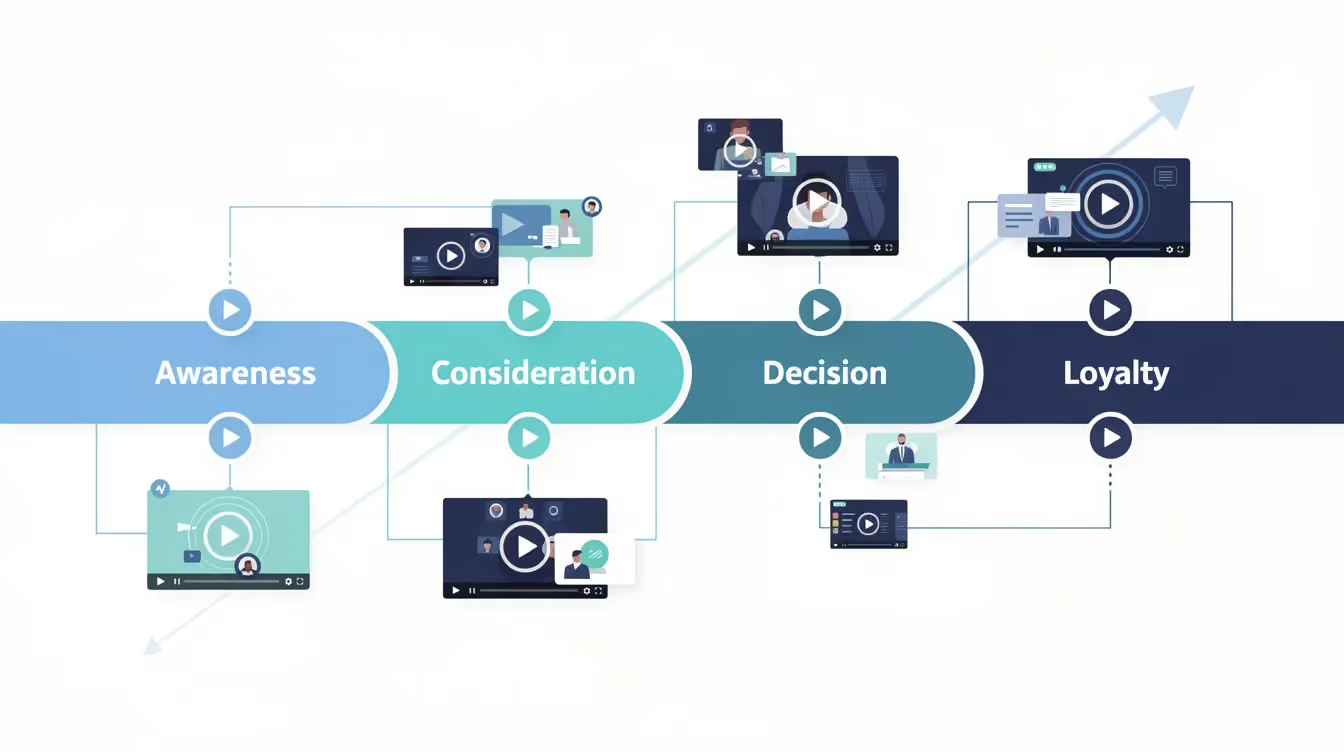
Different decision stages need different video content. A brand video works at awareness. An explainer video or product demo works at consideration. A customer testimonial closes the gap at the decision stage. Build your video strategy around this progression, not around what is easiest to produce.
Plan distribution before you hit record
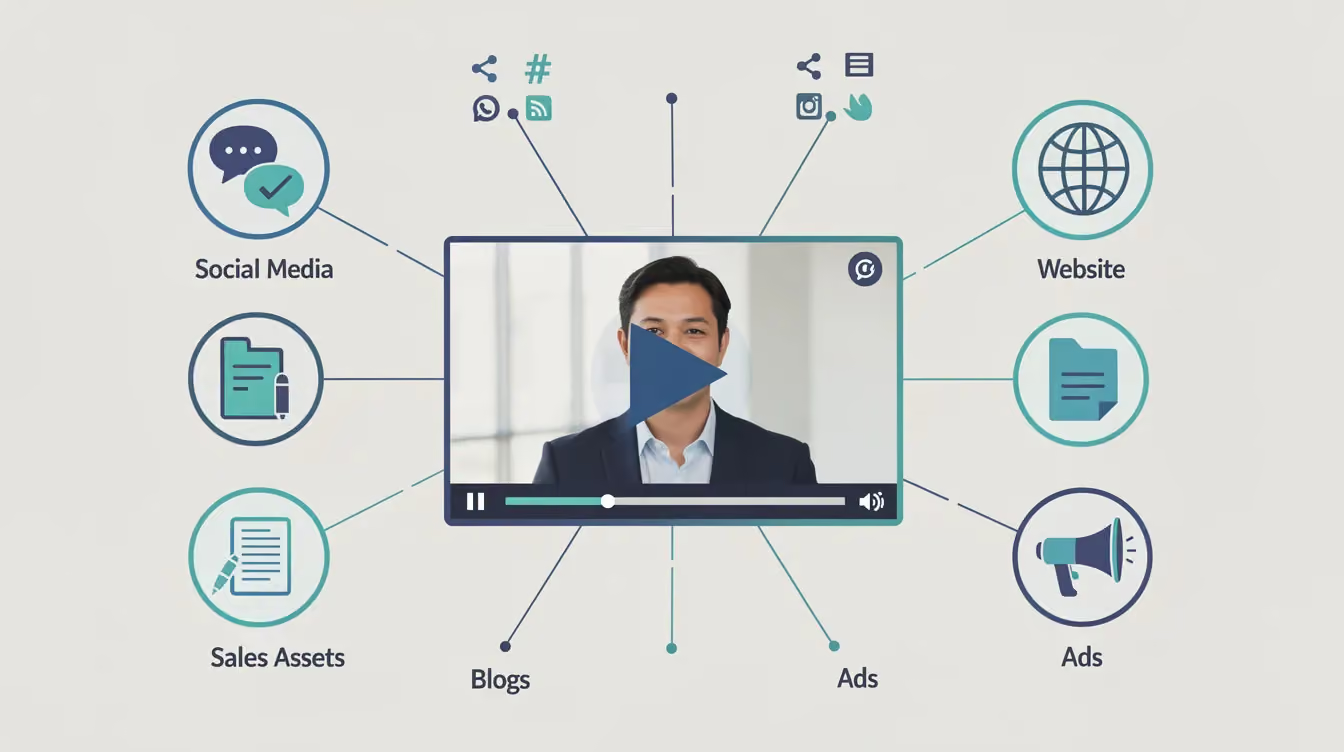
Decide where each video will live before production starts. Your website, landing pages, email campaigns, social media platforms, sales outreach sequences. A video without a distribution plan is just content sitting on a hard drive.
Set measurable results from day one
Know what success looks like before you start. Click through rates, demo requests, watch time, pipeline influence. Tie your video metrics back to real business outcomes. That is what a real b2b video content marketing strategy looks like in practice.
Video Types by Buyer Stage (Awareness, Consideration, Decision)
Not all video content serves the same purpose. The format that works at one stage of the sales funnel can fall completely flat at another. Here is how to match your video types to where your buyer actually is.
Awareness
At the top of funnel, your potential customers do not know you yet. They are not ready to see a product demo or hear a sales pitch. They need content that is useful, relevant, and builds familiarity with your brand.
This is where brand videos, thought leadership content, educational videos, and short form videos on social media platforms do the heavy lifting.
Consideration
At this stage, buyers are actively evaluating their options. They know they have a problem and they are looking for the right solution.
Explainer videos, product demos, webinars, and longer videos that go in depth on your solution work well here. These formats help potential customers understand exactly how your product or service addresses their pain points and why it is a better fit than the alternatives.
Decision
This is where the deal is won or lost. Buyers at the decision stage need proof, not promises. They want to hear from people who were once in their exact position and chose to work with you.
Testimonial videos and case study videos are the most powerful formats at this stage. Real customers, real results, real stories. When a buyer sees someone from their own industry describing a problem they recognize and an outcome they want, that human connection does what no marketing video can do on its own.
Sales outreach video also fits here. A short personalized video in a follow up email can move a stalled deal faster than any written content.
Using Video Testimonials as B2B Sales Assets
In B2B marketing, customer testimonials are one of the most effective sales tools you have.
B2B buyers are skeptical by nature. They are making decisions that affect their company, their budget, and often their reputation. Written content and product pages can tell them what you do. A real customer on camera telling them what changed for their business is a completely different thing.
Testimonial videos work across every stage of the buyer journey, not just at the bottom.
Awareness: A short testimonial clip on LinkedIn or YouTube puts a real human face on your brand before a buyer has ever visited your site.
Consideration: A customer speaking directly to a common industry challenge helps potential customers see themselves in the story.
Decision: A full testimonial video featuring measurable results and authentic storytelling can be the difference between a signed contract and a lost deal.
Sales teams use them too. A well-produced testimonial video dropped into a sales outreach email or shared before a proposal meeting gives buyers something concrete to bring back to their stakeholders.
That is what makes them such a powerful tool across the entire sales funnel. CaseLeap's video testimonial service is built specifically around this, helping B2B teams produce customer stories that work at every stage of the buyer journey.
Where to Distribute Your B2B Videos (And How to Make Each Channel Work)
Producing a great video is only half the job. Incorporating video into the right channels is what turns it into a marketing asset.
Your site is the highest-intent destination a buyer will visit. Embedding videos on your homepage, product pages, and landing pages keeps visitors engaged longer and gives them a faster way to understand what you do. A testimonial video on a pricing page or a product demo on a solution page can meaningfully improve conversion rates.
LinkedIn and YouTube
These are the two most important platforms for b2b video marketing. LinkedIn is where your decision makers are already spending time, making it ideal for short form videos, thought leadership clips, and customer story content. YouTube functions more like a search engine, so longer videos and educational content tend to perform well there over time.
Email campaigns
Video in email is underused in b2b marketing. Even just including the word "video" in a subject line has been shown to improve open rates. A short video clip in a nurture sequence or a personalized video in a sales outreach email gives your message a much better chance of getting a response.
Paid social and retargeting
Short videos work well as paid ads on LinkedIn and other platforms, especially for retargeting audiences who have already visited your site. These do not need to be long. Thirty to sixty seconds with a clear message and a strong hook is enough.
Sales enablement
This channel gets overlooked. Your sales team sharing a relevant testimonial video or product demo before a call or in a follow up email can accelerate deals that have gone quiet.
B2B Video Marketing KPIs That Actually Matter
Video metrics can feel overwhelming. Views, impressions, watch time, engagement rate. The list goes on. But most of it is noise if it is not connected to a real business outcome.
Here is how to think about measurement by funnel stage.
Awareness
At the top of the funnel, you are trying to reach new audiences and build familiarity with your brand. The metrics that matter here are:
Video views and reach
Watch time and average view duration
Follower growth and share rate on social media platforms
Consideration
At this stage, you want to know if your video content is actually moving people closer to a decision. Track:
Click through rates from video to your website or landing pages
Time on site after watching a video
Demo requests or content downloads attributed to video
Decision
This is where video should be directly influencing pipeline. The metrics to focus on:
Pipeline influenced by video touchpoints
Close rate for deals where video was part of the sales outreach
Revenue attributed to video assets in your sales funnel
Connect your metrics to real business outcomes, not just views.
How to Repurpose One Customer Story Across 5 Formats
One of the biggest mistakes B2B marketing teams make with video is treating each asset as a one-time production. You film a customer testimonial, post it on your website, and move on.
1. Full-length testimonial video
This is your anchor asset. A two to three minute video that tells the full customer story, the problem, the solution, and the results. Lives on your website, your case study library, and in sales outreach sequences.
2. Short form video clips
Cut the full video into thirty to sixty second clips that highlight a specific result or a compelling moment. These work well as organic posts on LinkedIn, as paid social ads, and as retargeting content on other platforms.
3. Written case study
Use the interview transcript as the foundation for a written case study. This serves a completely different audience, the buyers who prefer reading over watching, and it adds an SEO asset that drives search results over time. CaseLeap'swritten case studies service handles this as part of the same production process so you are not starting from scratch.
4. Quote cards and still frames
Pull the strongest lines from the interview and turn them into visual quote cards. These are easy to share across email campaigns, sales decks, and social media platforms without requiring any new production.
5. Blog post or article
The transcript from a good customer interview contains more insight than most marketing teams realize. Use it as the basis for a blog post that covers the customer's industry challenges, the solution they found, and the outcomes they achieved.
One shoot. Five assets. Multiple touchpoints across the entire buyer journey.
B2B Video Marketing Examples From Real Companies
Customer Testimonial Video
FreshBooks, the accounting software company, built one of the most referenced testimonial videos in B2B marketing by doing the opposite of what most companies do. No script. No rehearsed lines. Just a real customer named Sarah talking honestly about how much she hated invoicing and what changed when she started using the product. It felt real because it was real. That authentic storytelling is what made it stick.
Product Demo Video
Salesforce consistently uses customer-led product demo videos that center on a specific business problem rather than a feature walkthrough. Instead of showing every capability, they zoom in on one pain point and show exactly how the platform solves it. That specificity is what makes the video content useful rather than generic.
Thought Leadership Video
Moz built its entire brand authority through a simple weekly video series called Whiteboard Friday. Same format every week. One person, one whiteboard, one SEO concept explained clearly. No production budget required. Just consistent, useful video content that turned them into the go-to resource in their industry.
Brand Video
BrainRobotics combined live interviews with mission driven storytelling to create a testimonial based brand video showcasing human-centered innovation in prosthetics and their real world results.
Case Study Video
The Hon Company created a case study video featuring a school that used their innovative manufacturing and construction services - resulting in significant positive change for teachers, parents and students, alike. The first person video formatting is so much more impactful than any text could convey.
Impact Video
Clearwave Fiber used real community testimonials and employee interviews to share the real human impact that high-speed fiber connectivity made for one community. The video creates connection beyond the service, and builds both trust and loyalty.
Docu-style
Saab North America took a longer format approach to share airport operations efficiency and safety improvements highlighted in a live action docustyle testimonial video.
Common B2B Video Marketing Mistakes to Avoid
Most B2B companies do not fail at video because of bad production. They fail because of avoidable mistakes that kill results before the video ever reaches anyone.
No clear goal before production starts. If you cannot say what the video is supposed to do, you are not ready to make it.
Treating distribution as an afterthought. Where your video lives matters as much as what is in it.
Skipping customer testimonials. They are consistently the highest-ROI video format in B2B and the most underused.
Producing one video and calling it a strategy. Building trust with your target audience takes consistency, not a single asset.
Not repurposing what you already have. Every shoot is a content ecosystem waiting to happen.
Conclusion
The B2B companies getting the best results from video right now are not the ones with the biggest production budgets. They are the ones treating video as a strategic asset, not a creative project. They know which formats to use, where to put them, and how to connect them to real business outcomes.
Customer stories are at the center of that approach. A well-produced testimonial video does more for your pipeline than almost any other content investment you can make in B2B marketing.
The most effective B2B video marketing strategies are built around real customer stories.
CaseLeap helps B2B teams turn their best customer relationships into high-impact testimonial videos and written case studies that work across websites, sales outreach, and the entire buyer journey.
If you are ready to make customer stories a core part of your video marketing strategy, talk to the CaseLeap team.
FAQs
Is video marketing effective for B2B?
Yes. Research from Google found that 70% of B2B buyers watch video throughout their purchase journey. It helps potential customers understand complex solutions faster, builds trust before a sales conversation, and gives decision makers something concrete to share internally. When tied to a real strategy, video delivers some of the strongest ROI in B2B marketing.
What types of video work best in B2B marketing?
It depends on where your buyer is. Brand videos and short form social content work at awareness. Explainer videos and product demos work at consideration. Customer testimonials and case study videos are the most effective formats at the decision stage when trust and proof matter most.
How do you use video in a B2B sales cycle?
Map your video types to each stage. Use short form content on LinkedIn and YouTube to build awareness early. Use product demos and explainer videos to help buyers self-educate during consideration. Use customer testimonials in sales outreach, proposals, and follow ups to move deals forward at the decision stage.
How long should B2B marketing videos be?
Short form social videos work best at thirty to sixty seconds. Explainer videos and product demos typically run ninety seconds to three minutes. Full customer testimonials can go two to three minutes when the story earns it. The simple rule is be as long as you need to be and no longer.
What is the ROI of B2B video marketing?
Customer testimonials and product demos consistently deliver the strongest returns because they directly influence purchase decisions. Track ROI by funnel stage. Views and watch time at awareness. Click through rates and demo requests at consideration. Pipeline influence and close rates at the decision stage. Video tied to real business outcomes will always outperform video measured by views alone.
Build trust and accelerate conversions
Contact us today. We'd love to help you supercharge your sales conversions.