Get a Video Gap Analysis for your company · See which videos could have the biggest pipeline impact
See Where Your Competitors Are Winning With Video Get a custom Video Gap Analysis for your company · See which videos could have the biggest pipeline impact
Thanks - our team will review your website and put together your personalized Video Gap Report. Expect it atthe email address you provided within 2 business days.
We'll put together a personalized report showing where video could have the biggest impact, how your competitors are using it, and specific opportunities for your team. You'll get strategic recommendations, not generic advice.
Thank you! Your submission has been received!
Oops! Something went wrong while submitting the form.
Customer Testimonial Examples: 8 Powerful Examples That Build Trust and Drive Sales
Learn how quote, video, and long-form testimonials provide social proof that converts potential buyers
July 7, 2026
Customer Testimonial Examples: 8 Powerful Examples That Build Trust and Drive Sales
Most businesses say their product or service delivers great results. The challenge is that potential customers rarely take marketing claims at face value. Buyers want proof from real people who have already used the product.
This is where customer testimonials become powerful. When existing customers share their experiences, they provide social proof that helps potential buyers feel more confident about a purchase.
From short customer quotes to detailed customer stories and video testimonials, these real experiences show how a product works in practice and why customers value it.
In this guide, we will explore testimonial examples businesses use to highlight customer success stories, build credibility, and attract potential buyers.
What Is a Customer Testimonial?
A customer testimonial is a statement from a customer describing their experience with a company’s product or service. These testimonials explain how the product was used, the results achieved, and why the customer feels satisfied with the outcome.
Unlike traditional advertising, testimonials come directly from existing customers. This makes them more believable to potential buyers. When people see real feedback from other customers, it helps them understand how a solution performs in real life.
Testimonials often include customer quotes, customer stories, or positive reviews that highlight service quality, product benefits, or overall satisfaction. They can appear in several formats, including written testimonials on a website, video testimonials, audio testimonials, or social media testimonials shared across social media platforms.
Businesses commonly place testimonials on product pages, landing pages, and marketing materials to show real customer experiences. When buyers see that other customers had positive results, it helps them feel more confident about making a purchase.
In simple terms, testimonials turn customer feedback into social proof. They show potential customers that real people have already used the product and had a positive experience, which helps build credibility and trust before the buying decision is made.
People trust other people more than marketing claims. When potential customers see customer testimonials from real users, it helps them feel confident that a product or service delivers on its promises. This is why testimonials have become one of the most effective forms of social proof in modern marketing.
Customer testimonials influence buying decisions in several important ways:
They build trust quickly. Buyers often hesitate when evaluating a new product. Seeing real customer quotes, positive reviews, and customer stories helps remove uncertainty and makes a business appear more credible.
They show real product experiences. A testimonial explains how someone used the product, what challenge they faced, and what results they achieved. This helps potential buyers understand product benefits through real-life experiences, not just marketing claims.
They create an emotional connection. When readers see stories from customers who faced similar challenges, they can imagine how the product might help them too. This makes testimonials feel more personal and relatable.
They strengthen brand credibility. Displaying testimonials on product pages, landing pages, and social media platforms shows that real customers already trust the company’s products and services.
They increase conversions. Testimonials do more than improve perception. They can directly impact results. In fact, research shows that adding customer testimonials to a sales page can increase conversions by up to 34%.
When potential buyers see a collection of customer feedback, positive reviews, and success stories, it becomes much easier for them to trust the business and move forward with a purchase.
The following customer testimonial examples show how businesses use different testimonial formats to build credibility and influence potential buyers. Each example highlights a specific format and explains why it works.
8 Customer Testimonial Examples That Build Trust
Below are several testimonial examples businesses use to build and gain trust, strengthen credibility, and encourage potential buyers to move forward with a purchase.
1. Quote Testimonials
Quote testimonials are the most common format businesses use. They are short statements from happy customers that highlight a positive experience with a product or service.
These testimonials usually appear on a website, landing page, or product pages where potential customers are evaluating a purchase. A short quote allows readers to quickly see that other buyers had a positive experience.
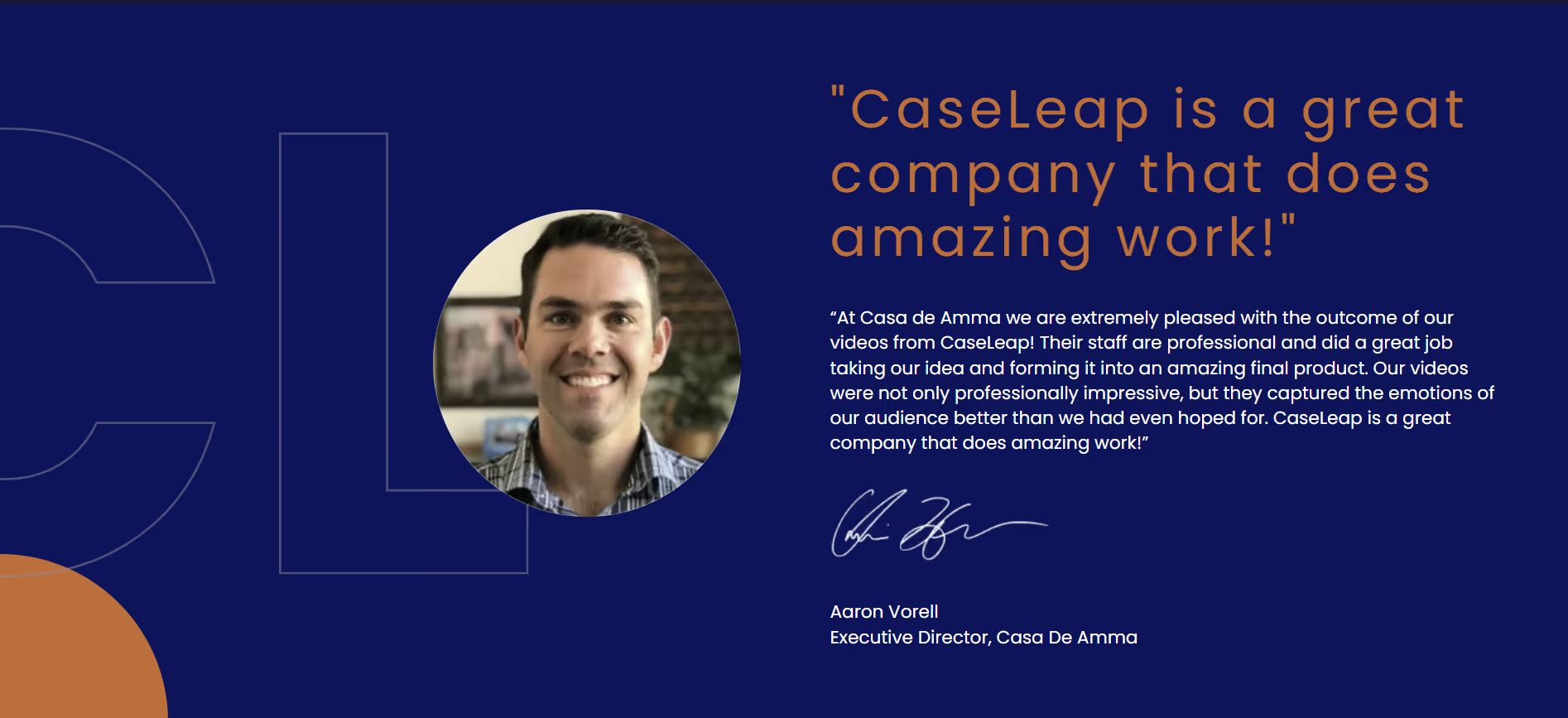
Example:
Why it works:
Quote testimonials are easy to read and immediately communicate customer satisfaction. A short statement from a satisfied customer can quickly build credibility and reinforce the value of the product.
Businesses often combine quote testimonials with a customer name, company, or role. This adds authenticity and helps potential buyers feel that the feedback comes from real people.
Even though they are short, quote testimonials remain a powerful way to provide social proof and strengthen a brand’s reputation.
2. Video Testimonials
Video testimonials allow customers to share their experience in their own words. Instead of reading a quote, potential customers can see and hear a real person describe how a product or service helped them.
This format often feels more authentic because viewers can observe tone, emotion, and confidence. That personal element helps testimonials feel personal and builds a stronger emotional connection with potential buyers.
Example:
Why it works:
Video testimonials combine storytelling with real client feedback. Viewers can understand product or service, see the customer’s perspective, and hear the results directly from someone who experienced them. This type of testimonial often appears on landing pages, product pages, and sales presentations because it helps businesses build trust quickly.
For many companies, customer testimonial videos become one of the most persuasive forms of social proof. They show that real customers achieved results and are willing to publicly share their experience.
3. Social Media Testimonials
Many powerful testimonials start as simple social media posts from happy customers. When someone shares a positive experience with a product on platforms like LinkedIn, Instagram, or X, it often feels spontaneous and genuine.
These posts usually come from existing customers who want to share how a product or service helped them. Because the feedback appears publicly and without prompting, social media testimonials can feel more authentic than traditional marketing messages.
Example:
A customer posts on LinkedIn describing how a company’s software improved their workflow and helped their team save hours each week. The post includes a short explanation of the problem they faced and how the solution improved their daily work.
Why it works:
Social media testimonials provide strong social proof because they show real people sharing real experiences in a public setting. Potential customers can see that the feedback was shared naturally, not written by the company.
Businesses often repurpose these posts by adding them to their website, testimonial page, or landing page. Highlighting positive feedback from social media platforms helps strengthen a brand’s reputation and shows that customers love the product or service enough to talk about it publicly.
4. Long Form Customer Story Testimonials
Some testimonials go beyond a short quote and tell a full story. Long form testimonials describe the customer’s experience in detail, explaining the challenge they faced, how they used the product, and the results they achieved.
These testimonials often appear as customer stories or success stories on a company website or blog post. They provide more detailed information that helps potential customers understand how the product works in real situations. Because attention spans are short, and key points are important to highlight, video is the most effective format for long form customer stories.
Example:
Why it works:
Long-form testimonials provide deeper insight into product usage and service quality. Instead of just praising the product, the testimonial shows how the solution solved a real business problem.
These detailed stories help potential buyers understand the value of the product or service more clearly. They also help build credibility because the explanation feels thoughtful and grounded in real experience.
5. Interview Testimonials
Interview testimonials are created by asking customers a series of structured questions about their experience with a product or service. Instead of asking for a general review, businesses guide the conversation so customers can explain their experience clearly.
These testimonials often start with questions about the customer’s situation before using the product. The conversation then explores how the product helped solve a problem and what results the customer achieved.
Example:
A company interviews a client about how they improved their workflow after adopting a new platform. The customer explains the challenges they faced before, how they implemented the solution, and how their team benefited from the change.
Why it works:
Interview testimonials produce more compelling testimonials because the responses are detailed and natural. Customers can explain their experience step by step, which creates a clearer story for potential buyers.
This format is also very flexible. The responses can be turned into customer testimonial videos, written testimonials, or social media content. By guiding the conversation with thoughtful questions, businesses can collect meaningful customer feedback that highlights real results.
6. Social Proof From Online Reviews
Many strong testimonials come from online reviews shared on review platforms, marketplaces, or community forums. These reviews often include honest feedback from customers who describe their real experience with a product or service.
Unlike curated testimonials, online reviews usually appear in public spaces where customers voluntarily leave reviews about what worked well for them. Because these comments are not always edited or polished, they often feel very authentic to potential buyers.
Example:
A customer writes a review explaining how a company’s software helped their team improve efficiency and save time each week. The review highlights the product benefits, the service quality they experienced, and why they would recommend the product to others.
Why it works:
Online reviews provide strong social proof because they come from real users sharing their experiences openly. Potential customers often read several reviews before making a purchase because they want to understand how the product performs in different situations.
Businesses often highlight positive reviews on their website, landing page, or testimonial page. Showcasing real customer feedback helps build credibility and reassures buyers that other customers had a positive experience.
7. Customer Success Story Testimonials
Customer success stories are detailed testimonials that explain how a customer achieved a meaningful result after using a product or service. Instead of focusing only on praise, these testimonials highlight measurable outcomes and practical benefits.
A success story usually follows a simple structure. It explains the challenge the customer faced, how they implemented the product, and the results they achieved after using it.
Example:
Why it works:
Success stories help potential customers understand the real impact of a product or service. By showing the full journey from problem to solution, these testimonials provide detailed information that makes the value of the product easier to see.
These testimonials are often featured as long-form testimonials, case studies, or blog posts on a website. Because they provide deeper insight into customer experiences, success stories are a powerful way to build credibility and demonstrate how businesses can achieve similar results.
8. Before and After Testimonials
Before and after testimonials highlight the difference a product or service made for a customer. Instead of only sharing praise, these testimonials show a clear transformation between the customer’s situation before using the product and the results they experienced afterward.
This format helps potential customers visualize the value of the solution. It provides context for the problem and demonstrates how the product helped solve it.
Example:
Why it works:
Before and after testimonials provide real life context that helps potential buyers understand how the product can solve similar problems. Seeing a clear improvement makes the testimonial feel more credible and practical.
Businesses often place these testimonials on product pages, landing pages, and marketing materials where potential customers are evaluating a purchase. By showing real outcomes, before and after testimonials help strengthen trust and encourages buyers to move forward.
How CaseLeap Helps Businesses Capture Powerful Testimonials
Many businesses struggle to collect testimonials consistently. Customers are busy, and feedback requests often go unanswered.
CaseLeap helps businesses capture structured testimonials through guided prompts that make it easier for customers to share meaningful feedback. Companies can collect video testimonials, written testimonials, and interview responses that highlight real customer experiences.
By organizing testimonials in one place, businesses can build a library of social proof that can be used across websites, landing pages, product pages, and marketing campaigns.
Conclusion
Customer testimonials remain one of the most effective ways for businesses to build trust with potential buyers. When real customers share their experiences, they provide social proof that helps others understand the value of a product or service.
From short customer quotes to detailed customer stories and video testimonials, these real experiences show how a product solves problems and delivers results in the real world.
Businesses that consistently collect and showcase testimonials build stronger credibility and a more persuasive marketing presence. Over time, a strong library of customer testimonials and success stories can help attract potential leads, strengthen brand reputation, and support long-term sales growth.
FAQs
Answering Common Questions
What is a customer testimonial?
A customer testimonial is a statement from a real customer describing their experience with a product or service. Testimonials can take several forms, including written quotes, video testimonials, social media posts, and detailed customer stories. Businesses use them as social proof on websites, landing pages, and marketing materials to build trust with potential buyers.
What are the most effective types of customer testimonials?
The most effective types include quote testimonials, video testimonials, social media testimonials, interview testimonials, online reviews, success stories, and before-and-after testimonials. Video tends to be the most persuasive format because viewers can see and hear a real person share their experience, which builds a stronger emotional connection than text alone.
How do customer testimonials increase sales?
Testimonials increase sales by providing social proof that reduces buyer hesitation. Research shows that adding testimonials to a sales page can increase conversions by up to 34%. They also build brand credibility and help prospects visualize how the product could solve their own challenges.
Where should businesses display customer testimonials?
Place testimonials on product pages, landing pages, homepage sections, sales presentations, and dedicated testimonial pages. The most strategic placement puts testimonials where buyers are actively evaluating a purchase, so social proof appears at the moment it can have the greatest influence on conversions.
What makes a customer testimonial believable?
Believable testimonials include specific details about the customer's challenge, how they used the product, and what results they achieved. Adding the customer's name, company, and role strengthens authenticity. Video testimonials feel especially credible because viewers can observe tone and confidence. A clear problem-to-solution structure comes across as more trustworthy than vague praise.
What is the difference between a testimonial and a case study?
A testimonial is a short-to-medium customer statement sharing a positive experience. A case study goes deeper, walking through the customer's challenge, the solution implemented, and measurable results. Testimonials focus on personal endorsement, while case studies emphasize data and outcomes. Many businesses use both to build credibility across different stages of the buyer journey.
When you are ready to build a testimonial video program tied directly to the pipeline, visit CaseLeap.
Build trust and accelerate conversions
Contact us today. We'd love to help you supercharge your sales conversions.



.avif)