Get a Video Gap Analysis for your company · See which videos could have the biggest pipeline impact
See Where Your Competitors Are Winning With Video Get a custom Video Gap Analysis for your company · See which videos could have the biggest pipeline impact
Thanks - our team will review your website and put together your personalized Video Gap Report. Expect it atthe email address you provided within 2 business days.
We'll put together a personalized report showing where video could have the biggest impact, how your competitors are using it, and specific opportunities for your team. You'll get strategic recommendations, not generic advice.
Thank you! Your submission has been received!
Oops! Something went wrong while submitting the form.
Video Case Study: How to Create One That Builds Trust and Drives Results
Create a high-performing video case study that builds trust and drives results. Includes examples, structure, tips, and strategies for max impact.
July 7, 2026
Video Case Study: How to Create One That Builds Trust and Drives Results
Video case studies have become one of the most effective forms of video marketing for modern businesses.
Today, potential customers rarely make decisions based on features alone. They want proof. They want to see how a business solves real pain points for real customers.
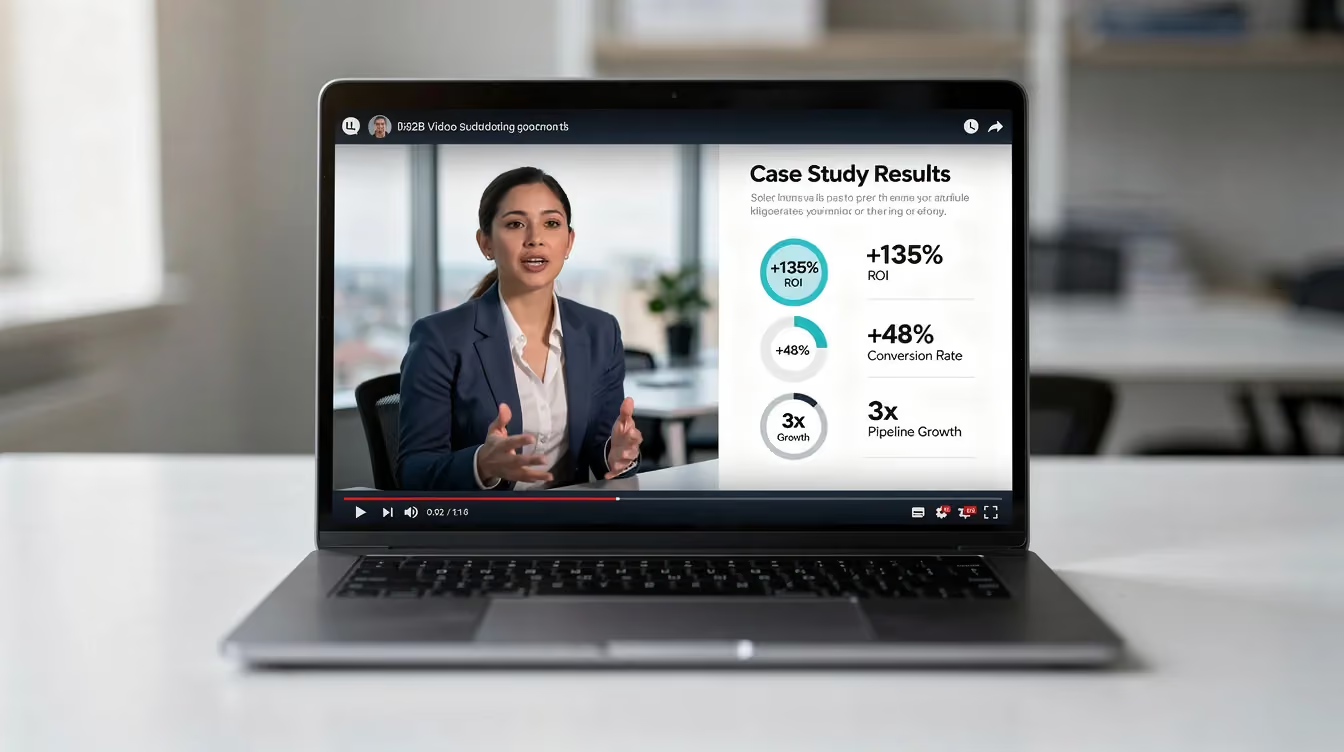
A strong case study video goes beyond showcasing happy customers. It introduces a specific customer problem, explains how the business solves it, and shows measurable outcomes that matter to decision-makers.
For many companies, a well-produced case study video becomes a central sales and marketing asset. In competitive markets, it often turns into the most persuasive tool in the sales process, supporting customer engagement across the funnel, reducing perceived risk, and accelerating decisions.
This guide explains what a video case study is, how it differs from a testimonial, and how to create one that supports real business results.
What Is a Video Case Study?
A video case study is a structured customer story told on camera.
It focuses on a specific customer problem, shows how the business solves it, and presents measurable results. Unlike simple customer testimonials, a case study video follows a clear story arc that moves from context and pain points to solution and measurable results.
The purpose is not just to highlight happy customers. It is to explain the whole story and connect outcomes to real business goals such as driving revenue, efficiency, or generating more leads.
Most video case studies run between two and four minutes. Shorter versions may support social media marketing, while longer formats often help sales teams close high-value deals.
When structured correctly, video case studies build trust and give potential customers the clarity they need to move forward.
Types of Case Study Videos
Not all video case studies follow the same format. Choosing the right structure depends on your audience, business goals, and overall video creation strategy. Understanding different video types helps you select the perfect fit for your message.
Interview-Based Case Study
This is the most common format. It centers on on-camera interviews supported by B roll and graphics. The focus is on authenticity and clarity. This format is a powerful way to build trust because viewers hear the story directly from the customer.
Documentary-Style Case Study
A more cinematic approach that follows the customer journey in depth. It leans into a compelling narrative, often showing the environment, team interactions, and transformation over time. This style works well when you want to elevate brand positioning or showcase complex solutions.
Product-Focused Case Study
This format highlights how a specific product or service solved a defined problem. Screen recordings, demonstrations, and performance visuals are central to the story. It is ideal when the goal is to clearly explain features while still anchoring the narrative in real outcomes.
Remote or User-Generated Case Study
Recorded virtually or submitted by customers, this approach reduces production costs while maintaining authenticity. When structured correctly, it can still deliver a compelling narrative and serve as a powerful way to showcase real-world results at scale.
What Makes a Good Case Study Video?
Not all video case studies perform the same. Some feel promotional. Others feel vague. A good case study video is structured, specific, and outcome-focused.
Here is what separates strong case study videos from forgettable ones.
1. A Clear Story Arc
A strong case study video follows a logical flow. The viewer should understand the context, the pain points, the solution, and the measurable results without confusion. When the story arc is clear, the key message becomes easier to remember.
2. A Specific Customer Problem
Generic challenges create weak stories. The most effective video case studies focus on one clear customer problem. That specificity helps potential customers recognize themselves in the example.
3. Measurable Results
A good case study video includes tangible results tied to real business goals. Sales growth, time savings, efficiency improvements, or cost reductions all strengthen credibility. Numbers make the story believable.
4. Authentic On Camera Interviews
Natural on camera interviews build trust. Viewers can sense when someone is reading a script. Authentic responses create stronger customer engagement and make the story feel personal.
5. Visual Support
Video compared to text has one major advantage: it can show the solution in action. B roll, screen recordings, and simple graphics reinforce the message and make complex ideas easier to understand.
6. Relevance to the Target Audience
A strong case study video reflects the world of the intended audience. When viewers see familiar challenges, industry language, and relatable scenarios, the story becomes more persuasive.
When executed well, a good case study video does more than explain a solution. It reduces risk for decision-makers and strengthens your position during competitive evaluations.
Video Case Study vs Testimonial Video
It’s easy to confuse a testimonial with a video case study, but they serve very different purposes in video marketing.
A testimonial is typically short and centered on satisfaction. A video case study is structured, outcome-driven, and built around a full customer journey.
Here’s a clear comparison:
Video Case Study
Length: 2–4 minutes (sometimes longer)
Structure: Full story arc: problem → solution → measurable results
Depth: Explains context, pain points, and business impact
Metrics: Includes tangible results and performance outcomes
Structure: Short endorsement focused on experience
Depth: Highlights satisfaction and general benefits
Metrics: Rarely includes detailed data
Primary use: Landing pages, social media, quick credibility
Goal: Build quick trust and brand perception
A testimonial may show that customers are happy.
A video case study shows why the decision worked.
Video case studies provide that proof by connecting real pain points to measurable results. Testimonial videos reinforce credibility. Case study videos build decision-level confidence.
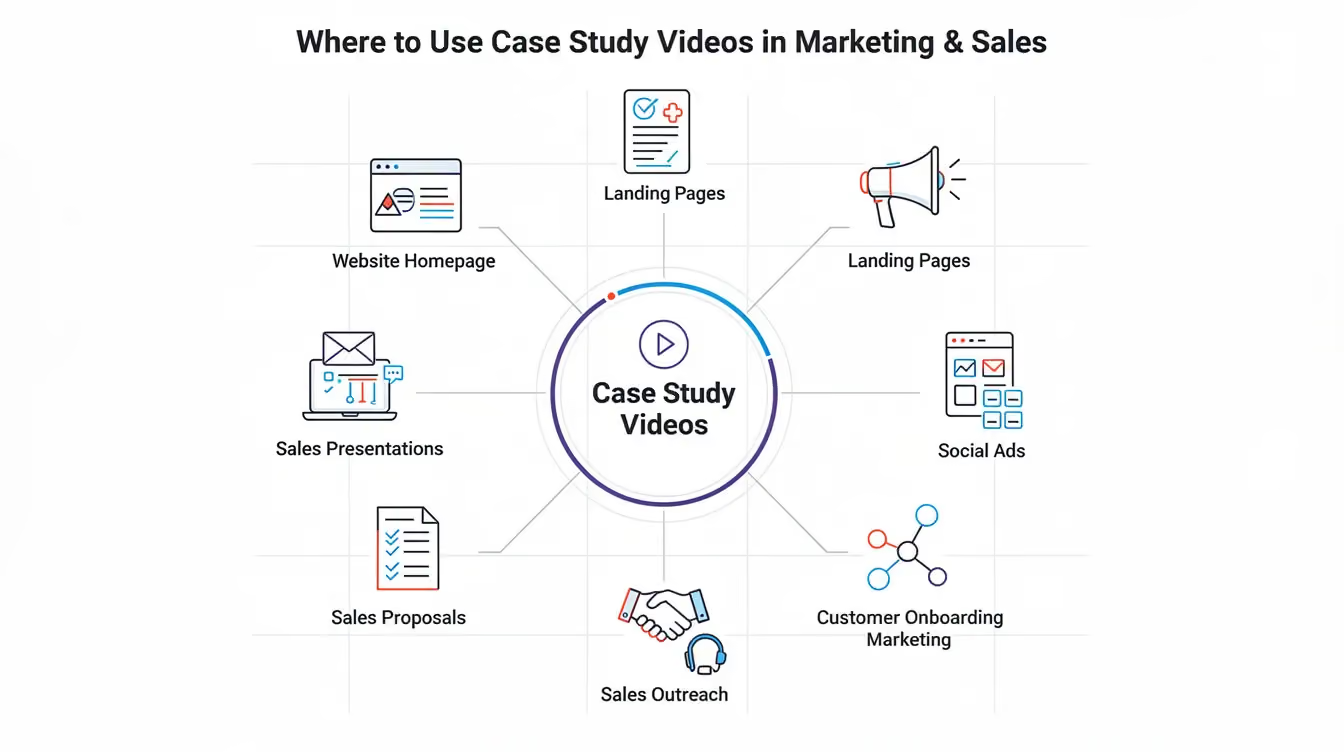
Video case studies can support different marketing and sales functions depending on how they are deployed.
Demand Generation
Short versions of case study videos perform well on social media platforms and landing pages. They introduce proof quickly and attract potential customers who want validation before speaking with sales.
Sales Enablement
Sales teams use full-length case study videos in follow-ups or live demos. Sharing a story that mirrors the prospect’s pain points strengthens credibility and helps reduce decision friction.
Account-Based Marketing
Industry-specific case study videos are effective in account-based marketing campaigns. When the story closely matches the viewer’s business environment, the message feels tailored and more persuasive.
Tips to Make Your Video Case Study Effective
Put the Customer First
Make the customer the hero. Focus on their pain points, their journey, and their results. Your business is the solution, not the spotlight.
Focus on One Clear Message
Choose one specific customer problem and one core outcome. A single strong story is more powerful than trying to cover everything.
Show Real Results
Include measurable results whenever possible. Revenue growth, cost savings, time reduction, or increased leads make the case study video credible.
Keep the Story Structured
Follow a clear story arc: context, challenge, solution, results. Structure keeps the key message clear and easy to follow.
Use Visual Proof
Support interviews with B roll, screen recordings, or simple graphics. Show how the business solves the problem instead of only describing it.
Match the Right Target Audience
Align the case study with a specific audience or industry. Relevance increases engagement and makes the example more persuasive.
End With a Clear Next Step
After building trust, guide viewers toward action. That might mean contacting sales, booking a demo, or exploring more videos.
How to Plan and Create a High-Performing Case Study Video
If your goal is to turn video case studies into a repeatable sales asset rather than a one-off project, planning becomes critical.
Before filming, define what the video needs to accomplish.
Step 1: Define the Business Goal
Decide what this case study should support. That could mean generating more leads in a specific vertical, helping sales close larger deals, or strengthening positioning around a particular service.
Clear goals shape the key message.
Step 2: Choose the Right Customer
Select a client with measurable results, clear pain points, and relevance to your target audience. The strongest case study videos focus on one clear transformation rather than trying to cover everything.
Step 3: Outline the Story Arc
Map the journey from specific customer problem to solution and tangible results. A clear structure ensures the final cut feels focused and intentional.
Step 4: Capture Authentic Interviews
Prepare guiding questions instead of scripts. Encourage customers to speak naturally about their challenges, decisions, and outcomes.
Step 5: Reinforce with Visuals
Use B roll, product footage, and simple graphics to support the story and highlight key metrics. Keep editing clean and focused on clarity.
Step 6: Plan Distribution Early
Decide in advance how the video will be used across website pages, sales outreach, social media marketing, and presentations. One case study video should support multiple touchpoints.
When planned strategically, video case studies do more than tell a story. They support marketing, strengthen sales conversations, and contribute to measurable results.
How to Measure the Impact of Video Case Studies
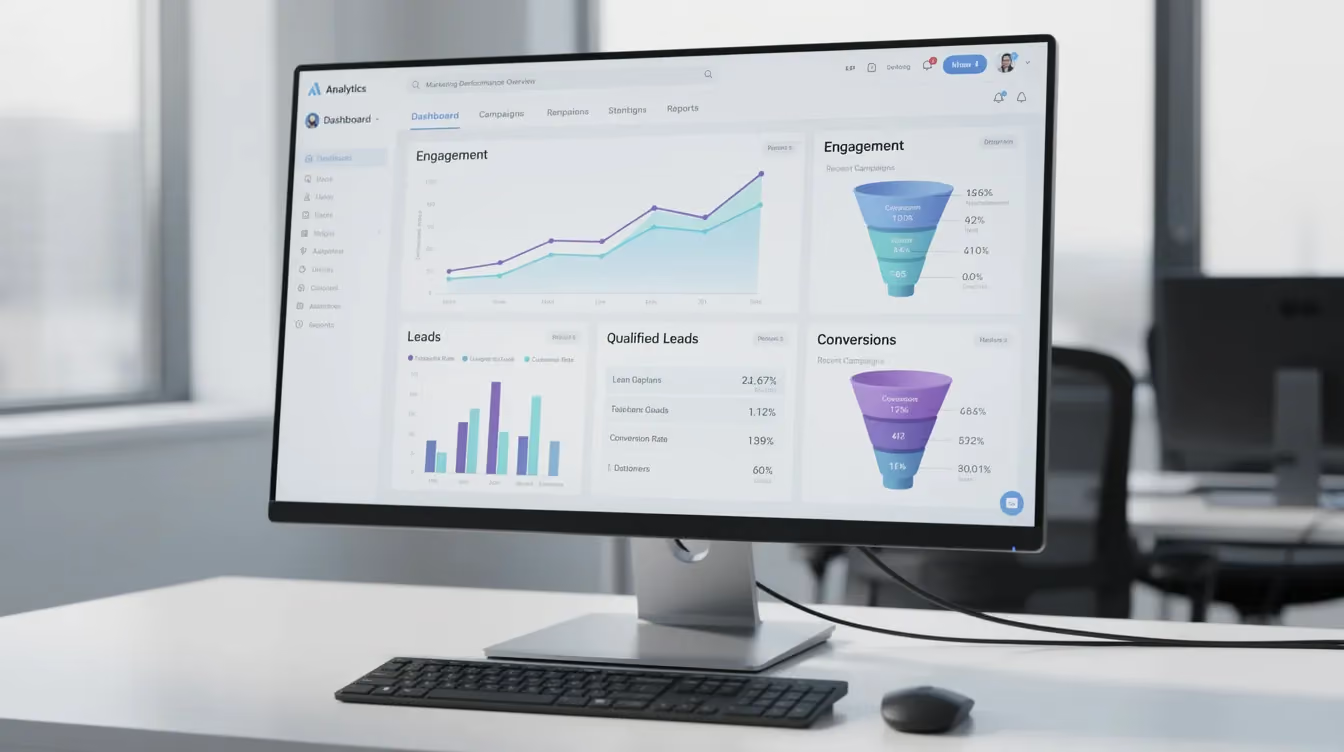
If video case studies are meant to support business goals, their performance should be measured beyond view counts.
Focus on three levels of impact.
Engagement
Start with how viewers interact with the video content. Track average watch time, completion rate, click-through rate, and engagement across social media platforms. If viewers consistently watch most of the story, the structure and key message are working.
Sales Influence
Measure whether case study videos are being used in sales conversations and whether they affect deal progression. Compare conversion rates between prospects who viewed the case study video and those who did not. Relevant video examples often help move hesitant buyers forward.
Revenue Impact
Look at broader outcomes such as win rates, deal size, and overall pipeline movement. When case study videos clearly connect pain points to tangible results, they can influence revenue growth by increasing confidence in the decision.
For many companies, tracking how case study videos influence pipeline progression reveals their true value as a sales enablement asset rather than just a marketing piece.
Conclusion
Video case studies are one of the most effective ways to build trust and support sales.
They show a specific customer problem, explain how the business solves it, and prove the outcome with tangible results. That clarity makes them stronger than generic customer testimonials.
While many businesses create one or two case study videos, the real impact comes from building a structured library of proof aligned with different industries, pain points, and stages of the funnel.
If you are considering investing in professional video case studies, focus on clarity, strategy, and measurable outcomes from the start. The right approach turns customer stories into long-term revenue assets.
Start with one strong customer story. Focus on measurable impact. Keep the message clear.
Many organizations underestimate how much structure and messaging strategy impact performance. Execution quality often determines whether a case study video becomes content or becomes a true sales asset.
FAQs About Video Case Studies
What is a video case study?
A video case study is a structured customer story on camera that explains a specific problem, the solution implemented, and the measurable results achieved.
How long should a case study video be?
Most video case studies perform best at 2 to 4 minutes. Short versions under 90 seconds work well on social media platforms.
What makes a good case study video?
A good case study video has a clear story arc, real pain points, authentic on camera interviews, visual proof, and measurable results tied to business goals.
Are video case studies effective?
Yes. Video case studies build trust, increase customer engagement, and help potential customers make decisions with more confidence.
What is the difference between a testimonial and a case study video?
A testimonial is a short endorsement. A case study video is a structured story that includes context, challenges, solution details, and tangible results.
Build trust and accelerate conversions
Contact us today. We'd love to help you supercharge your sales conversions.