Get a Video Gap Analysis for your company · See which videos could have the biggest pipeline impact
See Where Your Competitors Are Winning With Video Get a custom Video Gap Analysis for your company · See which videos could have the biggest pipeline impact
Thanks - our team will review your website and put together your personalized Video Gap Report. Expect it atthe email address you provided within 2 business days.
We'll put together a personalized report showing where video could have the biggest impact, how your competitors are using it, and specific opportunities for your team. You'll get strategic recommendations, not generic advice.
Thank you! Your submission has been received!
Oops! Something went wrong while submitting the form.
Healthcare Marketing Case Studies: Customer Story Examples for Health Tech and Medical Brands
Learn how healthcare and health tech brands create credible case studies using measurable outcomes, customer proof, and compliant video.
August 17, 2026
In healthcare marketing, customer case studies document how a health tech product, medical device, healthcare service, or clinical solution produced a meaningful result. They may document improved patient outcomes, more efficient workflows, reduced costs, faster adoption, or another measurable change.
These stories are especially important in healthcare because buyers need more than a compelling value proposition. They need credible evidence that a solution works in a regulated, high-stakes environment.
The strongest healthcare marketing case studies combine:
A clearly defined clinical or operational problem
A specific explanation of the solution and implementation
Measurable, supportable results
Firsthand insight from patients, clinicians, staff, or healthcare leaders
Appropriate consent, privacy safeguards, and compliance review
This guide examines healthcare case study examples, explains what makes them effective, and outlines how to capture customer proof without creating unnecessary compliance or production friction.
Why Healthcare Marketing Case Studies Matter
Healthcare buyers evaluate proof differently from buyers in most other industries.
A typical B2B buyer may focus on efficiency, revenue, cost, or ease of use. A healthcare buying committee may weigh all of those factors alongside patient safety, clinical outcomes, integration requirements, data security, regulatory exposure, and staff adoption.
A weak case study says that a customer was satisfied. A strong healthcare case study helps a prospective buyer answer questions such as:
Did the solution produce a meaningful clinical or operational result?
Did it integrate with the organization's existing systems?
How difficult was implementation?
Did clinicians and staff actually use it?
Were the outcomes measured and verified?
Would the solution work in an organization like ours?
For healthcare and health tech brands, a credible customer story can reduce perceived risk more effectively than another page of product claims.
Healthcare Marketing Case Study Examples
The following healthcare marketing examples demonstrate different ways to combine human stories, operational detail, and measurable evidence.
1. BrainRobotics: Connecting Medical Technology to Patient Impact
Rather than relying only on technical product information, the story combines patient interviews, product footage, and visual explanation. This allows viewers to understand both how the technology works and what that technology means in a person's daily life.
Why it works: The patient remains at the center of the story. The product is important, but the emotional and practical impact gives the technology meaning.
What healthcare marketers can learn: For medical devices and patient-facing technology, combine product education with a firsthand account of life before and after adoption. Showing the person and the product together makes technical innovation easier to understand and trust.
2. Qventus and Jackson Health System: Leading With Measurable Operational Results
The case study provides specific organizational context, identifies the systems involved, explains how the solution was deployed, and highlights measurable outcomes. Reported results include a reduction in mean excess days, annualized savings, and increased operating room utilization.
Why it works: The case study does not stop at saying the platform improved efficiency. It identifies where the inefficiency occurred, how the technology fit into existing workflows, and what changed after implementation.
What healthcare marketers can learn: B2B health tech case studies should connect product capabilities to the operational metrics healthcare leaders already track. Specificity makes the proof more credible and more useful during a sales conversation.
3. Texas Children's Hospital: Connecting Process Changes to Clinical Outcomes
The story reports measurable outcomes, including a reduction in unnecessary chest X-rays, shorter average length of stay, and increased use of standardized asthma care plans.
Why it works: The story links a specific process change to both clinical and operational outcomes. Readers can see what changed, how it was measured, and why the result mattered.
What healthcare marketers can learn: Clinical outcomes become more persuasive when the case study explains the process behind them. Avoid presenting a dramatic statistic without enough context to understand what produced it.
Patient Stories vs. B2B Health Tech Case Studies
Patient stories and B2B health tech case studies are different assets designed for different audiences.
Patient Stories
Patient stories focus on an individual's care or product experience. They are typically created for patients, caregivers, clinicians, and the general public.
The strongest patient stories highlight quality of life, access to care, confidence, treatment experience, or the personal impact of a healthcare product or service. They are usually more emotional and experience-focused than B2B case studies.
Clinician Testimonials
Clinician testimonials feature a provider discussing their professional experience with a product, service, or process. They are most relevant to physicians, clinical leaders, healthcare administrators, and other buyers.
These testimonials may address clinical value, usability, workflow fit, staff adoption, or patient impact. Because the insight comes from a healthcare professional, it can carry significant weight with buyers facing similar challenges.
Health System Case Studies
Health system case studies focus on a healthcare organization and the results it achieved. Their primary audiences include executives, IT leaders, procurement teams, administrators, and clinical leadership.
These stories typically cover efficiency, cost savings, integration, patient capacity, staff adoption, and measurable clinical or operational outcomes. For B2B health tech brands selling to hospitals or healthcare networks, this is often the most valuable type of customer proof.
Medical Device Case Studies
Medical device case studies show how a device performs in a real clinical or patient setting. They may be created for providers, purchasing teams, distributors, patients, or investors.
A strong medical device case study can address usability, implementation, clinical application, provider experience, and real-world patient impact. Combining professional insight with patient experience can make the technology easier to understand and trust.
A patient story is typically more emotional and experience-focused. It can build trust with prospective patients or help a medical brand demonstrate the human impact of its product.
A B2B health tech case study focuses on the healthcare organization as the customer. It addresses the outcomes that administrators, clinicians, IT teams, and procurement leaders need to evaluate before approving a purchase.
Both formats can be valuable, but they require different interview strategies, approval processes, and supporting evidence.
What Should a Healthcare Marketing Case Study Include?
A strong healthcare marketing case study should include the customer context, the original challenge, the solution, the implementation process, measurable outcomes, and direct customer insight.
CaseLeap's broader case study structure and template can be adapted for healthcare by giving additional attention to clinical relevance, integration, adoption, privacy, and claim substantiation.
1. Customer and Healthcare Context
Briefly identify the organization, care setting, patient population, or use case.
Relevant context may include:
Type and size of organization
Number of facilities or departments involved
Relevant patient or clinical population
Existing EHR or technology environment
Teams involved in the decision and implementation
Include only the information needed to help a prospective buyer determine whether the story is relevant to their organization.
2. The Clinical or Operational Challenge
Define the problem precisely.
"Improving efficiency" is too broad. Stronger challenges include:
Discharge planning relied on manual spreadsheets
Staff could not identify open operating room capacity quickly
Clinicians spent excessive time on repetitive documentation
Patients had difficulty understanding how to use a device
Scheduling delays limited access to care
A lack of standardization created inconsistent results
The challenge should describe what was happening before the solution and why it mattered.
3. The Solution and Implementation
Explain how the product, service, or process addressed the problem.
Healthcare buyers often need more implementation detail than buyers in other industries. Include information about:
Integration with the EHR or existing technology
Departments and stakeholders involved
Implementation timeline
Training and onboarding
Workflow changes
Security and compliance review
Barriers encountered during rollout
An overly polished story that removes every sign of difficulty can sound less credible. If implementation required adjustments, explain how the team handled them.
4. Clinical, Operational, or Financial Outcomes
Lead with specific outcomes that can be supported.
Depending on the solution, useful healthcare case study metrics may include:
Length of stay
Readmission rate
Time saved per task or patient
Staff adoption rate
Scheduling or documentation errors
Patient throughput
Operating room utilization
Time to treatment
Cost savings
Capacity created
Patient or provider satisfaction
Training and onboarding time
"Reduced medication reconciliation time" is stronger than "improved efficiency." A quantified result is even better when the methodology and customer approval allow it.
5. Customer Perspective
Include direct insight from someone who experienced the problem and the result.
That person might be:
A physician or clinical leader
A nurse or frontline staff member
An IT or security leader
A hospital administrator
A practice manager
A patient or caregiver
A product user
Different voices support different claims. A chief operating officer can speak credibly about organizational impact, while a nurse may be better positioned to explain how a tool changed a daily workflow.
6. Evidence and Claim Review
Every objective claim should be supportable, and this is particularly important for health-related products.
The FTC's Health Products Compliance Guidance explains that express and implied health-related advertising claims must be truthful, not misleading, and appropriately substantiated.
A customer interview does not automatically make a claim safe to publish. Before final approval:
Confirm the source of every statistic
Clarify the measurement period
Avoid implying that one customer's result is guaranteed
Review claims about safety, efficacy, or clinical performance
Obtain approval from the customer and appropriate legal or compliance teams
This article provides general marketing guidance and should not be treated as legal or regulatory advice.
HIPAA, Privacy, and Consent for Healthcare Video Testimonials
HIPAA does not automatically apply to every healthcare brand, interview, or video. Its application depends on factors such as who is creating the content, whether the organization is a covered entity or business associate, and whether protected health information is being used or disclosed.
However, healthcare video projects can create serious privacy concerns when patients, records, treatment details, or identifiable health information appear in the footage. Compliance and legal teams should therefore be involved early.
When HIPAA Authorization May Be Required
The HHS guidance on HIPAA and marketing explains that covered entities generally need an individual's valid authorization before using or disclosing protected health information for marketing, subject to defined exceptions.
If a patient testimonial reveals protected health information, a standard appearance release may not be sufficient. The organization may require a HIPAA-compliant authorization describing the information being disclosed and how it will be used.
Your legal or compliance team should determine the required documentation for the specific project.
Patient Consent and Release Forms
A patient who appears in a marketing video should receive a clear explanation of:
What information will be shared
How the footage will be used
Where the video may appear
How long the permission will remain in effect
Whether edited versions or short clips may be created
Whether and how authorization may be revoked
Complete this process before filming. Trying to resolve consent after production can make otherwise valuable footage unusable.
Staff and Clinician Releases
Clinician and staff interviews do not automatically involve protected health information. However, organizations commonly require appearance releases, employer approval, messaging review, or compliance sign-off before employees participate in public marketing.
Clarify who can speak on behalf of the organization and who has final approval over the finished asset.
What Should Be Kept Out of the Frame?
Before recording in a healthcare environment, review the background for:
Other patient faces or voices
Names on doors, screens, boards, or wristbands
Medical records and forms
Computer screens displaying patient information
Appointment schedules
Prescription labels
Conversations occurring nearby
Distinctive details that could identify a patient indirectly
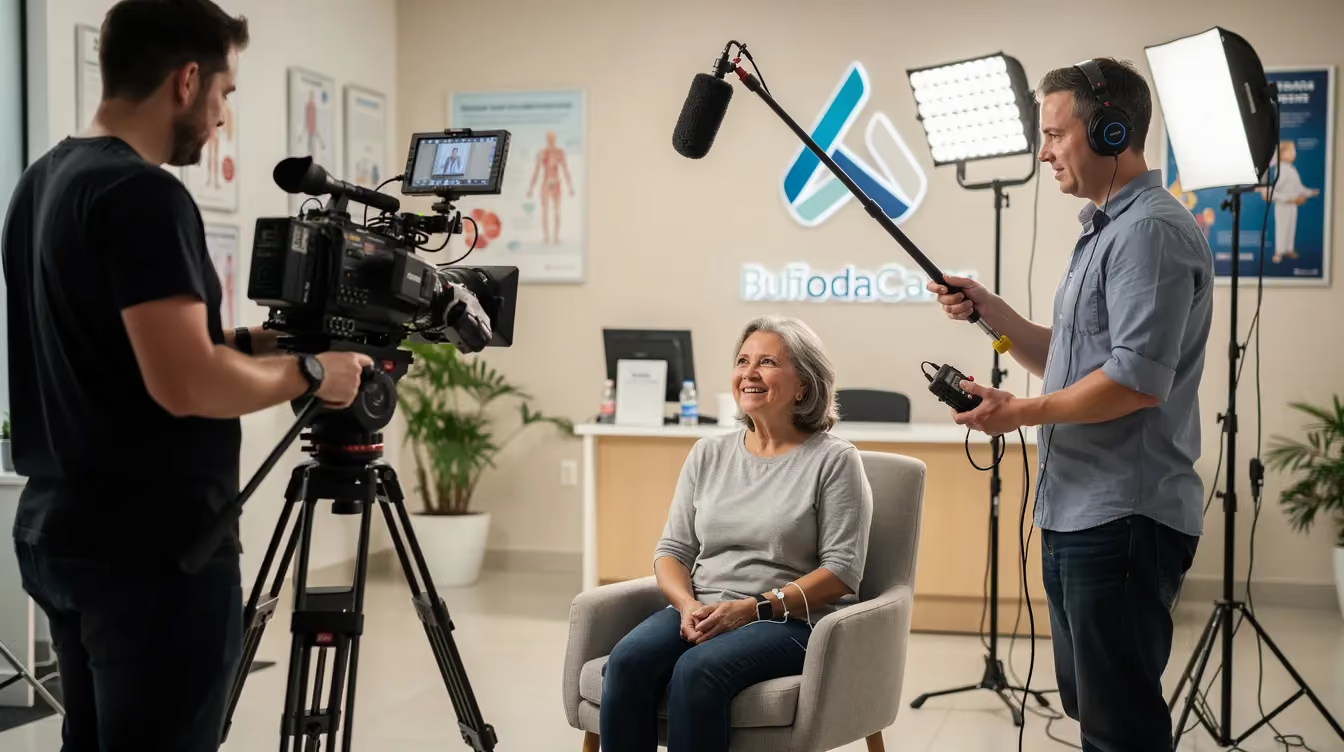
A professional on-site testimonial production should account for privacy during location planning, filming, and editing, rather than relying on post-production to fix every issue.
How to Get Healthcare Customers Comfortable Participating
Healthcare organizations are often willing to share a successful result. The problem is usually the time, risk, and internal coordination involved.
The best way to increase participation is to reduce those burdens from the beginning.
Bring the Approval Process Up Front
Before inviting someone to participate, define:
The purpose and intended audience
The topics that will be discussed
The filming or recording format
Where the final content will appear
Who will review and approve it
What information must remain private
Whether anonymization is available
CaseLeap's guide to securing customer testimonials provides a broader framework for managing the request and reducing participation friction.
Respect the Customer's Time
Send a preparation guide, schedule a short pre-interview, and keep the recording process focused. Participants should know the general topics in advance without being asked to memorize scripted answers.
Offer Final Review
Giving the organization a defined review period can remove a major source of hesitation. Establish how many people will review the video, how feedback will be consolidated, and which types of edits remain possible after filming.
Without a defined review process, a case study can become trapped in an endless approval cycle.
Provide Anonymized Alternatives
If the organization cannot be named, the story may still be useful.
An anonymized case study can identify the customer as:
A regional health system
A multi-location specialty practice
A national healthcare organization
A 300-bed community hospital
A medical device manufacturer
The case study can then focus on the challenge, implementation, and approved results without revealing the organization's identity.
Offer Remote and On-Site Recording
For flagship customers or stories where the clinical environment adds credibility, on-site production is usually the stronger choice.
For busy clinicians, geographically dispersed participants, or a larger customer story program, remote testimonial recording can reduce scheduling and logistical barriers.
How to Use Healthcare Case Studies Across Marketing and Sales
A healthcare case study should be planned as a reusable proof asset, not a single blog post or video. It can be a fundamental asset in your marketing strategy if used correctly.
One interview can support:
A full video case study
A written case study
Short clinician or customer clips
Sales presentation segments
Website testimonial sections
Paid social ads
YouTube and video ads
Conference presentations
Email and sales outreach
ABM campaigns
Longer versions can provide implementation detail for late-stage buyers. Shorter edits can introduce the customer and result in ads, email, or social content.
The strongest content strategy matches each case study to a buyer, use case, or objection. A hospital CIO may need evidence about integration and security, while a clinical leader may care more about adoption and patient outcomes.
Turn Healthcare Results Into Credible Customer Proof
Healthcare buyers do not need more vague claims. They need evidence that a solution worked in a real organization, under real clinical and operational constraints.
A strong healthcare marketing case study explains the original problem, documents how the solution was implemented, and presents measurable results through the voices of people who experienced them.
CaseLeap helps B2B health tech, healthcare, and medical brands capture customer stories through professional testimonial video production. Projects can be recorded on-site or remotely and developed into video, written case studies, and supporting assets for marketing and sales.
If you have a healthcare customer success story worth sharing, talk to CaseLeap about turning it into credible, reusable proof.
Frequently Asked Questions
What is a healthcare marketing case study?
A healthcare marketing case study documents how a healthcare product, service, or solution addressed a specific clinical, operational, or patient problem. It typically includes customer context, implementation details, measurable results, and firsthand customer insight.
What should a healthcare case study include?
A healthcare case study should include the customer context, original challenge, solution, implementation process, staff adoption, integration details, measurable results, and direct insight from an appropriate customer, clinician, or patient.
What makes a healthcare case study credible?
Specificity makes a healthcare case study credible. Strong stories identify the original problem, explain how the solution was implemented, provide supportable results, name the measurement period when possible, and include relevant customer perspectives.
Are patient testimonials and B2B health tech case studies the same?
No. Patient testimonials focus on an individual's care or product experience. B2B health tech case studies focus on organizational outcomes such as efficiency, cost, integration, capacity, clinical workflows, and staff adoption.
Does HIPAA apply to healthcare video testimonials?
It depends. HIPAA may apply when a covered entity or business associate uses or discloses protected health information. A patient testimonial that reveals identifiable health information may require specific authorization. The organization should have its legal or compliance team review the project.
Can a patient's face appear in a healthcare testimonial video?
Potentially, but only after the organization confirms that the appropriate informed consent, release, and any required HIPAA authorization have been completed. The exact requirements depend on the organization, information disclosed, and intended use.
Can a healthcare case study be anonymous?
Yes. An anonymized healthcare case study can describe the type and size of the organization, the problem, the implementation, and approved results without revealing the customer's identity or protected information.
Should a healthcare case study be written or video?
Both formats are useful. Written case studies provide detail and are easy to search, scan, and share. Video adds human credibility through the customer's voice, expression, and environment. Many healthcare brands produce both from the same interviews.
How long should a healthcare case study video be?
Most primary healthcare case study videos run approximately two to four minutes. Shorter edits of 30 to 90 seconds can be created for websites, sales outreach, social media, and advertising.
What healthcare outcomes should a case study measure?
Relevant outcomes may include length of stay, readmissions, patient throughput, staff time saved, adoption, operating room utilization, cost savings, error reduction, time to treatment, capacity, and patient or provider satisfaction. The metrics should match the problem the solution was designed to address.
Build trust and accelerate conversions
Contact us today. We'd love to help you supercharge your sales conversions.