Get a Video Gap Analysis for your company · See which videos could have the biggest pipeline impact
See Where Your Competitors Are Winning With Video Get a custom Video Gap Analysis for your company · See which videos could have the biggest pipeline impact
Thanks - our team will review your website and put together your personalized Video Gap Report. Expect it atthe email address you provided within 2 business days.
We'll put together a personalized report showing where video could have the biggest impact, how your competitors are using it, and specific opportunities for your team. You'll get strategic recommendations, not generic advice.
Thank you! Your submission has been received!
Oops! Something went wrong while submitting the form.
Case Study Example: Structure, Template & Video Examples
Examples & tips to create content that influences business decisions.
July 7, 2026
Case Study Example: Structure, Template & Video Examples
A strong case study example shows how a company handled a specific situation and achieved a measurable outcome. In business, it is not about theory. It is about clear data and real results that decision makers can assess quickly.
Case studies are important because buyers want proof. Whether presented in written format or as video case study examples, the goal is the same. Demonstrate what happened, how it was handled, and what outcome followed.
In this article, we break down the essential structure, review practical examples, and analyze how modern video case studies are used to support real business decisions.
What Is a Case Study?
A case study is a detailed analysis of a specific case where a company solved a defined challenge and achieved measurable results.
In business, a case study exists to help customers assess risk, evaluate value, and understand what actually happened in a real-world situation.
A strong business case study includes:
Client background and industry context
The specific challenge
The process or solution implemented
Supporting data and measurable outcome
A short summary of key insights
At its core, a case study answers one question: what changed, and why?
If that answer is clear, the case study becomes a powerful decision-making resource.
Why Case Studies Are Important in Business
Case studies are essentially important because buyers want proof. Claims are easy. Data is harder to ignore.
A structured case study gives decision makers:
Real context
Measurable results
Clear before-and-after comparison
Evidence tied to marketing, management, or operational performance
When customers can see what happened in a specific situation, trust increases. That clarity often influences buying decisions more than product features alone.
Standard Case Study Structure (Universal Case Study Template)
A clear case study template makes your analysis easier to understand and easier to reuse. Structure matters. Decision makers scan before they read. If the format is confusing, the value gets lost.
Most effective case studies follow a consistent structure:
1. Context and Client Background
Introduce the company, industry, and relevant details. Help readers understand the specific situation and why it mattered.
2. The Challenge
Identify the problem clearly. What was happening before? What obstacles or security concerns were involved? Be specific.
3. The Process and Solution
Explain what actions were taken. Describe the processes, team involvement, and management decisions that shaped the response.
4. Data and Outcome
Present measurable results. Use real numbers where possible. What changed? What has improved? What happened after implementation?
5. Summary and Key Insights
Close with a short summary that highlights the most important point. Why does this example matter for similar customers?
When you write a case study using a structured template, you make it easier for readers to assess the value quickly. The goal is clarity, not complexity. A strong structure turns research and experience into practical applications that support real business decisions.
Case Study Template Example (Step by Step Business Scenario)
Below is a practical case study example that follows the structure outlined above. This scenario reflects a common business challenge in a specific situation.
Client Context
The company operates in the marketing software industry. It provides automation tools for mid-sized B2B organizations across multiple industries. The management team noticed slowing growth despite steady website traffic.
The Challenge
Demo bookings had stalled for two quarters. Marketing campaigns were generating interest, but customers were not converting into qualified opportunities. Internal analysis showed that prospects lacked clear proof of measurable success.
The team identified a gap. They had features and data, but no documented case study that demonstrated real-world outcomes.
The Process
The company selected a specific case involving a long-term client. They gathered data from accounting and marketing reports, interviewed the client’s management team, and analyzed performance metrics before and after implementation.
They structured the case study around:
The client’s original challenges
The processes involved in deployment
Measurable performance improvements
Direct insights from the client
The Outcome
Within three months of publishing the case study, the company reported:
38 percent increase in qualified demo requests
24 percent improvement in conversion from demo to opportunity
Higher engagement in follow-up email sequences
Sales representatives noted that prospects were better prepared during calls and asked more informed questions.
Summary
This example works because it focuses on a real case, presents clear data, and shows what actually changed. Instead of abstract theory, it provides a structured analysis that allows potential customers to assess relevance and value.
For companies managing structured case documentation at scale, platforms like CaseLeap help centralize and organize case data across teams.
What Makes a Strong Business Case Study?
Not every case study delivers value. Some present information without real analysis. Others describe a specific situation but fail to explain what actually changed.
Here are the essential aspects that separate effective case studies from weak examples:
Specific Data, Not General Claims
Saying a company improved performance is not enough. Present real numbers. Revenue growth, cost reduction, security improvements, or marketing conversion rates give readers something concrete to evaluate.
Clear Before and After Comparison
Show the difference between the initial state and the final outcome. This helps customers explore what progress looked like in practice.
Defined Process and Team Involvement
Explain what was involved. Who led the effort? What processes were implemented? Strong case studies do not skip the middle of the story.
Relevant Context for the Industry
A case study in healthcare will look different from one in accounting or software. Readers need to identify with the environment and challenges described.
Focused Structure
Avoid long, dense analysis. Break the content into logical sections so readers can quickly understand the key point.
A strong case study answers three simple questions: what was the problem, what was done about it, and what changed as a result.
When supported by data, it becomes a credible business resource.
Not every case study example meets this standard. Watch for vague outcomes, missing data, or weak structure. If the analysis leans too heavily on theory or ignores industry context, the value drops.
Video Case Studies (Modern Case Study Format)
Written case studies remain valuable, but many companies now expand their approach through video case study examples. The structure stays the same, but the format changes how the story is presented and understood.
A video case study allows customers to see and hear the client involved. Instead of reading a summary, viewers observe tone, confidence, and context directly. This often increases the ability to assess credibility, especially in industries where trust and security are critical.
Here is how a strong video case study example typically works:
Clear Introduction
The client and company are introduced quickly. Viewers understand the industry, the specific situation, and why the challenge mattered.
Defined Challenge
The client explains what was happening before the solution. This adds authenticity that written analysis cannot always capture.
Process and Implementation
The video presents how the team addressed the problem. Visual elements can show workflows, software dashboards, or operational environments to reinforce the explanation.
Measurable Outcome
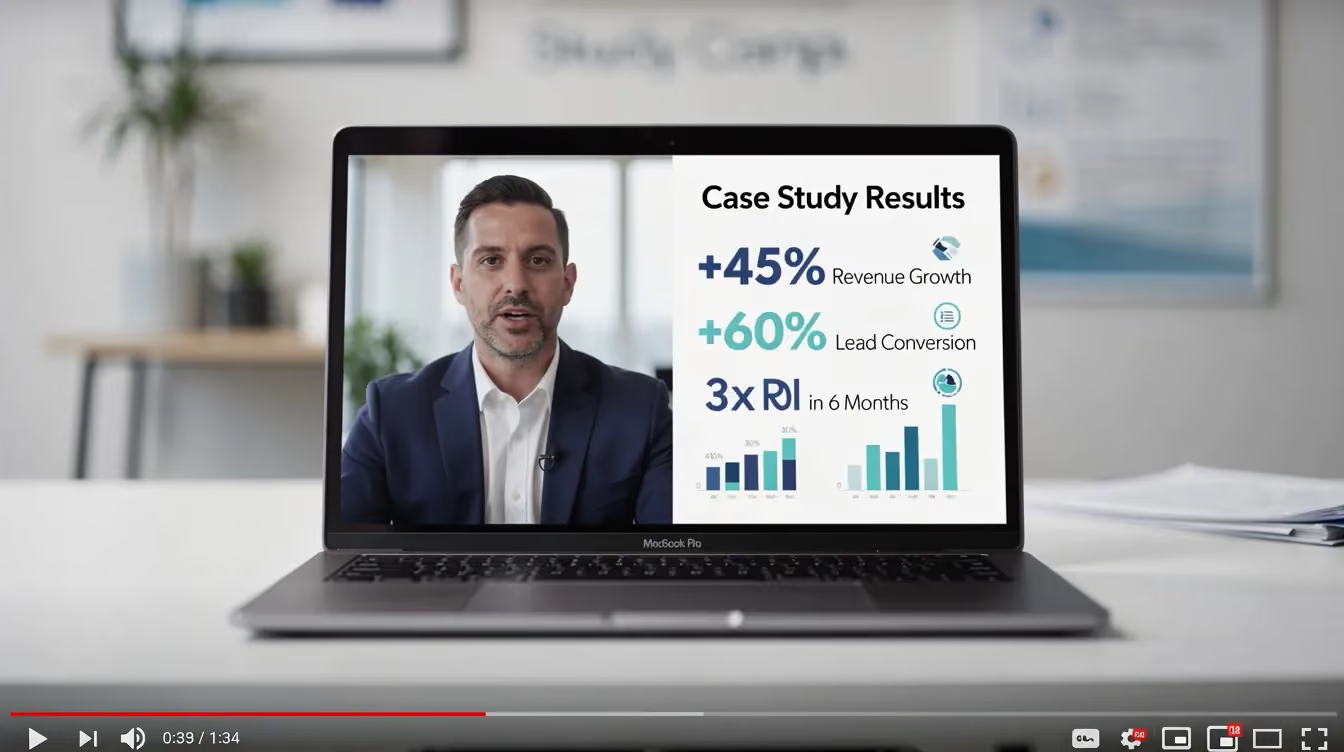
On-screen data supports the narrative. Instead of vague statements, the viewer sees real numbers tied to marketing performance, security improvements, cost savings, or operational efficiency.
Closing Insight
The client summarizes the impact in practical terms. This reinforces the value and gives prospects a clear point of reference.
Video adds emotion and real-world context that text alone cannot, strengthening persuasion in late-stage discussions.
The following video case study examples are analyzed using the same structured framework outlined earlier.
Real Video Case Study Examples
Below are real video case study examples from recognizable companies. Instead of listing them as inspiration, we will analyze their structure, process, and measurable impact.
Zoom Customer Testimonial Featuring Zendesk
Zoom presents a customer story featuring Zendesk to demonstrate how communication challenges were solved at scale.
Structure: The video opens with the client explaining the specific situation. The focus remains on the customer’s operational challenges rather than Zoom’s features. B-roll shows real use environments, reinforcing authenticity.
What Makes It Effective: The narrative follows a clear structure: challenge, implementation, outcome. Statistics are integrated naturally into the conversation instead of feeling scripted. The measurable outcome is tied to productivity and internal efficiency.
Key Insight: The success of this case study example lies in restraint. The product is present, but the client’s experience drives the analysis.
Google Ads Small Business Case Study
Google Ads highlights a small business owner who used digital advertising to expand revenue.
Structure: The story begins with personal context, then moves into business challenges. Visual footage supports the narrative, showing the real-world environment of the company.
What Makes It Effective: Clear metrics are embedded into the client’s story. Instead of abstract marketing claims, the viewer hears direct performance data. The outcome is framed in terms of growth and measurable return.
Key Insight: This video case study example succeeds because it connects emotional storytelling with concrete data. It balances human experience with structured results.
HubSpot CRM Enterprise Integration Story
HubSpot presents a case involving integration with a client’s sales team in the real estate industry.
Structure: The video emphasizes operational challenges such as siloed communication and inefficient management processes. It then transitions into a walkthrough of how the system was implemented.
What Makes It Effective: The analysis goes beyond surface-level testimonial. It shows how processes changed and how teams collaborated differently after adoption. The measurable outcome is framed around improved communication and workflow efficiency.
Key Insight: This case study example works because it documents transformation, not just satisfaction. It provides enough operational detail for potential customers to assess relevance.
Dropbox Collaboration Case Study
Dropbox showcases how its platform supports collaboration across different industries.
Structure: The video features multiple customers, each discussing a specific use case. Instead of focusing on technical features, the emphasis is on daily operational impact.
What Makes It Effective: The narrative presents consistent structure across industries. Each segment outlines a challenge, implementation, and clear outcome. The repetition reinforces credibility.
Key Insight: This video case study example demonstrates versatility. By presenting different aspects of collaboration, Dropbox expands relevance while maintaining structure.
In high-stakes environments, many companies pair structured documentation with professionally produced video case studies to strengthen credibility during evaluation stages.
Where to Use Case Study Videos
Creating a video case study example is only part of the equation. The impact depends on where and how it is used within the buyer journey.
Here are the most effective placement strategies:
Website Resource Hubs
Host video case studies on a dedicated page where prospects can explore different industries and specific situations. Organize them by vertical, challenge, or outcome to help customers quickly identify relevant examples.
Sales Presentations and Proposal Deck
Embedding short video case studies into live presentations allows teams to present real client perspectives during critical decision stages. This strengthens credibility and reduces repetitive objections.
Late-Stage Email Follow-Ups
Including a relevant video case study in follow-up communication can help prospects assess risk and understand the expected outcome more clearly.
Account-Based Marketing Campaigns
For targeted industries, case study videos can be used in personalized outreach and retargeting efforts to reinforce trust and demonstrate value within a specific context.
Internal Training and Alignment
Video case studies also support internal management and sales training. They provide structured insights that help teams understand processes, client challenges, and measurable success factors.
When used strategically, video case studies do more than support marketing. They become assets that influence different aspects of the buying process and help companies present proof at the right moment.
Conclusion
A strong case study example documents what happened, how it was handled, and what outcome followed. It replaces vague marketing language with clear data and real context.
Over time, building a disciplined approach to case study creation strengthens credibility, clarifies positioning, and helps customers make informed decisions based on evidence rather than assumption. Companies that consistently document measurable outcomes and present them clearly gain a long-term advantage in competitive markets.
FAQs
What is an example of a case study?
A case study example shows how a company handled a specific challenge and achieved measurable results. It includes client background, the problem, the solution implemented, and clear outcomes supported by data.
How do you write a case study?
Start by defining the context and the challenge. Then explain the process or solution used. Support the story with measurable results and close with a clear summary of impact.
What is the difference between a written and video case study?
A written case study presents structured analysis in text form. A video case study example uses on-camera interviews and visual context to strengthen credibility while following the same structure.
What is the best format for a business case study?
The best format follows a clear sequence: client context, defined challenge, solution process, measurable results, and key insights. This structure helps decision makers quickly evaluate relevance, risk, and potential outcomes.
What metrics should be included in a case study?
Strong case studies include metrics tied to business impact such as revenue growth, conversion rates, cost savings, efficiency gains, or pipeline increases. Specific numbers improve credibility and make results easier to assess.
When should a company use a video case study instead of written content?
Video case studies are most effective in late-stage decision making, sales presentations, and high-trust industries. They allow prospects to see real clients, hear outcomes directly, and evaluate credibility faster than text alone.
Build trust and accelerate conversions
Contact us today. We'd love to help you supercharge your sales conversions.