Get a Video Gap Analysis for your company · See which videos could have the biggest pipeline impact
See Where Your Competitors Are Winning With Video Get a custom Video Gap Analysis for your company · See which videos could have the biggest pipeline impact
Thanks - our team will review your website and put together your personalized Video Gap Report. Expect it atthe email address you provided within 2 business days.
We'll put together a personalized report showing where video could have the biggest impact, how your competitors are using it, and specific opportunities for your team. You'll get strategic recommendations, not generic advice.
Thank you! Your submission has been received!
Oops! Something went wrong while submitting the form.
Healthcare Testimonial Videos: A Complete Guide for Patient Stories, B2B Case Studies, and Recruiting
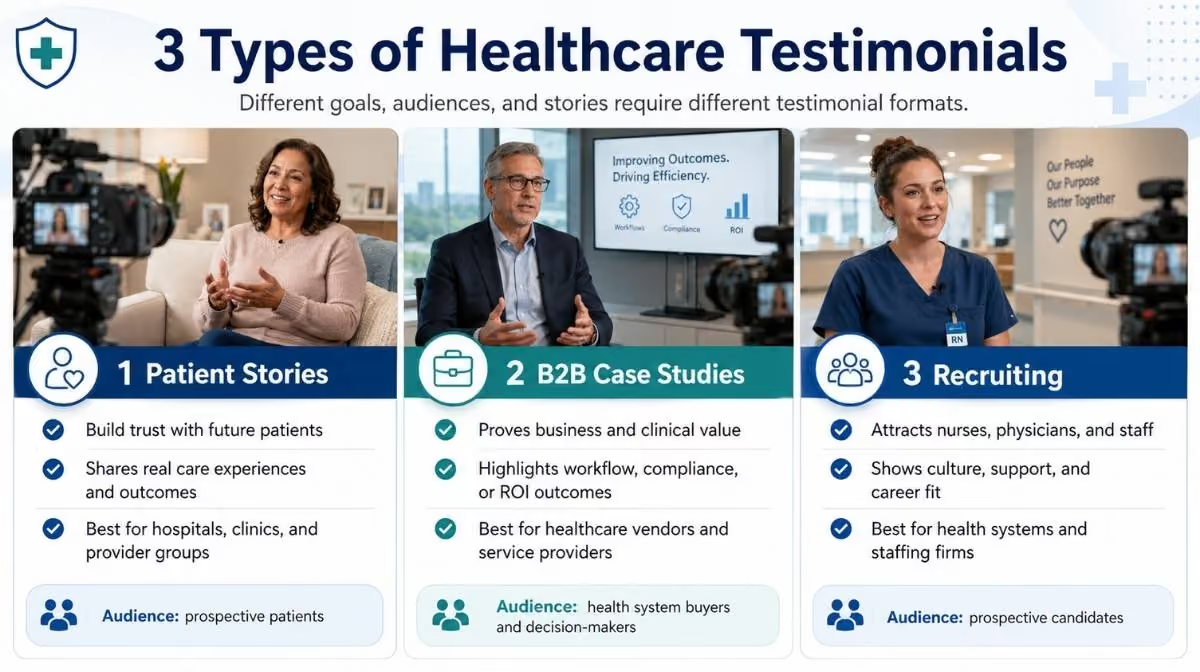
3 Types of healthcare testimonial videos for 3 distinct audiences: clients, B2B & recruits.
July 7, 2026
Healthcare Testimonial Videos: A Complete Guide for Patient Stories, B2B Case Studies, and Recruiting
Healthcare testimonial videos are one of the most effective trust-building tools in the industry.
But "healthcare testimonial" covers three distinct formats that serve completely different goals, audiences, and production requirements.
One features real patients sharing personal health experiences. One features clients and customers of healthcare vendors speaking to their experience with a product or service. And one features healthcare employees speaking to prospective candidates about what it is actually like to work there.
All three are powerful. All three require specialized production. And doing any of them wrong can create compliance exposure, missed audience fit, or content that simply does not convert.
This guide covers all three formats in full - including what makes each one work, the compliance requirements specific to each, and how to produce them correctly.
Healthcare organizations use video across a wide range of goals - patient education, staff training, recruitment, and vendor marketing.
Patient testimonial videos serve consumer-facing healthcare marketing. The audience is someone researching a provider, considering a procedure, or managing anxiety about a diagnosis. These stories build trust between healthcare organizations and the patients they serve.
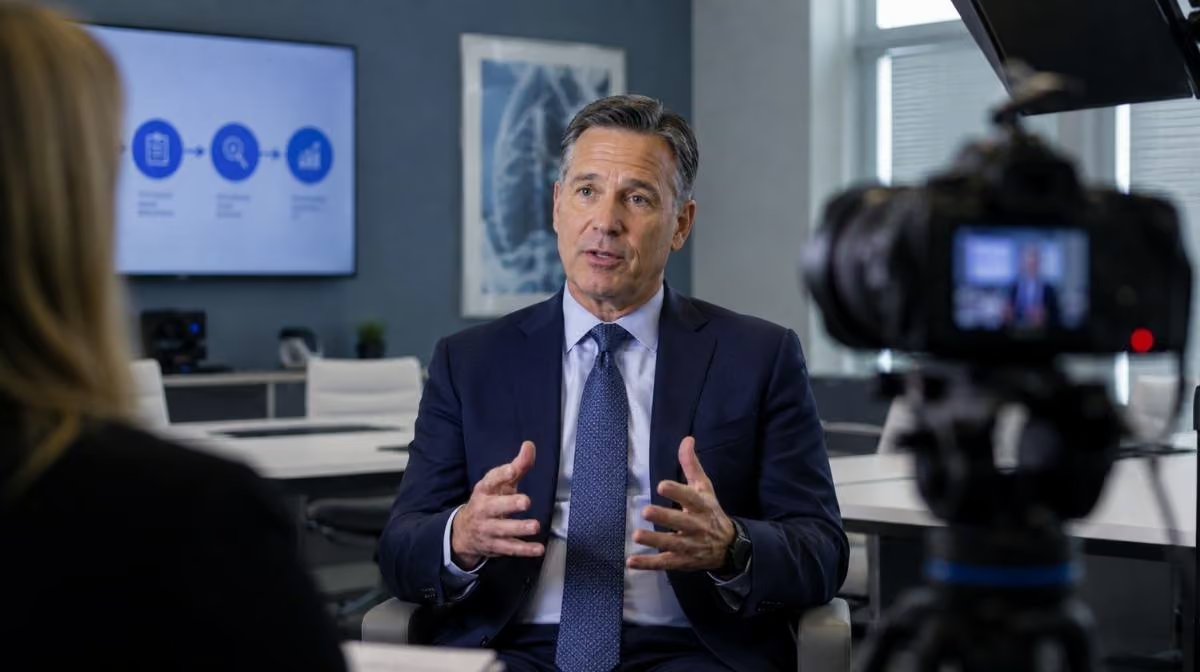
B2B healthcare testimonial videos serve vendor marketing. The audience is a health system, a procurement team, a clinical director, or an IT leader evaluating a healthcare technology, medical device, or professional service. These stories build trust between vendors and the institutional buyers they sell to.
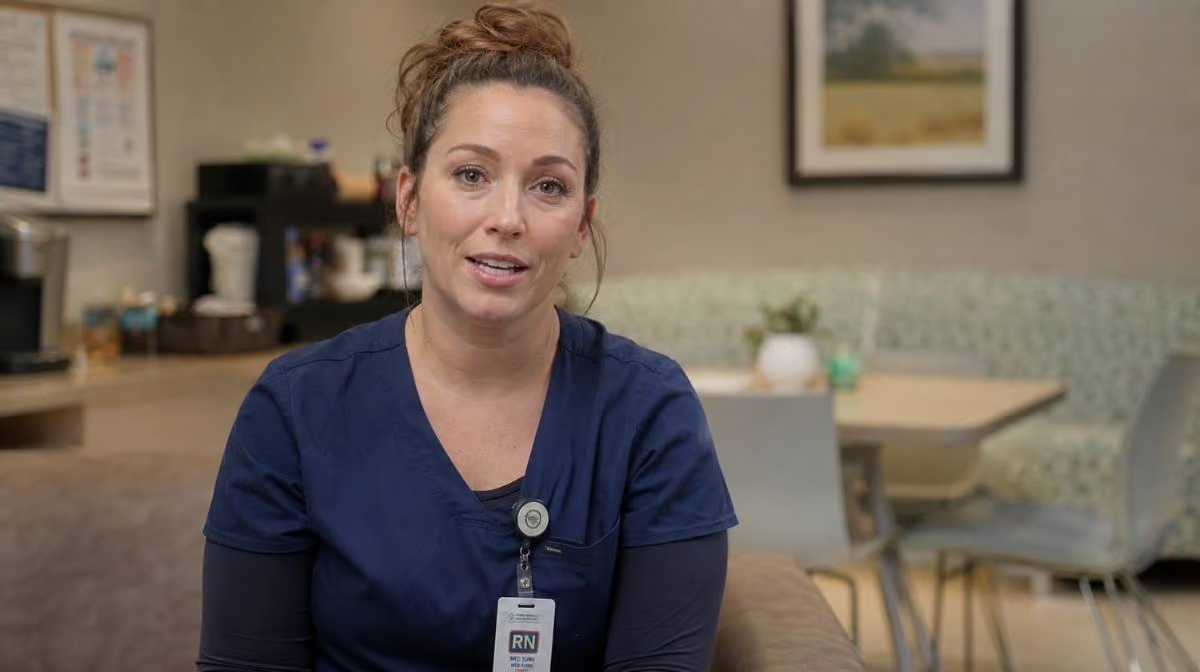
Employee recruitment testimonials serve healthcare talent acquisition. The audience is a prospective nurse, physician, technician, or administrator evaluating whether your organization is worth joining. These videos build employer brand credibility in a labor market where healthcare talent has significant options and is actively researching culture and career fit before applying.
The compliance requirements are different across all three. The storytelling approach is different. The distribution channels are different.
If you produce patient-facing content for a hospital, health system, or provider group, the next section is for you. If you sell to healthcare organizations and need peer-validated proof for enterprise buyers, skip ahead to the B2B section. If you are recruiting clinical or administrative talent, the employee section covers what you need. If you produce more than one type, read the whole thing.
Patient Testimonial Videos: Building Trust with Future Patients
Why They Work
A patient researching a procedure or choosing a provider is carrying a lot. Anxiety. Uncertainty. The weight of a decision that affects their health or their family's.
Reading a five-star rating does not move that needle much. Watching a real person describe their experience - in their own words, with visible emotion and relief - does something different. It makes the decision feel less risky. It creates a connection before the first appointment.
Patient testimonials are one of the highest-performing content types for healthcare consumer marketing because they tap into something no other format can: genuine, documented human experience.
What Makes a Strong Patient Testimonial
The best patient testimonials follow a simple arc. What the patient was facing. Why they chose your organization. What their experience was actually like. How their life changed after care.
That last part matters most. Outcomes, not just satisfaction.
A patient saying "the staff was wonderful" is pleasant but forgettable. A patient explaining how a diagnosis changed their life and why your team made the difference is a story a prospective patient remembers.
Key elements that make patient testimonials perform:
Specificity. Real details. The diagnosis. The procedure. The moment things turned around.
Authentic emotion, not performed. This comes from interviewing rather than scripting.
Relatability. The viewer should see themselves in the story.
A clear outcome. Something measurably changed for this person.
Types of Patient-Facing Healthcare Testimonial Videos
Different patient stories serve different marketing goals. Here are the formats that work best in consumer healthcare.
Facility and Care Experience Stories A patient describes what it was actually like to receive care at your hospital, clinic, or specialty center. These work well for health systems competing on patient experience, comfort, or accessibility. The story is less about a specific outcome and more about the environment, the staff, and how the patient felt throughout their care journey.
Condition and Treatment Stories A patient walks through their diagnosis, the treatment they received, and how their life changed as a result. These are the highest-performing format for service line marketing because they speak directly to prospective patients facing the same condition. Specificity is what makes them credible.
Medical Device Patient Stories A patient describes life before and after a device, whether that is a joint replacement, a cardiac device, a hearing aid, or a wearable therapy. These work well for device manufacturers marketing directly to patients or supporting provider adoption by showing patient-side outcomes.
Physician and Provider Features A doctor, surgeon, or specialist speaks to their clinical philosophy, their approach to patient care, and why they chose their specialty or institution. These are not traditional testimonials but function similarly - building trust with prospective patients who are choosing a provider, not just a procedure. Doctor interviews also pair well alongside patient stories to give both the clinical and personal perspective.
Caregiver Stories A family member or caregiver shares their experience supporting a patient through treatment or long-term care. These resonate strongly for pediatric, oncology, memory care, and senior care marketing, where the decision-maker is often not the patient themselves.
Multi-Format Stories A patient story paired with their physician or care team, each speaking to the same experience from their own perspective. These add clinical credibility to emotional patient narratives and work especially well for complex procedures or chronic condition management.
HIPAA and Consent Requirements for Patient Testimonials
Patient testimonials carry stricter compliance requirements than B2B testimonials because they inherently involve personal health information.
Every patient participant needs a signed HIPAA-compliant authorization form before filming. A standard media release is not enough. The authorization needs to specifically cover the health information being disclosed, the purpose of the disclosure, who will see it, where it will be distributed, and the participant's right to revoke consent.
This is separate from any treatment consent the patient has already signed. Marketing use requires its own authorization. For more on HIPAA authorization requirements, visit the HHS HIPAA resource page.
Key compliance considerations:
Authorization must be voluntary and documented before any filming begins
Participants should understand exactly where the video will be used
Compensation arrangements, if any, must be disclosed per FTC guidelines
Review with legal or compliance counsel before distribution, especially for condition-specific or treatment-specific claims
Patients can revoke authorization after filming. Build a process for handling revocations so you can pull content from distribution quickly if needed.
Production Considerations for Patient Testimonials
The biggest mistake in patient testimonial production is over-scripting. Rigid talking points kill the authenticity that makes these videos work. Use open-ended interview prompts and let participants speak in their own voice.
Filming location matters. A sterile, clinical backdrop can reinforce anxiety rather than reduce it. Where possible, film in warm, comfortable environments that reflect the care experience you want to convey.
Crew size should be small. Two to three people maximum. A large production crew makes participants self-conscious and changes how they speak.
Practical considerations:
Film at facility locations with appropriate access approvals
Use professional audio capture. Clinical spaces have background noise, PA systems, and equipment hum that will ruin footage
Burned-in or toggleable captions are essential. Most viewers watch without sound
Shoot enough b-roll to support the story visually without relying entirely on talking head footage
Produce a hero video of two to three minutes and shorter cuts of sixty seconds or less for social and paid distribution
High-impact placements include condition-specific service line pages, homepage trust sections, physician bio pages, and paid social targeting relevant demographics. Patient testimonial videos also perform well in email nurture sequences for prospective patients who have shown interest but have not yet booked.
B2B Healthcare Testimonial Videos: Building Trust with Enterprise Buyers
Why They Work Differently
Healthcare B2B sales cycles are long. A single vendor evaluation typically involves a CMO, clinical director, IT leader, compliance officer, and procurement team. Each of them needs to feel confident before signing off.
Written case studies and reference calls help. But neither one lets a skeptical buyer watch a real peer - someone in a comparable role at a comparable organization - speak directly to what they experienced. That visibility carries weight in a room full of decision-makers who have seen every polished sales deck in the industry.
Video captures tone, confidence, and specificity in a way no written format can. When a CMIO describes a successful EHR integration on camera, you hear the conviction. You see the body language. That is what moves a deal forward.
Types of B2B Healthcare Video Testimonials
Different stories serve different buyers and different stages of the sales cycle.
Health IT and Software Implementation A clinical director or IT leader walks through how your platform integrated with existing systems, reduced friction, and drove adoption across the organization. These are especially effective with health IT procurement teams evaluating interoperability and change management risk.
Medical Device Success Stories A physician or department head describes measurable clinical improvements after implementing your device. Specific outcomes and quantified patient impact make these highly credible with procurement teams and clinical leadership who need peer validation before signing off.
Operational Improvement Stories A COO or VP of Operations speaks to workflow changes, cost reductions, or efficiency gains your solution delivered at scale. These land best with operations-focused buyers who want to see demonstrated ROI before a committee review.
Regulatory and Compliance Wins A compliance officer or risk manager explains how your product helped the organization meet accreditation requirements or pass a critical audit. These are underused but highly effective, especially for vendors selling into risk-averse health systems where compliance is a primary purchase driver.
Multi-Stakeholder Stories Two or three voices from the same organization, each speaking to their own experience with your solution. A clinical lead, an IT director, and an operations manager covering their respective angles. These work especially well for enterprise deals where multiple buyer types need to feel represented before a decision gets made.
For a closer look at how written case studies can complement video testimonials in B2B healthcare sales cycles, CaseLeap produces both.
HIPAA and Compliance Requirements for B2B Healthcare Testimonials
Even when patients are not on camera, filming inside clinical settings carries compliance requirements.
If your production vendor handles footage shot inside a covered entity, a Business Associate Agreement is likely required. This legally binds your production partner to HIPAA safeguards and defines how raw footage is stored, transferred, and handled throughout post-production.
Every on-camera participant needs a media release covering video, audio, and image use. A general consent form is not enough. The release should specify distribution channels, duration, and scope of use.
Raw footage captures more than intended. Whiteboards with patient names. Monitor screens showing clinical data. Background audio from nearby conversations. Every frame needs a compliance review before distribution, not just the final cut.
If a customer claims your platform reduced costs by 40% on camera, the FTC expects substantiation. Specific performance claims need to be documented and defensible before the video goes live.
Selecting the Right Customers
Not every satisfied customer makes a strong candidate. Look for people who have a specific measurable outcome they can speak to, are comfortable on camera, have organizational clearance to participate publicly, and have no competitive non-disclosure restrictions that would limit what they can say.
Large health systems often need four to six weeks for legal and communications approval. Build that into your outreach timeline early. A short pre-interview call helps you assess story clarity and compliance readiness before committing to a shoot.
Healthcare facilities are active clinical environments. Production here requires more coordination than a standard office shoot.
Most hospitals and health systems require advance approval from facilities management, communications, and sometimes risk management. Plan for this early. Last-minute requests rarely get approved.
ICUs, operating rooms, and patient-facing zones typically require specific clearance. Scope out approved filming locations during pre-production, not on shoot day.
Keep crew size to two or three people. Large productions do not work well in live clinical environments.
For multi-state health systems or organizations where on-site access is complicated, remote recording can still produce professional, cohesive results.
Review and Approval Processes
B2B healthcare content typically requires approval from marketing, legal and compliance, clinical leadership, communications, and the customer's own internal teams. That last point is critical. Two separate approval chains need to run in parallel.
Build two to three rounds of review into your timeline from the start. Assign a single point of contact on each side. Routing feedback through multiple people with no clear owner creates delays that compound fast.
Plan for content lifecycle. Product claims change. Customers change roles. Revisit your videos every six to twelve months so nothing outdated stays in circulation.
Distribution for B2B Healthcare Testimonials
Equip your sales team with short clips mapped to specific buyer objections and deal stages. A peer testimonial delivered at the right moment in a sales cycle can be the deciding factor.
Embed testimonial videos on relevant service pages and demo request pages. A health IT testimonial belongs on your health IT page, not buried in a general library.
Use testimonial video thumbnails in email nurture sequences and post-demo follow-ups. Short cuts perform well as LinkedIn pre-roll targeting healthcare decision-makers.
One shoot day should produce more than one asset. A hero story, a sixty-second cut, a social clip, and a pull quote for email or sales decks. That kind of reuse stretches your budget and keeps every story working long after the shoot wraps.
Employee Testimonial Videos for Healthcare Recruiting
Why They Work
Healthcare is one of the most competitive recruiting environments in any industry. Nursing shortages, physician burnout, and high turnover in clinical roles mean that health systems, staffing firms, and healthcare employers are competing for the same finite pool of qualified candidates.
A job posting describes a role. An employee testimonial shows what it actually feels like to work there.
When a nurse explains why she has stayed at the same health system for eight years, or a traveling physician describes how a staffing partner handled his first placement, that speaks to a prospective candidate in a way no careers page copy can match. It reduces the perceived risk of making a move and builds trust with people who have likely been burned by employer promises before.
Types of Healthcare Employee Testimonial Videos
Clinical Staff Stories A nurse, physician assistant, or technician speaks to their day-to-day experience, team culture, and the reasons they chose or stayed with the organization. These are the backbone of healthcare employer brand content and work across careers pages, job board campaigns, and social recruiting.
Physician and Specialist Features A doctor or specialist speaks to clinical autonomy, practice environment, support infrastructure, and career development. These are especially important for health systems recruiting physicians in competitive specialties where candidates are evaluating multiple offers simultaneously.
New Hire and Onboarding Stories A recently joined employee walks through their experience from application through onboarding. These reduce friction for candidates who are uncertain about making a move and perform well in retargeting campaigns targeting passive candidates.
Travel and Staffing Testimonials A travel nurse or contract clinician describes their experience working with a staffing agency, covering placement quality, support during assignments, pay transparency, and what sets the agency apart. These are critical content for healthcare staffing firms competing on trust in a market full of skeptical candidates.
Leadership and Culture Stories A department head or clinical manager speaks to how the organization supports its people, handles burnout, or invests in professional development. These work well for organizations trying to differentiate on culture rather than compensation alone.
Multi-Voice Recruitment Stories Two or three employees from different roles or departments speaking to their own experience. These give prospective candidates a broader picture of what the organization is actually like across functions and seniority levels.
For more on how employee testimonial videos fit into a broader recruitment marketing strategy, CaseLeap has produced these across health systems and staffing firms.
Compliance and Consent Considerations
Employee testimonials do not carry the same HIPAA weight as patient testimonials, but they are not compliance-free.
Participants need a signed media release covering video, audio, and image use for recruiting and marketing purposes. If filming happens inside clinical spaces, standard facility access approvals still apply and any incidental PHI exposure in the background needs to be reviewed before distribution.
FTC endorsement guidelines apply here too. If an employee is compensated for participating, that relationship should be disclosed where required.
For healthcare staffing firms, be careful with specific pay or placement claims. Vague promises that overstate what candidates can expect create legal exposure and damage credibility with an audience that is already skeptical.
Production Considerations
The same principles that apply to patient and B2B testimonials apply here. Small crew, open-ended interview prompts, professional audio, and short-form cuts alongside a hero video.
One difference worth noting: healthcare employees are often shift workers. Scheduling flexibility matters more here than in most other production contexts. Building in options for early morning, late evening, or weekend filming will dramatically improve participation rates compared to assuming standard business hours.
Distribution for Recruitment Testimonials
Careers pages and job postings are the obvious placements. Beyond those, LinkedIn organic and paid targeting by job title performs well for clinical roles. Short clips work well in email outreach to passive candidates and in retargeting campaigns for people who have visited your careers page without applying.
For healthcare staffing firms, these videos also belong in recruiter outreach sequences and at industry events where candidates are actively looking.
Common Mistakes in Healthcare Testimonial Production
These apply across all three formats.
Over-scripting. Rigid talking points kill authenticity. Viewers can tell when someone is reciting lines. Use open-ended prompts and give participants space to speak naturally.
Rushing compliance review. One missed authorization or unreviewed frame can pull a video from distribution entirely. Build compliance into every phase of production.
Vague stories. "It went really well" does not move a viewer. Push for specifics. Which metric improved. By how much. Over what timeframe.
Poor audio. Clinical environments are noisy. Professional audio capture is not optional.
No clear next step. Every video needs an intentional conclusion. What should a viewer do after watching? Make that obvious.
One and done usage. Posting a video once and moving on wastes the investment. Every healthcare testimonial video should have a distribution plan that spans multiple channels and touchpoints.
Healthcare testimonial videos are among the most persuasive content formats available - whether you are helping future patients feel confident about a procedure, helping enterprise buyers validate a vendor decision, or helping prospective employees picture themselves on your team.
All three formats require specialized production expertise, compliance planning, and storytelling that holds up under scrutiny.
CaseLeap works exclusively in healthcare testimonial production, covering patient stories, B2B case studies, and employee recruitment content. Our process is built around the compliance, access, and approval realities of clinical environments.
A healthcare testimonial video features a real person speaking to their experience with a healthcare organization, product, or service. Patient testimonials feature individuals sharing personal care experiences. B2B healthcare testimonials feature healthcare executives and clinical leaders speaking to operational outcomes and business impact. Employee testimonials feature staff speaking to workplace culture and career experience for recruiting purposes.
What HIPAA requirements apply to healthcare testimonial videos?
For patient testimonials, a HIPAA-compliant authorization covering marketing use is required before filming. For B2B testimonials filmed inside covered entities, a Business Associate Agreement with your production vendor may be required. Employee testimonials carry fewer HIPAA obligations but still require signed media releases and background PHI review if filming inside clinical spaces.
Do healthcare testimonial participants need to sign a release form?
Yes. Every on-camera participant needs a signed release covering video, audio, and image use, distribution channels, usage duration, and marketing permissions. For patient testimonials, this must meet HIPAA authorization requirements, not just standard media release language.
How do you film testimonial videos inside a hospital or clinical facility?
Plan approvals four to eight weeks in advance with facilities, risk management, communications, and legal teams. Use a small two to three person crew, identify approved filming locations before the shoot day, and review every frame for incidental PHI exposure before distribution.
What is the difference between a patient testimonial and a B2B healthcare testimonial?
A patient testimonial features an individual sharing a personal care experience for consumer-facing healthcare marketing. A B2B healthcare testimonial features institutional buyers such as health system leaders, IT directors, or operations executives discussing implementation, ROI, or workflow outcomes for vendor marketing.
What are healthcare employee testimonial videos used for?
Healthcare employee testimonials are used for recruiting and employer brand marketing. They feature nurses, physicians, clinical staff, or administrators speaking to their work experience, culture, and career development. They are commonly used on careers pages, in job board campaigns, on LinkedIn, and in recruiter outreach sequences.
How long does it take to produce a healthcare testimonial video?
Most healthcare testimonial videos take 8 to 12 weeks from planning to final delivery. Patient testimonials may move faster if facility access is straightforward. B2B testimonials inside large health systems often require more pre-production time for multi-department approvals.
Can healthcare testimonial videos include clinical outcome or ROI claims?
Yes, but any performance claim - whether clinical, financial, or operational - should be accurate, documented, and reviewed before publication. Avoid vague or unsupported claims, especially in B2B healthcare content where procurement teams will scrutinize specifics.
What should a healthcare testimonial video include?
All three formats follow a similar arc: the challenge or context the subject faced, the decision they made, and what changed as a result. For patient testimonials, emotional authenticity and specific personal outcomes matter most. For B2B testimonials, measurable business impact and operational specifics are what move buyers. For employee testimonials, day-to-day culture details and career trajectory carry the most weight with candidates.
Build trust and accelerate conversions
Contact us today. We'd love to help you supercharge your sales conversions.