Get a Video Gap Analysis for your company · See which videos could have the biggest pipeline impact
See Where Your Competitors Are Winning With Video Get a custom Video Gap Analysis for your company · See which videos could have the biggest pipeline impact
Thanks - our team will review your website and put together your personalized Video Gap Report. Expect it atthe email address you provided within 2 business days.
We'll put together a personalized report showing where video could have the biggest impact, how your competitors are using it, and specific opportunities for your team. You'll get strategic recommendations, not generic advice.
Thank you! Your submission has been received!
Oops! Something went wrong while submitting the form.
The Art of Securing Customer Testimonials
Secure customer testimonial videos with a proven process that increases participation, builds trust, and drives conversions
July 7, 2026
The Art of Securing Customer Testimonials: A Step-by-Step Guide
Your potential customers do not trust you yet. That is not an insult. That is just how buying works.
What they do trust is other people who have already bought from you. Real customers, sharing real experiences, in their own words. That is what customer testimonials do. And done right, they are one of the most powerful tools you have for building credibility, driving conversions, and turning potential buyers into paying clients.
The problem is most businesses do not have a system for collecting them consistently.
heir experience with your product or service. They act as social proof, giving prospective customers confidence that others have already bought from you and found it worthwhile. In fact, 88% of consumers trust testimonials as much as personal recommendations from people they know.
They come in several formats:
Video testimonials on-camera accounts from satisfied customers. The most engaging and highest converting format.
Quote testimonials short written statements used on landing pages, product pages, and promotional materials.
Interview testimonials structured conversations that go in depth on a customer's success story.
Social media testimonials organic posts or mentions from happy customers across social media platforms.
Blog testimonials longer customer stories embedded in blog posts or case studies.
Online reviews feedback left on third party platforms and review sites like Google or G2.
Each format serves a different purpose. The best approach uses more than one.
8 Steps To Securing Customer Testimonials
Step 1: Identify the Right Customers
Not every customer will make a good testimonial. Before you send a single testimonial request, you need to know who to ask.
Focus on existing customers who:
Have seen real, measurable results from your product or service
Have given you positive feedback or left positive reviews unprompted
Are enthusiastic brand advocates who already refer others
Have a strong relationship with your team
For video testimonials, also prioritize customers who are comfortable on camera and represent the same industries or pain points as your potential customers.
The closer their story matches what your potential buyers are going through, the more persuasive their testimonial will be.
Start with a shortlist of five to ten current customers. That is your starting point.
Step 2: Personalize Your Outreach
A generic testimonial request gets ignored. Every time.
When you reach out, make it clear you are asking them specifically. Here is what a good testimonial request looks like:
Address them by name
Reference a specific result or success story from their experience
Explain why their story would be valuable to other customers like them
Keep the ask short and low pressure
Be clear about the format, time commitment, and how it will be used
The goal is to make them feel like a partner, not a marketing asset.
For customers you interact with regularly, the ask can be as simple as bringing it up naturally at the end of a positive conversation. A personal email or quick call will always outperform a template.
The more personal the outreach, the higher your response rate.
Step 3: Make the Process Easy and Convenient
The number one reason customers say no is not unwillingness. It is that it feels like too much work.
Remove every point of friction:
Send a question guide in advance: Two or three simple prompts like "what problem were you trying to solve?" and "what results have you seen?" give them direction without scripting their answers.
Keep the time commitment short: A 15 minute conversation is a much easier yes than a half day commitment. Be upfront about how long it will take.
Offer flexible scheduling: Work around their availability, not yours.
Offer remote recording options: Not every customer can come to a studio. Caseleap offers both on-site and remote recording built specifically for collecting testimonials at scale.
Handle the logistics: Send the calendar invite, prep guide, and tech instructions. The less they figure out, the more likely they follow through.
Make it the easiest thing on their to-do list that day.
Step 4: Offer an Incentive
Most satisfied customers will say yes without needing anything in return. But for customers who are on the fence, a small gesture can make the difference.
Options that work well:
A discount code on future products or services
Early access to new features
A gift card or branded item
A donation to a charity of their choice
Recognition on your website or social media
Keep it proportionate to the effort. A 15 minute video call does not need a grand gesture.
One thing to keep in mind. In certain industries, incentivized reviews require disclosure. Know the guidelines for your space before offering anything tied directly to the testimonial.
And never let it feel transactional. The goal is to show appreciation, not buy a positive review. Your potential buyers will notice the difference.
Step 5: Ensure a Positive Customer Experience
Once a customer says yes, your job is not done.
How you handle the process from here determines the quality of the testimonial and the strength of the relationship afterward.
Communicate clearly and promptly: Confirm the details, send reminders, and make sure they always know what is happening next.
Coach them without scripting them: Encourage them to speak in their own words. The best testimonials sound like a real person talking, not a press release.
Be flexible: If they need to reschedule, make it easy. If they are nervous on camera, reassure them.
Make them feel valued: This customer is doing you a favor. A little warmth and gratitude before, during, and after the recording goes a long way.
The experience they have reflects directly on your company. Make it a good one.
Step 6: Record and Collect the Testimonial
The format you choose matters more than most people realize.
Video testimonials are the highest impact format. They capture tone, emotion, and authenticity that a written quote cannot. They work across every marketing channel, from landing pages to social media posts to sales decks.
Interview testimonials work well for customers who need guidance. Walk them through a structured conversation. Ask about the problem they faced, why they chose you, and what results they have seen. Let their answers tell the story.
Quote testimonials are faster to collect. A short, specific statement pulled from a customer email or post project survey can be just as effective in the right context.
A few things to keep in mind:
Always get written consent before publishing
Capture specific details, numbers, and real outcomes whenever possible
Avoid over editing. The more natural it sounds, the more potential customers will trust it
Investing in recording quality signals to every potential buyer that your company takes quality seriously.
Step 7: Showcase and Amplify the Testimonial
Collecting the testimonial is only half the job. Where you use it determines the actual business impact.
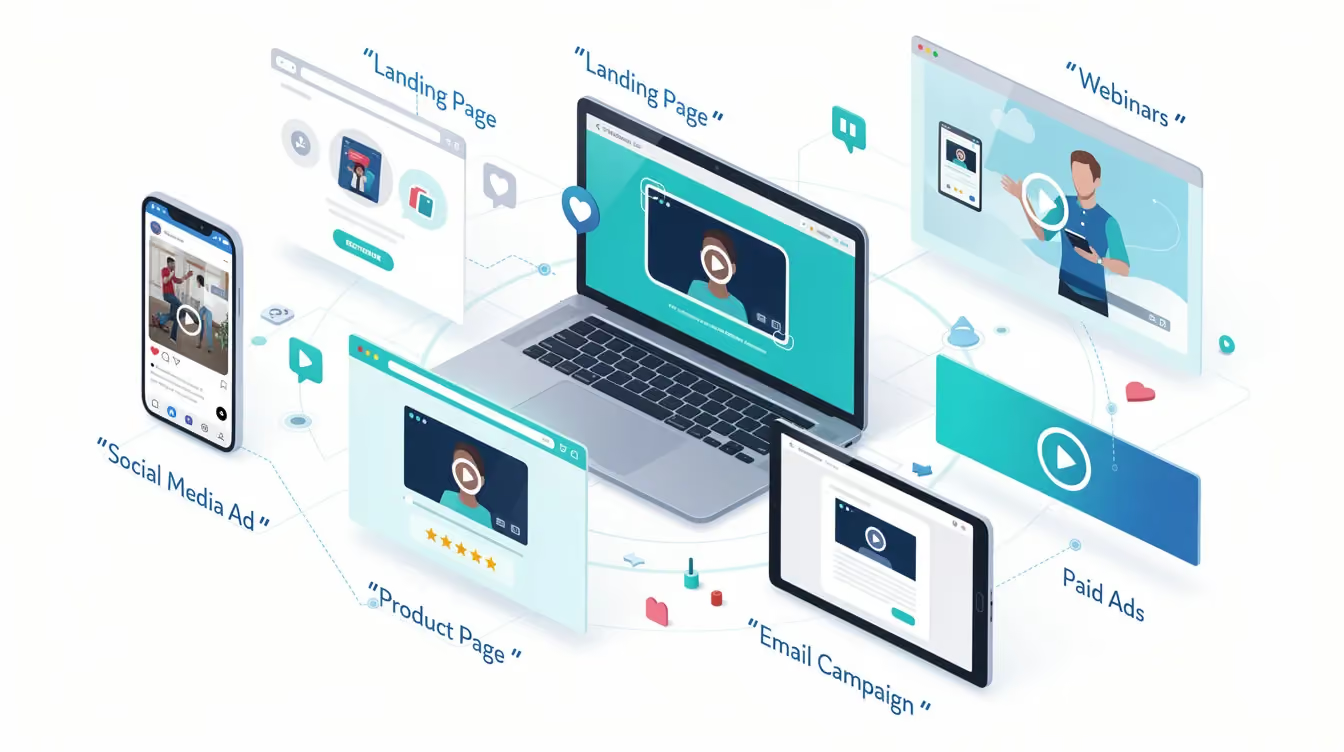
On your website: Place testimonials on your homepage, landing pages, and product pages. Position them close to your calls to action. That is where social proof does its heaviest lifting.
On social media: Short video clips and quote graphics perform well across social media platforms. A 30 to 60 second clip from a longer testimonial video can reach new customers who have never heard of you.
In your sales process: Send relevant testimonials to potential leads during follow up. A customer story that mirrors a prospect's pain points can do more than any sales pitch.
In email campaigns: A real customer story dropped into a nurture sequence at the right moment can move a prospect from considering to buying.
In promotional materials: Proposals, pitch decks, and event materials all hit harder with real customer voices behind them.
One video testimonial can fuel all of these at once. That is the real value of investing in quality testimonial content.
Step 8: Follow Up and Show Gratitude
This step gets skipped more than any other. And it is one of the most important ones.
Once the testimonial is live, close the loop.
Send a personal thank you: A genuine, specific message that references their contribution. Not a template. Something that actually feels human.
Share the finished product with them: Let them see the final result. Most happy customers will share it with their own network without being asked.
Deliver any agreed incentive promptly: If you promised a discount code or gift, send it immediately. Do not make them follow up with you.
Tag them on social media when you post it: This gives them recognition and expands the reach of the testimonial at the same time.
Customers who have a great experience become enthusiastic brand advocates. They refer others. They say yes the next time you ask. They become part of your long term marketing engine, not just a one time contribution.
The relationship does not end when the camera stops rolling.
Where to Use Customer Testimonials
A strong testimonial deserves more than one placement.
Landing pages are the highest priority. Testimonials placed near your call to action directly influence conversion rates can increase conversions by up to 34%. They also give potential buyers the confidence they need at the moment of decision.
On product pages, match the testimonial to the specific product or service it references. Credibility right where the decision happens.
Your homepage sets the first impression. A short quote or video testimonial above the fold tells new customers immediately that real people trust your business.
Social media posts, email campaigns, and sales conversations are where testimonials extend your reach and close deals. The right customer story at the right moment moves a prospect from interested to ready to buy.
One well produced testimonial video can fuel every single one of these.
FAQ
What is a customer testimonial?
A customer testimonial is a statement from a real customer about their experience with a product or service. It acts as social proof, helping prospective customers feel confident in their purchasing decisions by showing that others have already had a positive experience.
What makes a good customer testimonial?
Good customer testimonials are specific, authentic, and results driven. They speak directly to a pain point, describe the experience of working with the company, and share a clear outcome.
What is the difference between a testimonial and an online review?
Online reviews are left voluntarily by customers on third party platforms like Google or G2. Testimonials are typically requested by the company and published on their own marketing channels. Both build credibility but serve slightly different purposes.
Where should you place testimonials for maximum impact?
Landing pages, product pages, and anywhere close to a call to action. These are the moments where potential buyers are making decisions and social proof has the most influence on conversion rates.
Do video testimonials perform better than written ones?
Yes, in most cases. Video testimonials capture emotion, tone, and authenticity that written quotes cannot. They consistently outperform text based testimonials on landing pages and social media.
Conclusion
Securing customer testimonials does not have to be complicated. Identify the right customers, make the process easy, and put it to work across your marketing channels.
The businesses that do this consistently build a pipeline of social proof that converts potential buyers at every stage.
If you want to make sure yours do that job, Caseleap handles everything from scheduling to production, on-site or remote.