Get a Video Gap Analysis for your company · See which videos could have the biggest pipeline impact
See Where Your Competitors Are Winning With Video Get a custom Video Gap Analysis for your company · See which videos could have the biggest pipeline impact
Thanks - our team will review your website and put together your personalized Video Gap Report. Expect it atthe email address you provided within 2 business days.
We'll put together a personalized report showing where video could have the biggest impact, how your competitors are using it, and specific opportunities for your team. You'll get strategic recommendations, not generic advice.
Thank you! Your submission has been received!
Oops! Something went wrong while submitting the form.
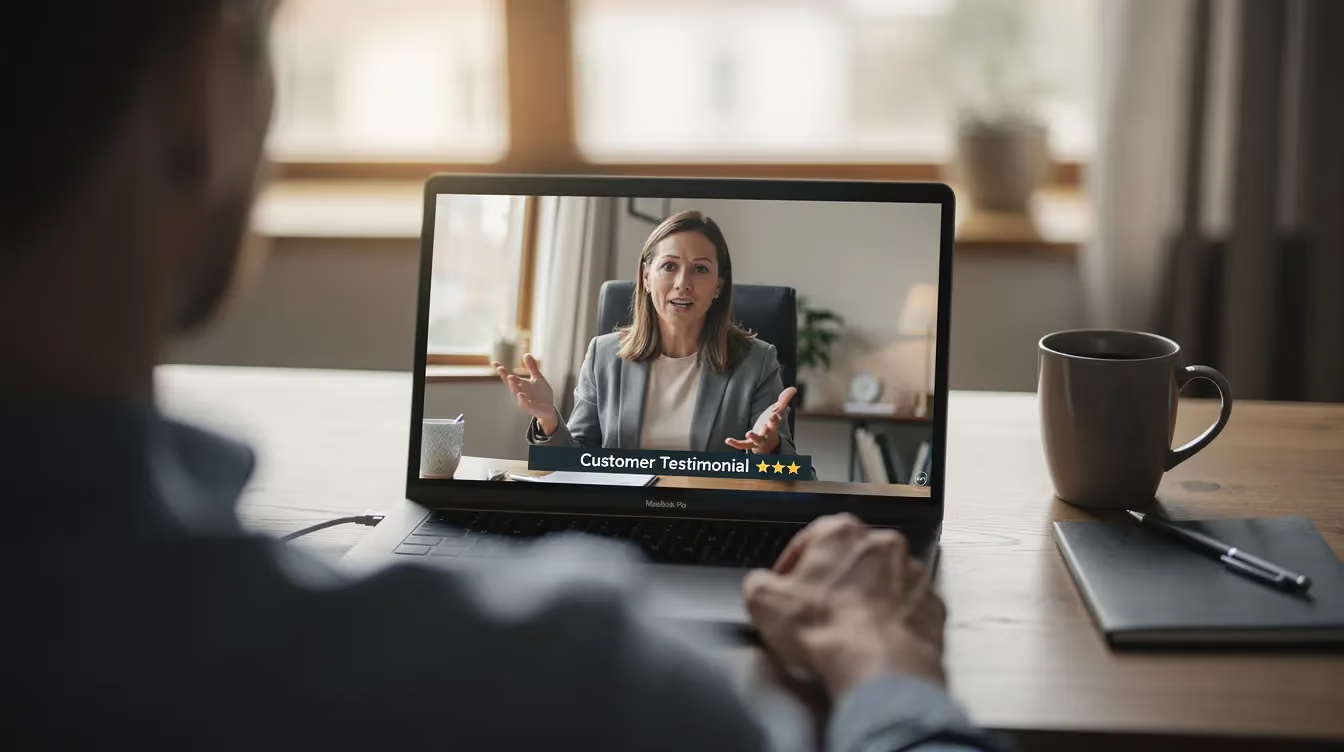
On-Site vs Remote Video Testimonials: Which Is Right for Your Business?
Remote vs on-site video testimonials: compare cost, quality, timeline, and use cases to choose the right approach for your business.
July 7, 2026
On-Site vs Remote Video Testimonials: Which Is Right for Your Business?
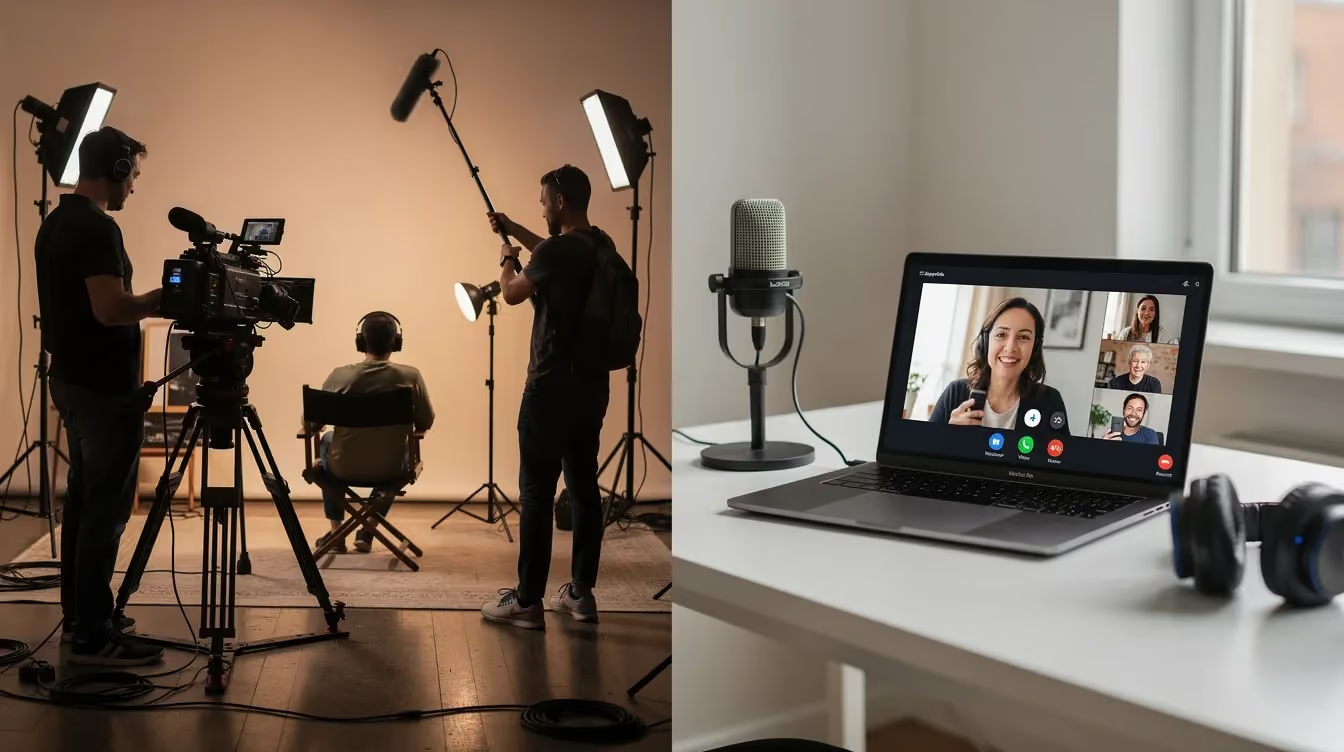
Choosing between remote video testimonials vs on-site video testimonials is one of the most practical decisions B2B marketing teams face when planning a customer story program. Both approaches can deliver results, but they serve different needs and come with different trade-offs.
Neither approach is universally better. The right choice depends on what you are trying to accomplish, where your customers are located, and what kind of production value your use case demands.
This guide breaks down both options so you can choose the right format for your next testimonial project and broader video marketing strategy.
What Is a Remote Video Testimonial?
A remote video testimonial is a customer interview recorded without a production crew physically present. The customer films from their own location, typically their office or home, while the production team manages the session remotely.
Professional remote recording is not the same as asking a customer to hit record on Zoom. A properly managed remote session includes tech checks, lighting guidance, background review, and real time quality control to make sure the footage is actually usable.
Remote testimonial recording works well for customers who are geographically dispersed, have limited availability for an on-site shoot, or are comfortable on camera without in-person direction.
The result is a leaner production with a faster turnaround, typically one to two weeks shorter than a comparable on-site shoot.
Remote Testimonial Production Works For:
B2B companies that need to capture customer stories at scale. When your satisfied customers are spread across different cities or countries, flying a crew to each location is not always realistic.
Capturing genuine feedback from busy executives who have limited availability but a strong story to tell. It requires minimal equipment on your customer's end, removes friction, increases visibility for your brand, and delivers authentic feedback that influences purchasing decisions.
Companies needing tangible social proof, that don't want to keep budget lean and remove the expense and coordination of on-site filming.
What Is an On-Site Video Testimonial?
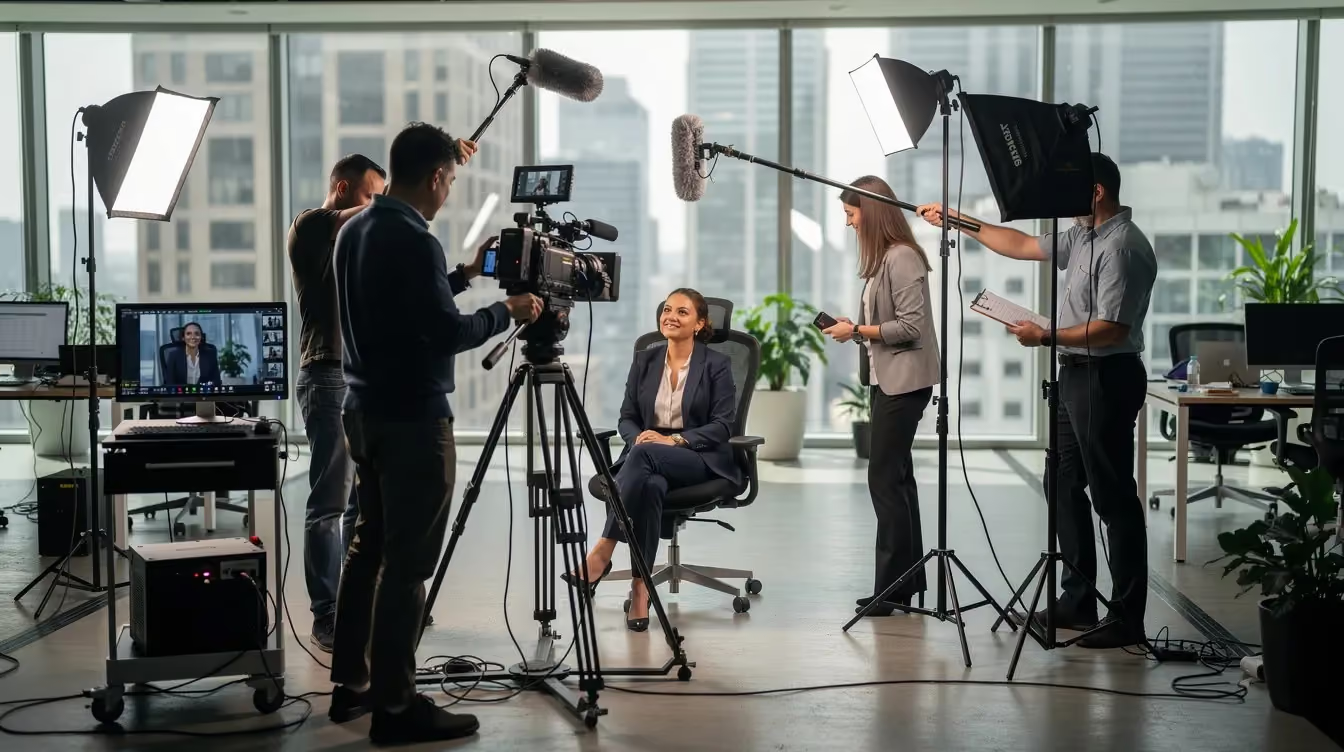
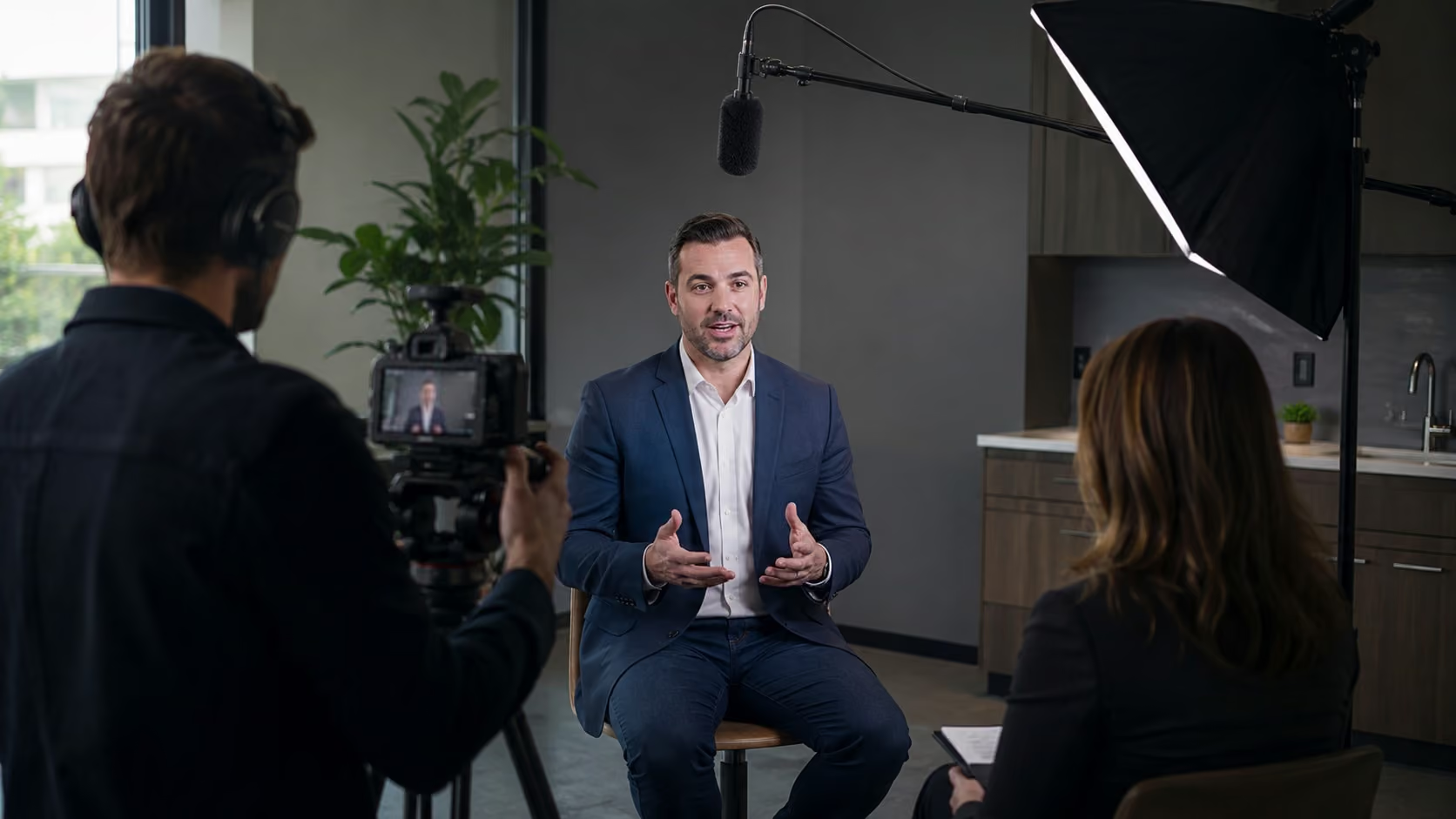
An on-site video testimonial is filmed at the customer's location with a professional crew present. This includes a camera operator, professional lighting setup, dedicated audio equipment, and a director managing the interview.
On-site production gives you full control over the visual environment. The crew sets up the shot, manages the lighting, handles audio, and captures supporting B roll footage that adds depth and authenticity to the final video.
This is the standard approach for high-stakes customer testimonial videos, think website hero sections, sales enablement assets, and conference presentations, where production quality directly affects how the content performs with your audience.
On-site testimonial video production requires more planning, more coordination, and a longer timeline than remote recording. But for the right use case, the output reflects that investment and significantly impacts how potential customers respond to the story.
Testimonials On Location Work For:
B2B companies with complex sales cycles, high-value deals, or customers with compelling stories to tell, on-site production is often worth the additional investment.
Those looking to make first impressions with polished production value. This signals brand credibility to potential buyers before your customer even says a word. For businesses building a robust online presence, that first impression matters.
How Do Remote and On-Site Testimonial Videos Compare?
Most decisions come down to three factors: cost, quality, and logistics. Here is how the two approaches stack up.
Cost
Remote recording is significantly less expensive. Without crew travel, equipment rental, and location logistics, production costs are lower across the board. Basic remote testimonial video production starts around $2,500. More involved remote productions with professional equipment guidance and extensive post production run $4,000 to $10,000.
On-site production costs more because it involves more people, more gear, and more time on location. Full crew on-site shoots with multi-camera setups and B roll typically run $10,000 to $20,000+ or higher depending on location and scope.
Interviewee cost should be factored in as well. On site, that might require travel, stay and per diem. In addition, if having a crew on site could cause any business disruptions, that's a secondary expense that should be considered.
Quality and Production Value
On-site production consistently delivers higher production value. Professional lighting, multiple camera angles, and rich B roll create a more polished final video. The crew can respond to issues in real time and adjust the environment to get the best possible footage.
Remote recording quality has improved significantly with better tools and experienced production teams. A well-managed remote session can produce strong results but relies more heavily on the customer's environment and comfort level on camera.
A pro team like CaseLeap will send equipment, run through extensive technical checks, and help guide the recording remotely to ensure the best outcome.
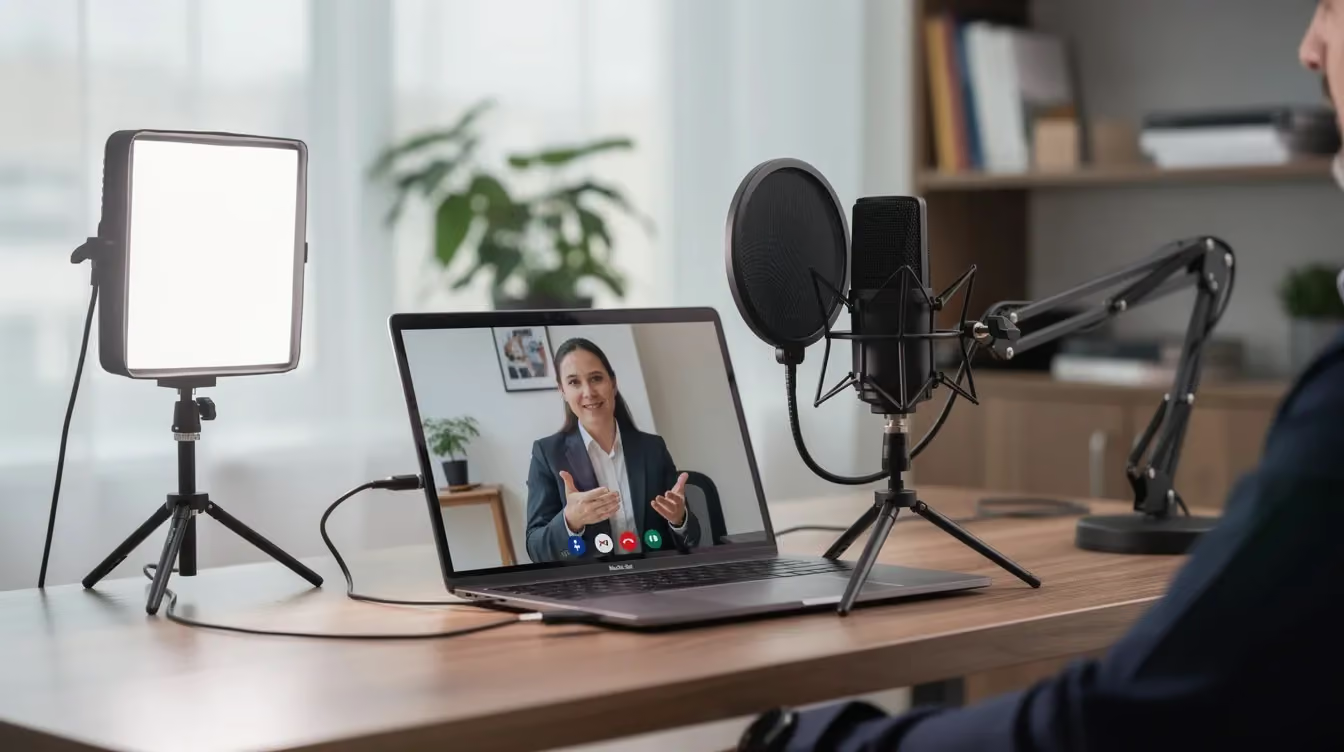
Audio is often the limiting factor in remote recording. A quality external microphone is the single most important piece of equipment. Post production for remote footage may require more cleanup for lighting inconsistencies and background noise compared to on-site footage.
Logistics and Timeline
Testimonials filmed on location require location scouting, travel coordination, gear rental, and crew scheduling. Pre-production is heavier and the timeline is longer.
Testimonials recorded remotely are leaner. A tech check, a background review, and a scheduled session are often all that is needed. The production team can coordinate everything without leaving their office.
Remote recording is generally faster by one to two weeks. On-site needs more lead time for logistics and typically involves longer filming days. If you need a finished video in two to three weeks, remote is the more realistic path.
Customer Experience
On-site shoots put a professional crew in the room with your customer. For some customers this is reassuring and helps them deliver stronger, more confident answers. For others it can feel intimidating without the right direction. On site shoots are a bigger ask, as they require travel, coordination, prep, and a longer time investment.
Remote sessions are lower pressure. Customers are in their own space, on their own schedule, with less setup time required. Filming in a familiar environment can create a more relaxed and candid atmosphere that comes through in the final video. The trade is less control over environmental factors and outside elements like bandwidth.
When Remote Is the Better Choice
Remote video testimonials are not a compromise. For many B2B marketing situations, they are genuinely the smarter option, especially when you plan to leverage using remote video testimonials across your marketing and sales channels. Remote works best when:
Your customer is not local. Flying a crew to another city or country adds significant cost and complexity. Remote eliminates that entirely and lets you capture customer video testimonials from anywhere.
Your timeline is tight. If you need a finished video in two to three weeks, remote is the only realistic path. On-site production cannot be compressed that far without sacrificing quality.
You are producing multiple testimonials at once. Remote lets you run multiple sessions in the same week without travel overhead, making it easier to scale your social proof program efficiently.
Your customer has limited availability. A one hour remote session is much easier to schedule than a half day on-site shoot. Busy executives are more likely to say yes.
Budget is a constraint. Remote delivers professional customer testimonial videos at a lower price point without sacrificing authenticity or driving conversions.
You need volume over polish. Social proof campaigns, email sequences, and sales outreach often perform just as well with authentic remote testimonials as they do with high production shoots.
When Does On-Site Testimonial Production Deliver More Value?
On-site production is worth the investment in specific situations where production value directly affects how the content performs.
Your video will be a hero asset. If the testimonial is going on your homepage, running as a paid ad, or being shown at a major event, the quality bar is higher. On-site production meets that bar consistently.
When the story will shape first impressions or influence brand reputation. The extra polish of on-site production can be worth the investment.
Your customer's environment tells part of the story. A manufacturing facility, a hospital, a retail location, or a technology lab adds visual context that remote recording cannot replicate. B roll shot on location makes the story more credible and compelling to potential customers.
You are working with a less experienced customer. Some customers are not comfortable on camera. Having a director in the room to coach them and guide the conversation produces significantly better footage than a remote session where the customer is largely on their own.
You need multiple camera angles. On-site production allows for multi-camera setups that create more dynamic editing options and a more polished final video format. Remote sessions are typically single angle.
The stakes are high. Enterprise sales cycles, high value accounts, and flagship customer stories deserve the full production treatment. When the video needs to significantly impact how your audience perceives your brand, on-site is the right investment.
What Does a Professional Remote Recording Session Look Like?
Virtual testimonial recording is a relatively new format but with the right production partner and a clear, step-by-step approach to creating client testimonial videos remotely, it is a lot more structured than a simple Zoom call with a record button.
It starts with a pre-session tech check.
The production team connects with the customer to test their internet connection, camera, microphone, and lighting. Background and framing are reviewed and adjusted. Any technical issues get resolved before the actual recording day so nothing interrupts the session.
On the day of recording the production team joins a video call with the customer.
Before filming starts they walk the customer through the process, explain what to expect, and answer any questions. This prep time is what gets natural, comfortable responses on camera rather than stiff rehearsed answers.
The interview runs as a structured conversation.
The production team works from a pre-built question guide designed to draw out specific results and authentic answers in the customer's own words. Most sessions run 30 to 45 minutes.
Quality control happens throughout.
The production team monitors audio levels, lighting consistency, and framing in real time. If something needs adjusting it gets flagged and corrected immediately rather than discovered in post production.
After the session the footage is reviewed, the best takes are selected, and editing begins. A first cut is typically ready within 48 hours for straightforward remote projects.
CaseLeap's remote recording process is built around minimizing friction for your customer while maximizing the quality and usability of the footage.
What’s the Process for On-Site Video Testimonials?
On-site video testimonials involve a more hands-on production experience, but with the right production company, the process is smooth and efficient.
Before the Shoot
Preparation starts with your production team collaborating with you to select the right customer and craft a compelling story angle. They develop targeted questions to encourage detailed, authentic responses that resonate with your target audience. The team also coordinates logistics like scheduling, location scouting, and any necessary permits or access.
Your customer receives a prep guide outlining what to expect, how to dress, and tips for feeling comfortable on camera. This helps reduce nerves and ensures they’re ready to share genuine customer feedback that highlights your product or service’s impact.
During the Shoot
A full professional crew arrives on location to manage lighting, sound, and camera work. The director leads the interview in person, building rapport and guiding the conversation to capture specific, engaging customer success stories. They also direct framing and body language to maximize emotional connection.
Additional footage, such as b-roll of the customer’s workspace or team in action, is captured to enrich storytelling and provide visual context. This high production value enhances your overall reputation and builds trust with potential buyers.
After the Shoot
The footage is handed over to editors who refine the story, polish audio, add graphics, and ensure the final video meets your brand standards. The finished product is ready to showcase on your website, social media channels, sales decks, or paid campaigns. Many packages include shorter clips optimized for various platforms, helping you maximize reach and engagement from a single shoot.
Hybrid Options: Combining On Site and Remote Filming
Some projects benefit from combining both approaches. A hybrid testimonial video production strategy uses remote recording for some customers and on-site production for others, depending on location, availability, and the role each video will play.
For example, a company running a quarterly testimonial program might film their highest priority customer stories on-site for use in paid campaigns and on the website, while using remote recording for supporting testimonials used in sales outreach and email sequences.
This gives your team a steady pipeline of video content without spending top-dollar production budget on every customer story.
A hybrid strategy also gives you flexibility when customer availability is unpredictable. If an on-site shoot falls through due to scheduling, a remote session can often be arranged quickly as a backup without losing the story entirely.
When evaluating a production company, look for one that has experience managing both approaches. A team that only does remote or only does on-site cannot give you an objective recommendation for your situation.
Planning a Hybrid Program
Unlike user generated content, a hybrid program gives you professional quality at every tier. A good production partner will help you decide which stories warrant which treatment based on the customer story, intended distribution, and your overall budget.
Think about repurposing from the start:
An on-site shoot can generate a long-form testimonial, short video clips, b-roll footage, photography, and pull quotes from a single session
Remote sessions can be edited down into multiple formats for social media posts, email campaigns, and landing pages, especially when you secure customer testimonials that lend themselves to repurposing
Either way, one production effort should fuel multiple marketing materials and deliver marketing results that justify the investment
Which Approach Is Right for Your Next Testimonial Video Project?
The decision comes down to four questions:
What is your budget per video?
How quickly do you need the finished asset?
Where are your customers located?
How will the video be used?
If budget is tight, timelines are short, or customers are dispersed, start with remote. If the video is a flagship asset, the customer's environment matters, or the stakes are high, invest in on-site.
Most B2B marketing teams end up using both. Remote for volume and speed, on-site for impact and polish.
FAQs
Can a remote video testimonial look professional?
Yes. Remote testimonials that use proper lighting, quality audio equipment, and professional post-production can achieve results close to on-site quality. The dynamic nature of video testimonials helps humanize the content, making it more relatable and aesthetically pleasing compared to written testimonials. The key elements are an external microphone, good lighting placement, and editing that includes color correction and audio cleanup.
What equipment do customers need for a remote testimonial?
Most customers can participate with the equipment they already have. A modern laptop or desktop webcam, a quiet room with decent natural light, and a stable internet connection are the minimum requirements. For better results, a production team may recommend a USB microphone, a ring light, or a virtual background.
How much does a remote video testimonial cost?
Remote testimonial video production costs less than on-site because it eliminates travel, crew, and location expenses. Pricing varies based on post-production complexity and volume, and tools like our video budget calculator can help you understand typical ranges before you speak with a strategist.
Is on-site or remote better for B2B testimonials?
It depends on how the video will be used. On-site production is better for hero assets, high-stakes campaigns, and stories where the customer's physical environment adds to the narrative. Remote recording is better for tight timelines, dispersed customers, multiple testimonials, and budget-conscious projects. Many B2B marketing teams use both approaches strategically depending on the role each video plays in their content mix.
How does CaseLeap handle remote testimonial recording?
CaseLeap manages the entire remote recording process from tech check to final delivery. This includes pre-session preparation with the customer, a structured interview guide, real time quality control during the session, and post production editing. The goal is to minimize friction for your customer while maximizing the quality and usability of the footage.
Ready to Choose the Right Approach for Your Next Testimonial Video?
CaseLeapworks with B2B marketing teams on both on-site and remote testimonial video production. Whether you need a high-production hero asset or a fast-turnaround remote session, we manage the entire process from customer coordination to final delivery.