Get a Video Gap Analysis for your company · See which videos could have the biggest pipeline impact
See Where Your Competitors Are Winning With Video Get a custom Video Gap Analysis for your company · See which videos could have the biggest pipeline impact
Thanks - our team will review your website and put together your personalized Video Gap Report. Expect it atthe email address you provided within 2 business days.
We'll put together a personalized report showing where video could have the biggest impact, how your competitors are using it, and specific opportunities for your team. You'll get strategic recommendations, not generic advice.
Thank you! Your submission has been received!
Oops! Something went wrong while submitting the form.
SaaS Case Study Video Examples
See how top SaaS companies use case study videos to prove ROI, shorten sales cycles, and build trust
July 13, 2026
Most SaaS companies have customers with great results. The problem is that those results usually live in a Slack thread, a quarterly business review slide, or a customer success manager's notes.
They never turn into the kind of proof that actually moves a deal forward.
That is where SaaS case study videos come in. A strong video case study takes a customer's challenge, walks through how your product solved it, and backs it up with specific metrics, all delivered by a real person whose tone and confidence a prospect can hear for themselves.
This matters more in SaaS than almost anywhere else in B2B. Buyers are not asking if a product works. They are asking if it will keep working, adopt well across a team, and pay for itself fast. And they would rather watch a 90-second customer testimonial video than read three pages of text to find out.
Below, we break down what makes a SaaS case study video different from other B2B content, walk through real video examples you can watch today, and cover the formats, metrics, and production approaches that carry the most weight with potential customers.
What Makes a SaaS Case Study Video Different From Other B2B Video Content
Not every customer testimonial video is built the same way. A SaaS case study video has a few requirements that come straight from the recurring revenue model and the way software actually gets sold.
Video Proof Has to Show Ongoing Value, Not a One-Time Win
When an agency publishes a case study video, the story usually ends at project delivery. In SaaS, the story keeps going.
Buyers want to see that a product solved a problem and kept solving it through renewals and expansion, not just in the first 90 days.
That is not a one-quarter spike. It is compounding value, and it is exactly the kind of story that translates well to video because a customer on camera can speak to how results grew over time, not just where they started. That credibility is hard to replicate in text alone.
Customer success teams should help shape these stories. They are the ones who see the long-term impact firsthand, long after the sales team has moved on. In most organizations, this is where customer marketing teams step in, turning those raw insights into a polished, reusable video asset.
Buyers Want Integration, Adoption, and Time to Value on Screen
A SaaS buyer is not only asking whether a product works. They are asking how fast it will work for their team, and whether it fits into the stack they already have.
When a real user walks through how the product replaced their old toolset, a prospect can see and hear the specifics in a way that a written paragraph cannot deliver.
The strongest SaaS case study video examples include moments where the customer describes implementation speed, what the team had to learn, and how the new tool sits next to the rest of their stack. Specific pain points and specific fixes carry more weight on camera than any amount of polished marketing language.
The Anatomy of a High-Converting SaaS Case Study Video
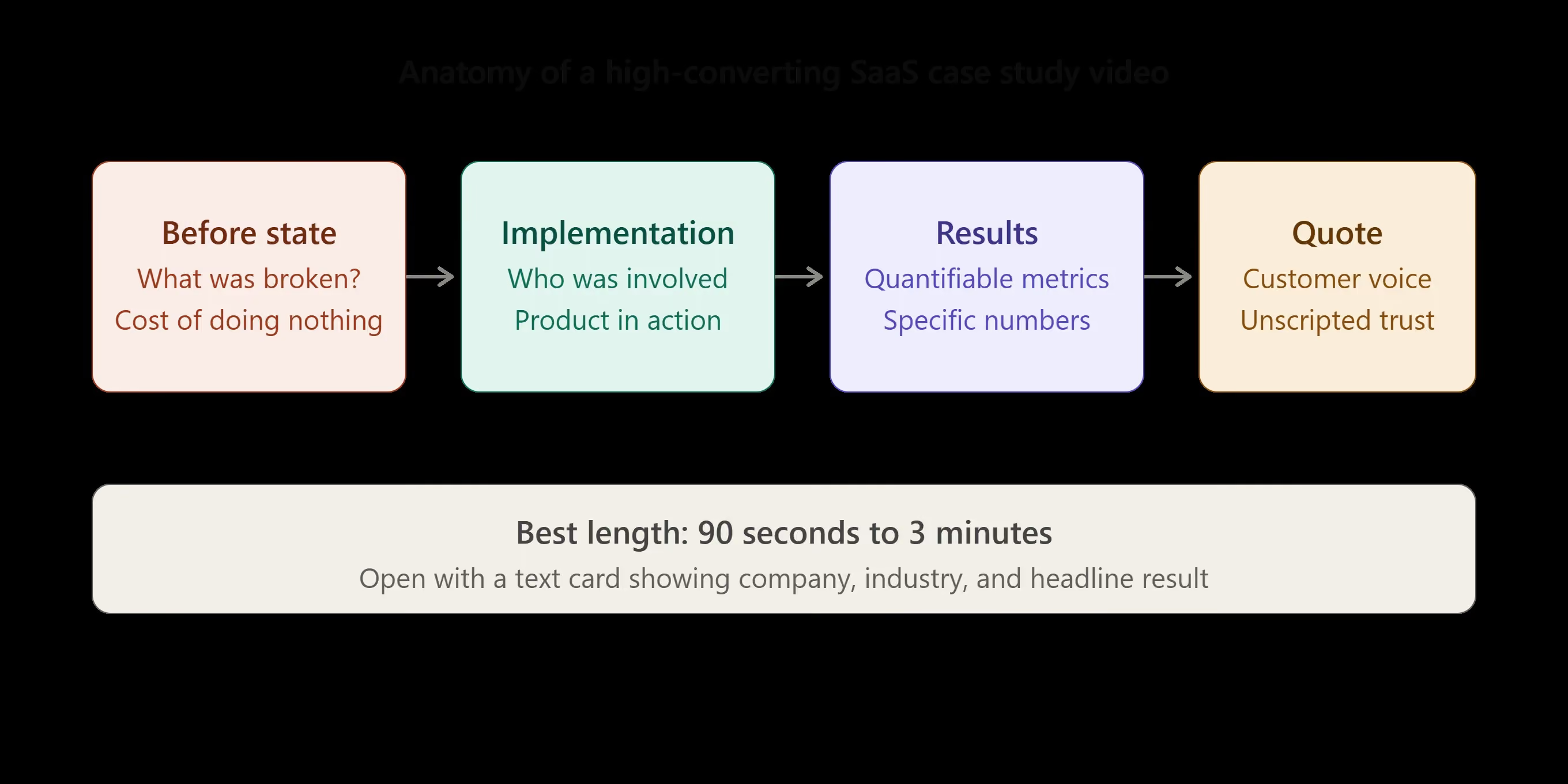
The best case study video examples follow roughly the same structure, whether the company is a 50-person startup or a publicly traded platform. Build around this and the rest falls into place.
The Before State
Every effective case study video opens with the customer's challenge stated plainly. What were they using before? What was breaking? What was the actual cost of doing nothing?
On camera, this is the section where a prospect decides whether the story is relevant to them. The more specifically the customer describes the frustration, the stronger the hook. Slack's famous case study video with Sandwich Video nails this: the team describes juggling email, texts, GChat, and Dropbox across different people, and the chaos is instantly recognizable.
A brief on-screen text card at the top, covering the company name, industry, and headline result, gives a busy viewer the full narrative before the interview even starts.
The Implementation
This is where a lot of SaaS companies cut corners in their video content. They jump straight from problem to results and skip the solution entirely, leaving the viewer wondering how hard it was to get there.
A strong implementation section names who was involved, how long the rollout took, and what had to change in the existing workflow. In video, this is also where product screen captures and workflow visuals earn their keep. A simple screen recording showing the actual product in use makes this section feel real instead of abstract.
The Results
This is the section that carries the most weight, both in written and video case studies. Vague outcomes do not build trust. Viewers want quantifiable results they can bring into their own internal conversations.
In video, the way a customer delivers these numbers matters. When someone says "we cut abandonment rates by 90%" with conviction on camera, like Cricut did in their Zoom case study, it hits differently than the same sentence on a webpage. That is the core advantage of the video case study format.
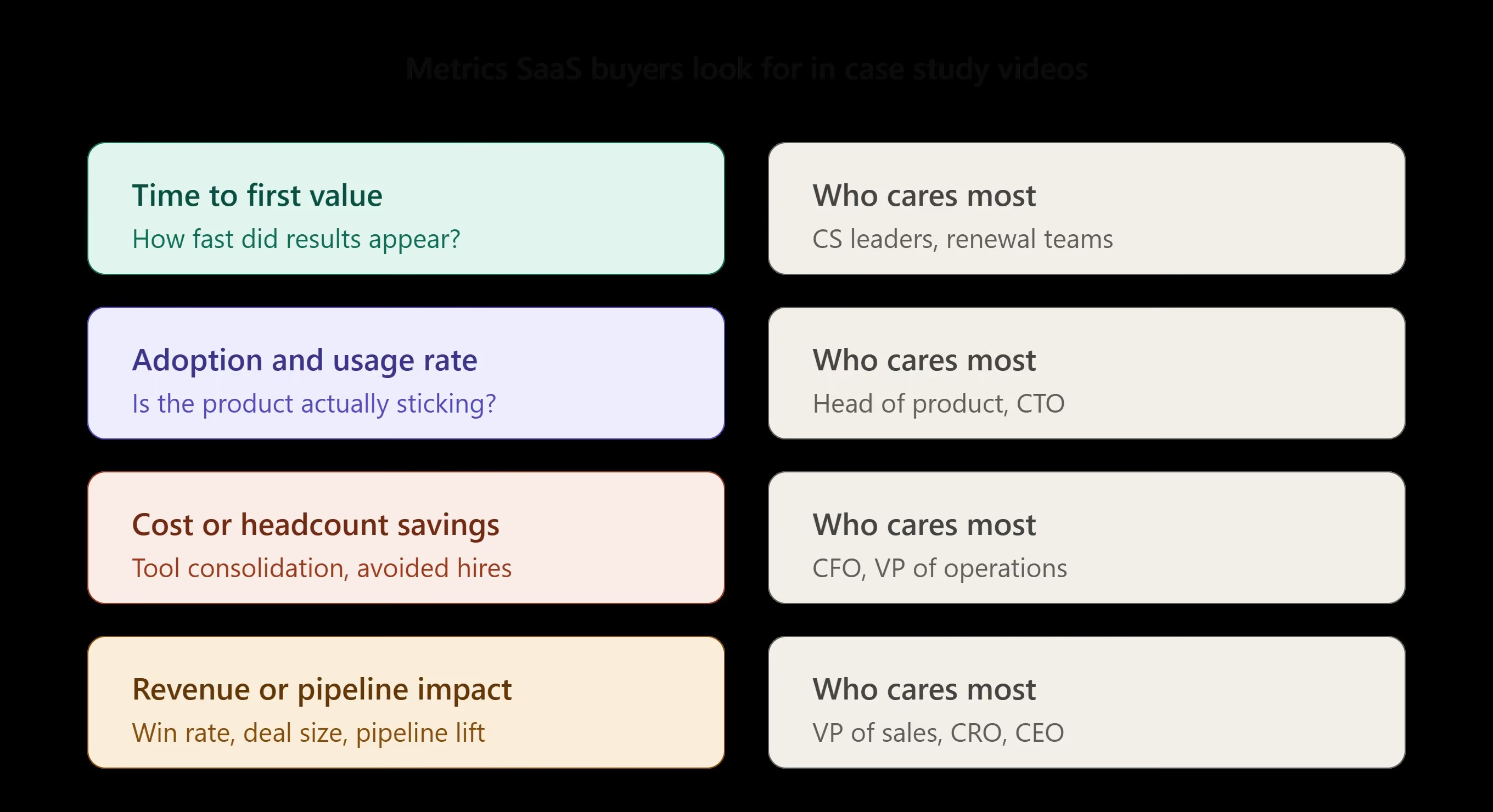
The right metrics depend on who is watching. A CFO wants cost savings and payback period. A VP of Sales wants win rate and ramp time. A head of product wants adoption data. The best SaaS video marketing programs produce versions or highlight clips tailored to each audience.
The Quote on Camera
A quote in a written case study adds credibility. A quote on camera adds trust. There is a meaningful difference.
When a customer speaks in their own words, without a script, viewers can hear the sincerity. (Getting those answers right starts with how you run the interview.) That is why customer testimonial videos consistently outperform written quotes in sales conversations and on landing pages.
Pull quotes from the video work differently than the interview itself. They are shorter, punchier, and built for social cards, paid ads, and sales decks. A strong video case study program produces both the full-length piece and a library of shorter clips from the same shoot.
SaaS Case Study Video Examples You Can Watch Right Now
Here are real, publicly available SaaS case study videos that show how this plays out in practice. Each one gives you something practical to borrow for your own case study video production.
Slack: "So Yeah, We Tried Slack" (Sandwich Video)
This is arguably the most referenced SaaS case study video ever made, and it earned over 1.3 million views on YouTube. Slack hired Sandwich Video to make a product video. The twist: Sandwich Video became a real Slack customer during production, and the final piece is a mockumentary about that conversion.
The team walks through exactly what communication looked like before Slack, describing the mess of emails, texts, GChat, and Dropbox across different people. Then they show how Slack replaced all of it. The humor makes it memorable, but the structure is pure case study: before state, adoption, and results, told by real people in their own voices.
What to borrow: The mockumentary format took a standard customer story and made it entertaining without losing the proof. You do not need this level of production budget to apply the lesson. What matters is that the customer sounds like a real person, not a marketing script.
Zoom: Customer Story Videos (Capital One, Cricut, MLB, Oxfordshire County Council)
Capital One's case study features the company's Director of Unified Communications explaining how Zoom connects global teams and accelerates hiring. Clips of employees using the platform throughout their workday add visual proof alongside the interview.
Cricut's story is results-forward: the company slashed abandonment rates by 90% after implementing Zoom Contact Center. Oxfordshire County Council cut resident wait times by 55%. These are not vague improvement claims. They are specific numbers delivered on camera by the people who lived through the change.
What to borrow: Zoom's format is repeatable. One or two speakers, a clean on-camera interview, specific metrics shown as on-screen graphics, and B-roll of the product in daily use. This is the template most mid-market and enterprise SaaS companies should start with.
HubSpot: Video Case Studies (Motorola Solutions, Sticos)
HubSpot pairs its written case studies with video versions, and the strongest ones lead with a hard number. Motorola Solutions unified 123,000-plus customer records using HubSpot and uncovered a cross-sell opportunity that generated millions in revenue. Sticos, a Visma company, automated 41% of incoming support inquiries with HubSpot's Customer Agent and Service Hub.
What makes HubSpot's approach smart is the dual format. The video tells the emotional story, the customer on camera describing the pain and the payoff. The written version provides the detail a buyer can forward to their CFO. Both formats exist for the same customer, and both link to each other.
What to borrow: Build your written and video case studies as a matched pair from the start. Plan the interview to serve both formats, and you get two assets from one shoot.
Salesforce: Customer Story Video Library
Salesforce has built one of the largest libraries of customer story videos in SaaS, spanning industries from financial services to retail to healthcare. The consistent structure across hundreds of videos is the standout. Each follows the same arc: who the customer is, what they needed, how Salesforce solved it, and what the measurable result was.
The production quality varies from high-end cinematic pieces to simpler interview formats, which actually works in their favor. It signals that any customer, regardless of size or industry, can tell a compelling story.
What to borrow: Volume and consistency matter more than perfection on any single piece. Salesforce proves that a growing library of customer stories, each following the same structure, compounds in value over time. A prospect in healthcare can find a healthcare story. A prospect in finance can find a finance story. That specificity closes deals.
Different Formats for SaaS Case Study Videos
Not every case study video has to be a sit-down interview. The strongest SaaS video marketing programs use a mix of formats depending on the story, the customer, and where the video will live.
Live-Action Interview
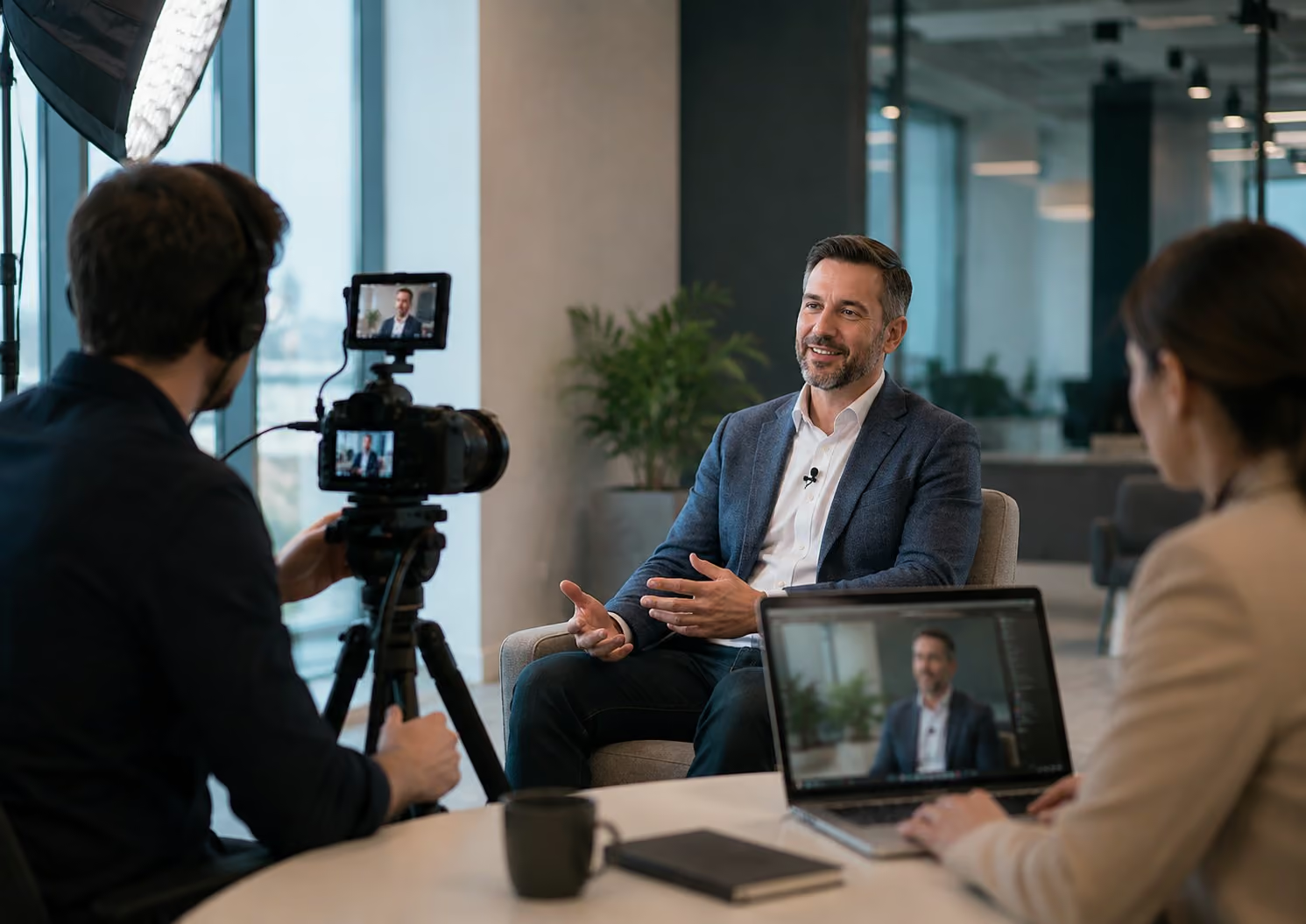
This is the standard format: one or two customers on camera, answering questions about their experience. It works best when filmed on-site at the customer's office, where B-roll of the team using the product adds visual context. Zoom's customer story library is the clearest example of this approach at scale.
Animated Explainer with Customer Narrative
Some SaaS case studies work better as animated pieces, especially when the product is technical and the value is hard to show on screen. In this format, the customer's voice drives the narrative while motion graphics, screen captures, and data visualizations illustrate the story. Companies like Levitate Media produce this style of SaaS video for brands like Asana and Session AI, using 2D animation and mixed media to translate complex platform value into clear, visual storytelling.
Remote Capture
When the customer is spread across multiple offices or countries, remote recording is a practical alternative to on-site production. The trade-off is lower production polish, but the authenticity often increases. A VP on a clean webcam setup, speaking candidly about results, can be just as persuasive as a studio-quality shoot, as long as the audio is clean and the story structure holds.
Short-Form Social Cuts
These are not standalone case studies. They are 30-to-60-second clips pulled from a longer interview, built for LinkedIn, paid campaigns, and email sequences. The best SaaS video programs plan for these from the start, capturing enough material in a single shoot to produce five to ten short clips alongside the full-length piece.
The Metrics SaaS Buyers Actually Look For in a Case Study Video
Not all data points carry equal weight. These four categories consistently move a sales cycle forward, and they should be the backbone of any video case study you produce.
Time to first value. The faster a customer sees results, the easier the next renewal conversation becomes. When a customer says "we saw results in the first two weeks" on camera, that moment alone can become one of the most reused clips in your library.
Adoption and usage rate. This signals whether a product is actually sticking, and it predicts churn risk long before it shows up in a renewal call.
Cost or headcount savings. This speaks directly to a budget holder. Tool consolidation, reduced manual work, and avoided hires all belong here. Cricut cutting abandonment rates by 90% with Zoom is a strong example of this category done right on video.
Revenue or pipeline impact. This gets the most attention in any sales cycle. Motorola Solutions uncovering a cross-sell opportunity worth millions through HubSpot's unified data is the kind of number that stops a CFO mid-scroll.
Use specific metrics, and always tie each one back to the category your viewer cares about. That is how a video case study offers more than a good story. It offers proof a buyer can use internally.
Why Video Case Studies Outperform Written Case Studies for SaaS
Written and video case studies serve different purposes, and the smart move is to use both. But for SaaS companies trying to close deals faster, video consistently pulls more weight in the moments that matter.
Written Case Studies Are Built for Search and Scanning
Written case studies drive organic traffic, let a reader jump straight to the metric they care about, and work well as blog posts or downloadable assets. Aim for 800 to 1,500 words so there is enough room for context, proof, and outcomes without losing momentum.
Sales teams reach for them during active deal cycles, especially in proposals and late-stage support, where a prospect wants something they can forward internally.
Video Case Studies Carry More Trust
A prospect can hear the tone and confidence in a customer's voice in a way text cannot replicate, and that trust registers fast. Research backs this up: 93% of B2B buyers say video builds brand trust, and 96% of consumers have watched a video to learn about a product or service.
Seeing multiple stakeholders share their experience adds another layer of social proof. When a VP of Sales and a frontline rep both describe their experience with the same product, the story becomes harder to dismiss. Slack's Sandwich Video and Zoom's Capital One story both use this multi-speaker approach to great effect.
The best SaaS case study videos run between 90 seconds and three minutes. Long enough to cover the challenge and the result, short enough to keep someone watching. Studies from Wistia consistently show that two minutes is the sweet spot for engagement before viewership drops off.
The Strongest Approach Pairs Both Formats
The best programs follow the same story arc in both the written and video versions, with product screen captures, simple graphics for the key metrics, and a real person on camera. HubSpot does this better than most, and it makes repurposing content across formats easy because both pieces share the same raw material.
Video case studies can be filmed on-site for the highest production quality, or captured through remote recording when the customer is spread across multiple locations. Either approach works as long as audio quality is clean and the story structure holds.
Turning Your SaaS Case Study Videos Into Reusable Sales Assets
Most SaaS companies produce a case study video, publish it on one page, and move on. That is the same as running paid ads to a landing page and never testing the headline.
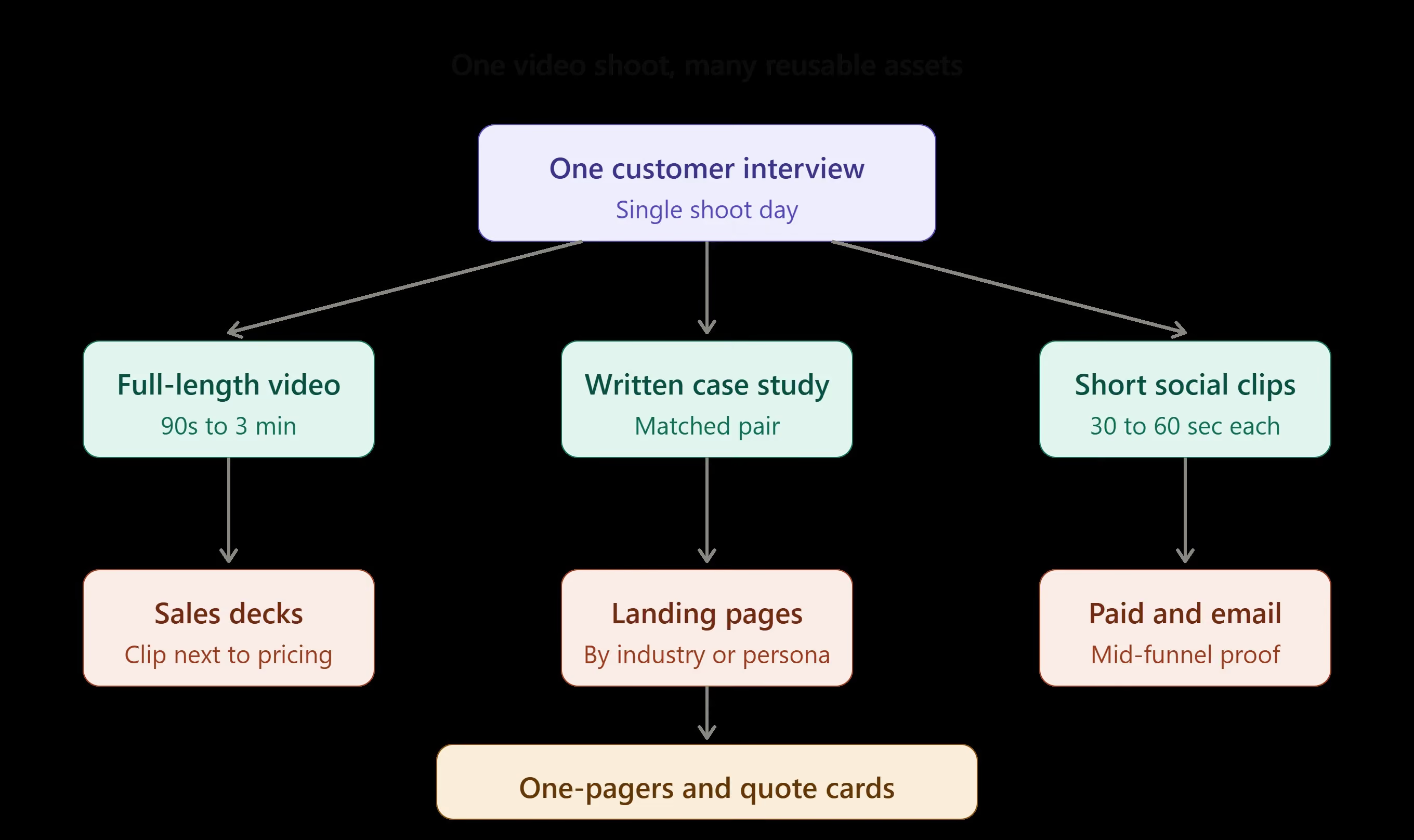
The real value is in the reuse. A single strong customer story video can become:
Sales decks. A 30-to-60-second clip embedded right next to the pricing slide.
Landing pages. Built around a specific industry or persona, each pulling the most relevant video and proof point for that audience.
Social and paid content. Short clips and quote cards for LinkedIn and paid campaigns.
Email sequences. A proof point that keeps a mid-funnel prospect moving.
One-pagers. A thumbnail linked to the full video, paired with three metrics and one quote, ready for a co-founder or VP who needs the full story in 30 seconds.
So how many video case studies does a growing SaaS company actually need? It comes down to getting customers to participate and building a real customer proof library instead of a folder of disconnected files. Salesforce's massive case study library is the clearest proof that this compounds. Once that library exists, sales and marketing can pull the right story for the right deal in seconds.
Avoid generic content that could describe any company. Specific data points and recognizable customer voices are what separate a forgettable testimonial from one that actually shortens the sales cycle.
Treat each video as a living asset. Refresh the numbers once a year, and film an updated customer testimonial video with the same customer once the relationship has grown. Case study videos earn the most ROI when they live inside an ongoing production system, not a one-off project.
Work With CaseLeap on SaaS Case Study Videos
If you already have customers with strong results, and prospects who need to hear those stories from real people, the next step is turning that proof into video.
CaseLeap is a testimonial video production company focused on capturing authentic customer stories for B2B brands, with experience producing case study and testimonial videos for SaaS marketing, tech, and enterprise companies, including teams in enterprise SaaS selling to larger organizations.
A SaaS case study video is a short film featuring a real customer who explains how a software product solved a specific problem, backed by measurable results like time saved, cost reduced, or revenue gained. It follows the same challenge-solution-results structure as a written case study, but delivered on camera.
What should a SaaS case study video include?
A strong SaaS case study video includes the customer's starting challenge in their own words, a description of how they implemented the product, specific data points showing the results, and at least one direct quote that captures the value clearly enough to reuse in a sales deck or social post.
How long should a SaaS case study video be?
The most effective case study videos run between 90 seconds and three minutes. That is long enough to cover the problem and the results without losing the viewer. Shorter highlight clips of 30 to 60 seconds work well for social, email, and sales outreach.
Are video case studies more effective than written ones for SaaS?
Video case studies tend to convert better in sales conversations and on landing pages because prospects hear tone and confidence directly. Written case studies are easier to scan, search, and repurpose into other formats. The strongest programs use both.
How often should a SaaS company produce new case study videos?
Most SaaS marketers aim for one new case study video every month or two, prioritizing customers in active deal cycles or target industries where the company wants to grow. Building each video into a reusable asset library helps it support pipeline well beyond the first campaign it was built for.
How much does SaaS case study video production cost?
Costs vary based on whether the shoot is on-site or remote, how many stakeholders are interviewed, and how many deliverables are cut from the raw footage. A strong case study video production partner will produce the full-length piece plus a library of shorter clips, quote cards, and social cuts from the same session.
Build trust and accelerate conversions
Contact us today. We'd love to help you supercharge your sales conversions.