Get a Video Gap Analysis for your company · See which videos could have the biggest pipeline impact
See Where Your Competitors Are Winning With Video Get a custom Video Gap Analysis for your company · See which videos could have the biggest pipeline impact
Thanks - our team will review your website and put together your personalized Video Gap Report. Expect it atthe email address you provided within 2 business days.
We'll put together a personalized report showing where video could have the biggest impact, how your competitors are using it, and specific opportunities for your team. You'll get strategic recommendations, not generic advice.
Thank you! Your submission has been received!
Oops! Something went wrong while submitting the form.
B2B Testimonial Video Best Practices: 15 Tips from 500+ Productions
Build trust, shorten sales cycles, and influence pipeline with proven B2B video strategies
Andrew Crichton
Co-Founder
April 21, 2026
Most testimonial videos fail to influence pipeline. After 500+ B2B productions, we have seen why.
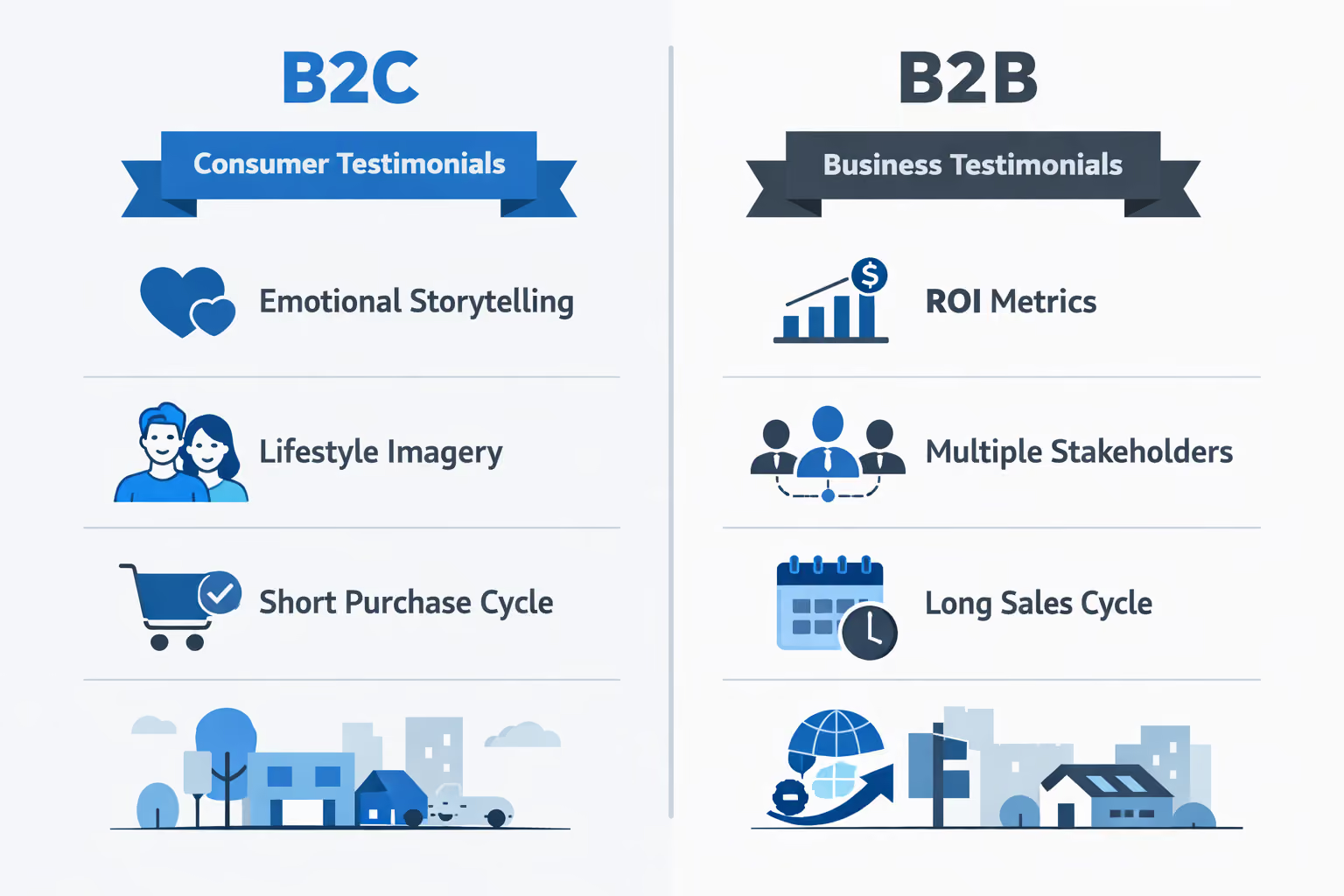
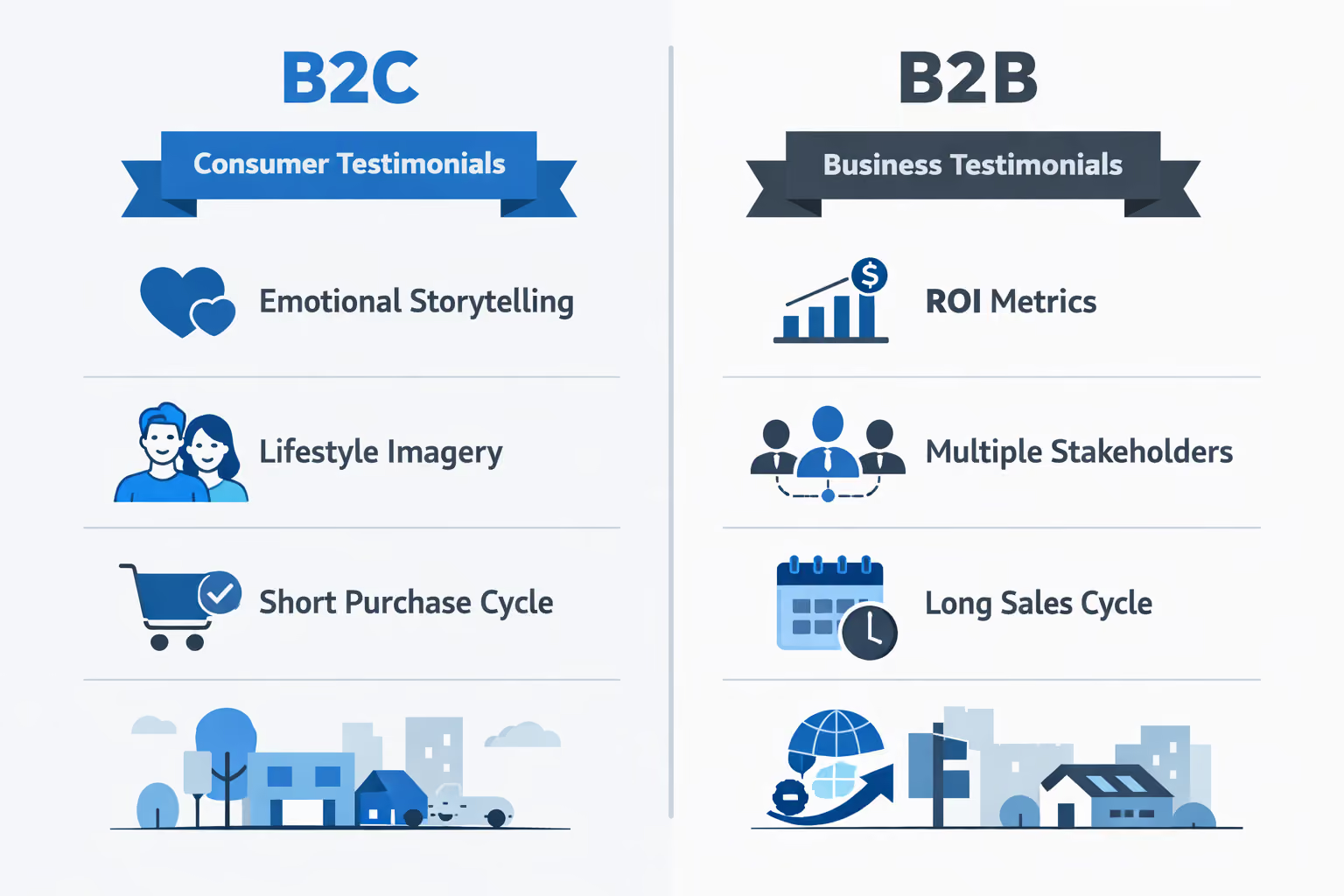
Testimonial video advice on the internet is generally written for B2C brands. Emotional storytelling. Happy customers. Relatable moments.
That playbook fails in B2B.
Your buyers are building a business case, getting sign-off from multiple stakeholders, and evaluating risk over a sales cycle that can stretch six to twelve months. A testimonial video that converts a fitness app subscriber will not close an enterprise software deal.
AtCaseLeap, we have produced over 500 B2B testimonial videos across SaaS, healthcare, finance, and manufacturing. We have seen clear patterns in what drives pipeline and what gets ignored.
This guide covers 15 B2B testimonial video best practices drawn from those productions. It is written for marketing directors and demand gen managers at mid-market to enterprise B2B companies who need video testimonials that actually influence deals.
Why B2B Testimonial Videos Require a Different Approach Than B2C
B2B buyers are not browsing. They are evaluating.
When your average deal involves six to ten decision-makers and a sales cycle measured in months, emotion alone will not move the needle. Your prospects are presenting your solution internally, justifying budget, and managing risk on behalf of their organization.
B2C testimonials work because they create desire. B2B testimonials work when they create confidence. Your buyers need to see proof that your solution scales, integrates, and delivers measurable results within a timeline they can defend to leadership.
The testimonials that retain viewers longest share three things: a customer who mirrors the prospect's profile, concrete details about the problem that was solved, and quantifiable results that speak the language of ROI.
By the time a testimonial video gets in front of them, your prospects are not looking to be inspired. They are looking to be reassured.
Pre-Production Best Practices
Most B2B testimonial videos fail before the camera ever turns on. Pre-production is where the foundation is built, and skipping it is the most expensive mistake a video marketing team can make.
Tip 1: Choose Customers Who Mirror Your Best Prospects
The most common pre-production mistake is choosing testimonial participants based on relationship strength rather than prospect relevance.
What matters is ICP alignment. Match your testimonial participants to the industry, company size, buyer role, and use case of the prospects you are actively trying to convert. A glowing review from a fifty-person startup will not resonate with an enterprise buyer evaluating a solution for five thousand employees.
Diversity matters too. Aim to build a testimonial library that covers multiple industry verticals, company sizes within your target range, and both decision-maker and end-user perspectives. Multi-perspective customer testimonial video examples increase perceived trustworthiness because they demonstrate impact across different stakeholder needs.
One more thing: do not wait for the perfect customer. A willing, on-ICP advocate is worth more than a perfect story from someone your prospects cannot relate to.
Tip 2: Identify the Story Before You Schedule the Shoot
Do not show up hoping the story will emerge on camera. It rarely does.
Run a discovery call before you schedule anything. Use it to uncover the real narrative using a Problem to Solution to Outcome framework:
What challenge were you solving before our solution?
Why did you choose us over alternatives?
What specific metrics improved after implementation?
This does two things. It uncovers authentic customer stories before cameras roll, and it gives your production team a clear editorial direction walking into the shoot. Story clarity alone can cut shoot time significantly and reduce post-production revisions by half.
You can use a testimonial video script template to structure your discovery calls and keep the story focused without over-scripting the customer's responses.
Tip 3: Build Logistics Around Enterprise Realities
Enterprise shoots do not fail on creativity. They fail on logistics.
Common friction points include legal approvals and NDA reviews that can take four to six weeks, multi-stakeholder sign-offs involving up to five people, and C-suite calendars booked months in advance.
Mitigate these early with a production-ready checklist:
Secure written commitment at least sixty days before the shoot
Provide approval templates your customer's legal team can work from
Offer flexible half-day scheduling options that respect executive time
Clarify upfront what claims will and will not be usable in the final video
Friction is the number one cause of customer dropout before shoot day. Streamlining the process protects your timeline and keeps your testimonial strategy on schedule.
Interview Best Practices
The interview is where your raw footage is made or lost. A strong pre-production process sets you up, but what happens on camera determines whether you walk away with compelling story material or hours of footage that is hard to edit into anything usable.
Tip 4: Use a Question Flow That Unlocks Real Stories
The best soundbites do not come from the first question. They come from fifteen to twenty minutes in, after the customer has warmed up and stopped thinking about the camera.
Structure your customer interviews around open-ended questions that make yes or no answers impossible:
Start broad: "Walk me through your day before our solution."
Pivot to specifics: "How did that change after implementation?"
Push for outcomes: "Can you put a number on the business impact?"
A few additional techniques that consistently produce better material:
Do not send questions in advance. Pre-sent questions produce rehearsed answers that B2B buyers immediately recognize as staged. The goal is natural language, not polished corporate speak.
Ask for the recommendation directly. At the end of the interview, ask your customer outright: "Would you recommend us to a company like yours?" It feels direct, but hearing those words spoken on camera is exactly what late-stage buyers need.
Encourage customers to say the stats themselves. When a customer delivers a metric on camera in their own words, it carries significantly more weight than a graphic or voiceover saying the same number. Coach them to share specific results naturally during the interview rather than saving numbers for post-production overlays.
If a competitor comes up organically, let it breathe. When a customer mentions why they switched from a competitor, that moment is gold for late-stage B2B buyers who are actively comparing vendors. Do not redirect away from it.
Tip 5: Set Up Technology That Does Not Intimidate
Poor production quality undermines the credibility you are trying to build. But an overly complicated technical setup intimidates customers and kills the natural energy you need on camera.
Remote setups now dominate B2B video production. Most enterprise customers prefer them. But remote does not mean low video quality. Essential elements for a professional remote setup include consistent lighting, an external microphone for audio clarity, and a clean background that reflects the customer's professional environment.
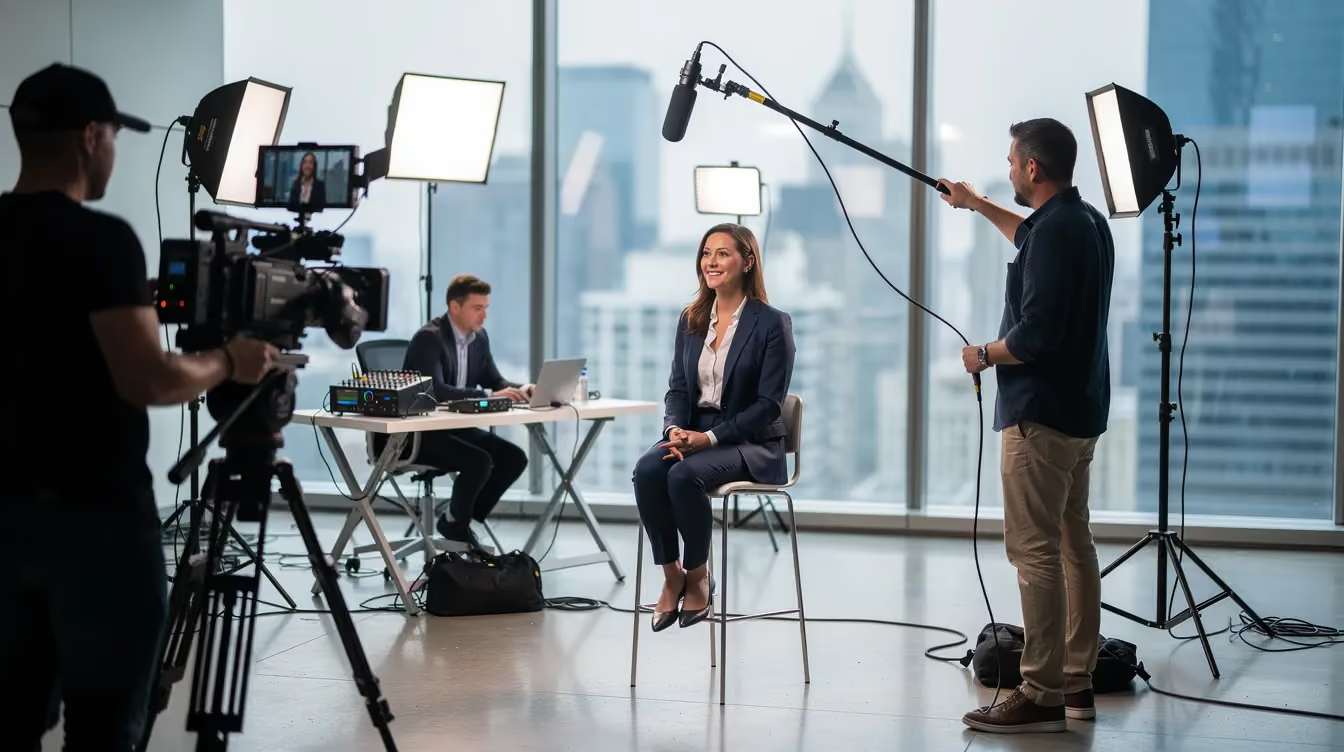
For on-site shoots, shoot in the client's office rather than yours. It feels more authentic and helps prospective customers visualize themselves in a similar setting. A hybrid approach combining a director-led interview with separately captured b-roll footage often yields the best results.
Whatever format you choose, the technical setup should be invisible to the customer. The moment they start thinking about the camera or the mic, you lose the natural delivery that makes testimonial videos believable.
The first ten minutes off camera determine the quality of the next sixty minutes on it.
Before you start recording, take time to talk about something other than the interview. Review what you are looking for together. Normalize the process and address any nerves or concerns directly.
Executives who feel comfortable before the interview starts transition naturally from guarded corporate language into the kind of narrative-driven conversation that produces usable soundbites. Executives who feel rushed or unprepared stay stiff throughout.
On-Camera Best Practices
Getting a customer in front of a camera is one thing. Getting them to deliver something useful is another. Most non-professional speakers go stiff the moment they know they are being recorded. Your job is to prevent that.
Tip 7: Coach Executives Without Over-Directing Them
Non-professional speakers need guidance, not scripts. B2B buyers can spot an over-rehearsed testimonial instantly and it kills credibility.
A few techniques that work consistently:
Coach eye line before you start. Whether your subject looks at the interviewer or the camera, consistency matters. Wandering eye line reads as uncertainty on screen.
Use breathing cues for pacing. Executives who rush under pressure slow down naturally when reminded to pause between thoughts. It also makes editing easier.
Do not ask for retakes on specific wording. When you ask someone to repeat a line with slightly different phrasing, the restatement almost always sounds worse than the original. If a customer delivers a powerful moment imperfectly, keep it. Real customers speaking in their own words do more for brand trust than polished delivery ever will.
Before the shoot, know what closing line you are looking for. A single sentence that captures the customer's experience is the most versatile asset you will produce. It works as a pull quote on your website, in a proposal deck, and in sales outreach. Coach toward it without forcing it.
Tip 8: Find the Right Balance Between Authenticity and Polish
Over-produced testimonial videos make B2B buyers skeptical. When everything looks too perfect, it stops feeling real.
What enterprise audiences actually respond to: unscripted metrics delivered naturally, real office settings instead of studios, and brand elements that are present without being loud.
B roll footage is where most teams leave credibility on the table. Showing dashboards with real data, teams at work, or product interfaces in action gives viewers something concrete to connect with. It makes the customer success story feel real rather than staged.
Plan your b roll before the shoot. Walk through what the customer's environment actually looks like. What spaces, screens, or moments show the story visually without anyone saying a word?
Authentic interview footage paired with purposeful b roll produces a polished final product that still feels human. That is the balance B2B buyers trust.
Post-Production Best Practices
A great shoot gives you the raw material. Post-production determines whether that material keeps viewers engaged or gets abandoned after fifteen seconds.
Tip 9: Edit for How Business Audiences Actually Watch
B2B buyers skim video the same way they skim emails. You have a few seconds to prove the video is worth their time.
Start with your strongest moment, not an introduction. Opening with "Hi, I'm Jane from Company X" is the fastest way to lose a viewer. Lead with the most compelling outcome, a specific result, or a statement that makes someone want to keep watching. Place names and titles in the lower third of the screen instead.
From there, keep the edit tight. Cut filler words, long pauses, and anything that does not move the story forward. Data from our productions shows optimal length for B2B testimonial videos sits between sixty and ninety seconds for social and top of funnel use. For complex solutions or late-stage sales content, two to three minutes can work, but every second needs to earn its place.
Let emotional peaks breathe. When a customer delivers a genuinely powerful moment, do not cut away too quickly. Those are the moments that create real connection with potential customers.
Brand consistency matters in the edit too. Your testimonial video should feel like it belongs alongside your other marketing content. That means consistent fonts, color treatment, logo placement, and if you use background music, a tone that fits your brand identity without distracting from the customer's story.
Tip 10: Make Subtitles and Accessibility Non-Negotiable
The majority of viewers on LinkedIn watch videos on mute. If your testimonial video does not have captions, most of your target audience is not hearing a word of it.
Subtitles are not optional for B2B distribution. They improve completion rates, make your video content accessible to non-native English speakers, which is common in global B2B, and contribute to SEO through transcripts on video hosting platforms.
Precision matters. Poorly timed captions distract from the video rather than supporting it. Invest in accurate, well-timed subtitles as a standard part of every post-production workflow.
Tip 11: Repurpose One Shoot Into a Full Content Ecosystem
One well-planned shoot should not produce one video. It should produce a library of assets.
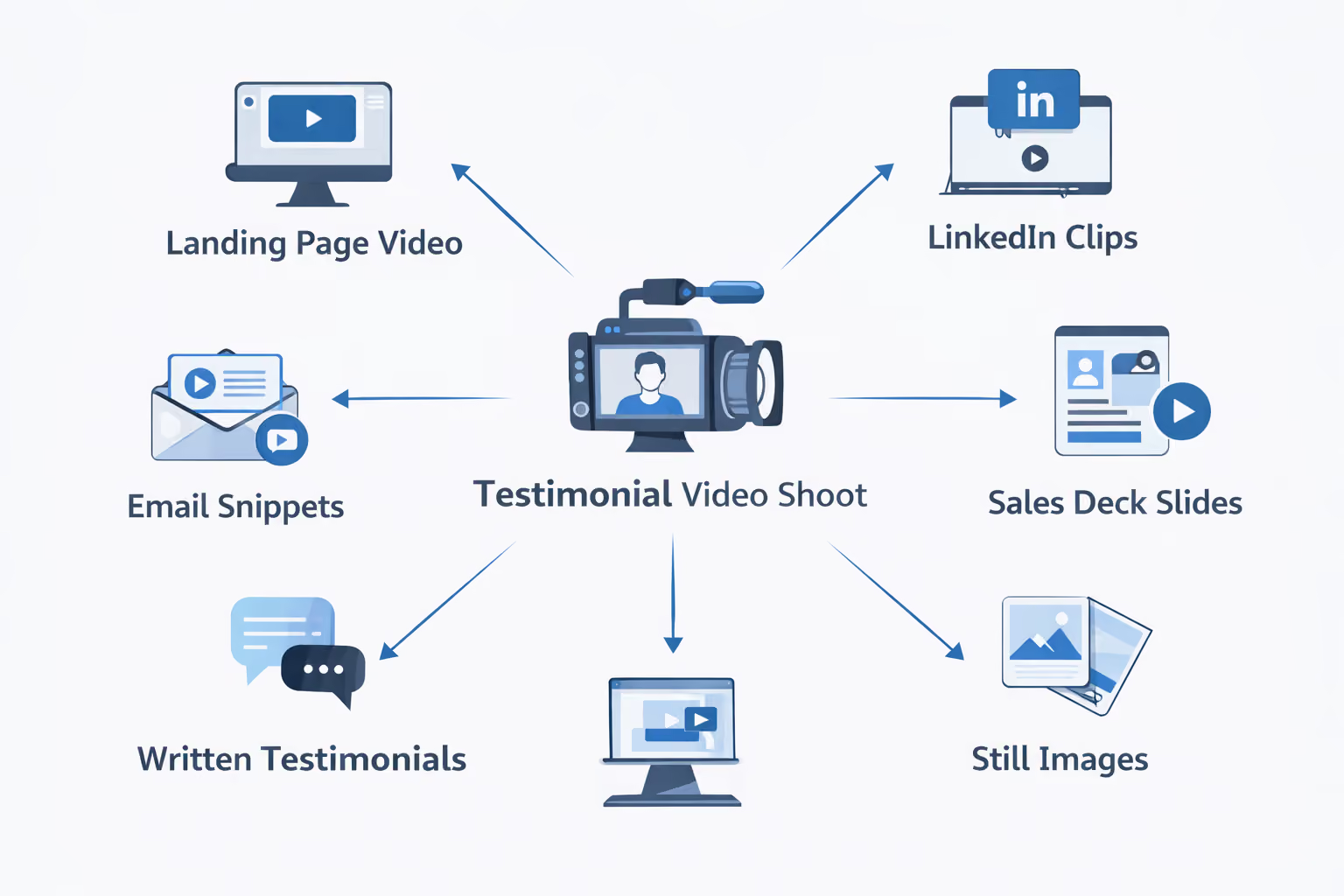
Plan for repurposing before the shoot, not after. When multiple angles and clean audio are captured with distribution in mind, you walk away with:
A full sixty to ninety second testimonial for landing pages and product pages
Fifteen to thirty second clips for LinkedIn and other social media platforms
Pull quotes for email sequences and sales presentations
The key is retaining context when cutting shorter clips. Testimonial highlights should make sense as standalone content without losing the thread of the customer's journey. A clip pulled out of context can confuse viewers or misrepresent the story.
Distribution and Activation Best Practices
Producing a great testimonial video is half the work. Most B2B teams underinvest in distribution and wonder why their videos are not moving deals.
Tip 12: Deploy Testimonial Videos as Sales Enablement Assets
Your sales team is one of the most powerful distribution channels you have for testimonial content. Most marketing teams do not treat it that way.
Testimonial videos built for sales enablement look different from those built for awareness. They are shorter, more specific, and matched to the exact objection or question a prospect raises during an active deal.
Practical ways your sales team can use testimonial videos:
Full length versions embedded in proposal decks to reinforce the business case
Industry or use-case specific clips in follow-up sequences after demos
For this to work, your testimonial library needs to be organized. Tag videos by industry, company size, use case, and buyer persona so sales reps can find and deploy the right clip quickly without digging through a shared drive.
Tip 13: Place Videos Where They Actually Convert
The homepage is the obvious placement. It is not always the highest converting one.
Landing pages paired with a specific offer or campaign
Product pages next to feature descriptions where purchase intent is highest
Email nurture sequences timed to the consideration stage
Proposal decks and sales presentations at the decision stage
A dedicated testimonials page organized by industry or use case
That last one is worth building properly. A well-organized testimonial page functions as a standalone conversion asset. When prospects arrive already evaluating you, seeing a library of relevant customer stories organized by their industry or problem is one of the most effective ways to remove doubt.
Place testimonial videos next to your calls to action wherever possible. A customer success story sitting directly above a demo request form creates context that copy alone cannot.
Tip 14: Sequence Distribution Across Channels Strategically
Releasing a testimonial video everywhere at once wastes momentum. A sequenced rollout extends the life of a single video across weeks or months.
A simple channel sequencing framework:
Week one: short teaser clip on LinkedIn to generate initial engagement
Week two: full video deployed to email nurture for warm leads
Week four: sales enablement activation for active pipeline
This approach treats your testimonial video as a strategic asset rather than a one-time content drop. It aligns each format and channel to a specific stage of the sales funnel and keeps the content working across your marketing efforts long after the initial release.
Measurement Best Practices
If you cannot connect your testimonial videos to pipeline impact, you will struggle to justify the budget for more of them.
Tip 15: Build a Measurement Framework That Ties to Pipeline
Views and watch time are not business metrics. They are indicators of reach, not impact. Tracking them as your primary success measure is how testimonial video programs lose internal support over time.
The metrics that actually matter for B2B testimonial video:
Pipeline influence. Track deals where a testimonial video was viewed during the sales cycle. Even if the video was not the deciding factor, the influenced pipeline gives you a revenue-denominated number to report to leadership.
Deal velocity. Compare time to close for deals where prospects engaged with testimonial content versus those that did not. Shorter cycles in the influenced group is one of the clearest signals that your videos are doing real work.
Conversion lift. Measure stage progression rates for prospects who viewed a testimonial video at specific points in the funnel. Landing page conversion rates with and without video embedded are a straightforward starting point.
To make this work operationally:
Tag all testimonial videos with UTM parameters so views are trackable back to source
Connect video engagement data to your CRM so you can see which contacts in active deals are watching
Report in revenue terms: pipeline influenced, not plays recorded
The goal is to frame testimonial video performance the way your CFO thinks about marketing investment. Not "our video got three thousand views" but "testimonial content influenced two point four million in the pipeline last quarter."
Common Mistakes B2B Companies Make With Customer Testimonial Videos
Choosing customers based on relationship strength rather than prospect relevance: Your friendliest customer may be completely off-ICP. If your target prospects cannot see themselves in the testimonial, the video will not convert no matter how good the production is.
Over-scripting responses until all authenticity is gone: B2B buyers recognize rehearsed answers immediately. Let satisfied customers speak in their own words, even if the delivery is imperfect.
Skipping pre-production discovery and showing up without a story: Walking into a shoot without a clear narrative direction produces flat footage that is expensive to salvage. A single discovery call before the shoot changes everything.
Treating the video as done once production wraps: Without a distribution and activation plan, even the best testimonial video sits unwatched. Most of the value comes from how you deploy it.
Measuring views instead of pipeline impact: If you are not connecting performance to deals influenced or conversion lift, you are measuring the wrong things.
Applying B2C thinking to B2B contexts: Emotional storytelling without concrete outcomes consistently underperforms with enterprise buyers who need proof, not inspiration.
Producing one long video instead of planning for multiple formats: Planning for multiple length outputs during the shoot multiplies the value of every production day.
Conclusion
These 15 practices work best as a system. Strong pre-production feeds better interviews. Better interviews give you material worth editing. Smart post-production makes that material work across every channel. And disciplined distribution turns individual videos into a program that compounds over time.
If you are starting from scratch, begin with customer selection. It is the most common breakdown point and the one mistake that no amount of editing or distribution can fix.
The best testimonial videos are real customers sharing real outcomes in their own words. When those stories are captured well and deployed strategically, they give your prospective customers a reason to trust you before you have ever spoken to them.
What makes a B2B testimonial video actually convert?
A B2B testimonial that converts focuses on: measurable results, clear problem to solution storytelling, and a customer that mirrors your target buyer. Relevance and proof matter more than emotion.
How long should a B2B testimonial video be?
Most high-performing videos are 60 to 90 seconds for marketing use. Longer versions up to 3 minutes can work for sales enablement if every second delivers value.
Should testimonial videos be scripted?
No. Over-scripting reduces credibility. The strongest testimonials come from guided conversations where customers explain outcomes in their own words.
Where should testimonial videos be used for best results?
They perform best on landing pages, product pages, email nurture sequences, and sales materials where buyers are actively evaluating solutions.
How do you measure ROI from testimonial videos?
Track pipeline influence, deal velocity, and conversion rates. Views alone do not indicate impact. Revenue-connected metrics are what matter.
Build trust and accelerate conversions
Contact us today. We'd love to help you supercharge your sales conversions.