Get a Video Gap Analysis for your company · See which videos could have the biggest pipeline impact
See Where Your Competitors Are Winning With Video Get a custom Video Gap Analysis for your company · See which videos could have the biggest pipeline impact
Thanks - our team will review your website and put together your personalized Video Gap Report. Expect it atthe email address you provided within 2 business days.
We'll put together a personalized report showing where video could have the biggest impact, how your competitors are using it, and specific opportunities for your team. You'll get strategic recommendations, not generic advice.
Thank you! Your submission has been received!
Oops! Something went wrong while submitting the form.
SaaS Customer Testimonial Videos: Complete Production Guide for Software Companies
Andrew Crichton
Co-Founder
July 7, 2026
SaaS Customer Testimonial Videos: Complete Production Guide for Software Companies
B2B SaaS buying cycles are long, involve multiple stakeholders, and require serious proof before anyone signs. By the time a prospect talks to your sales team, they have already watched customer testimonial videos, read written reviews, and formed an opinion.
SaaS testimonial videos are what move that opinion in your favor.
Real customers sharing authentic testimonials on camera builds social proof that pitch decks cannot replicate. For software companies, authentic testimonials are not brand content. They are a powerful tool for pipeline acceleration that addresses specific pain points and gives sales teams something that actually closes deals.
Why Testimonial Videos Are Critical for B2B SaaS Sales Cycles
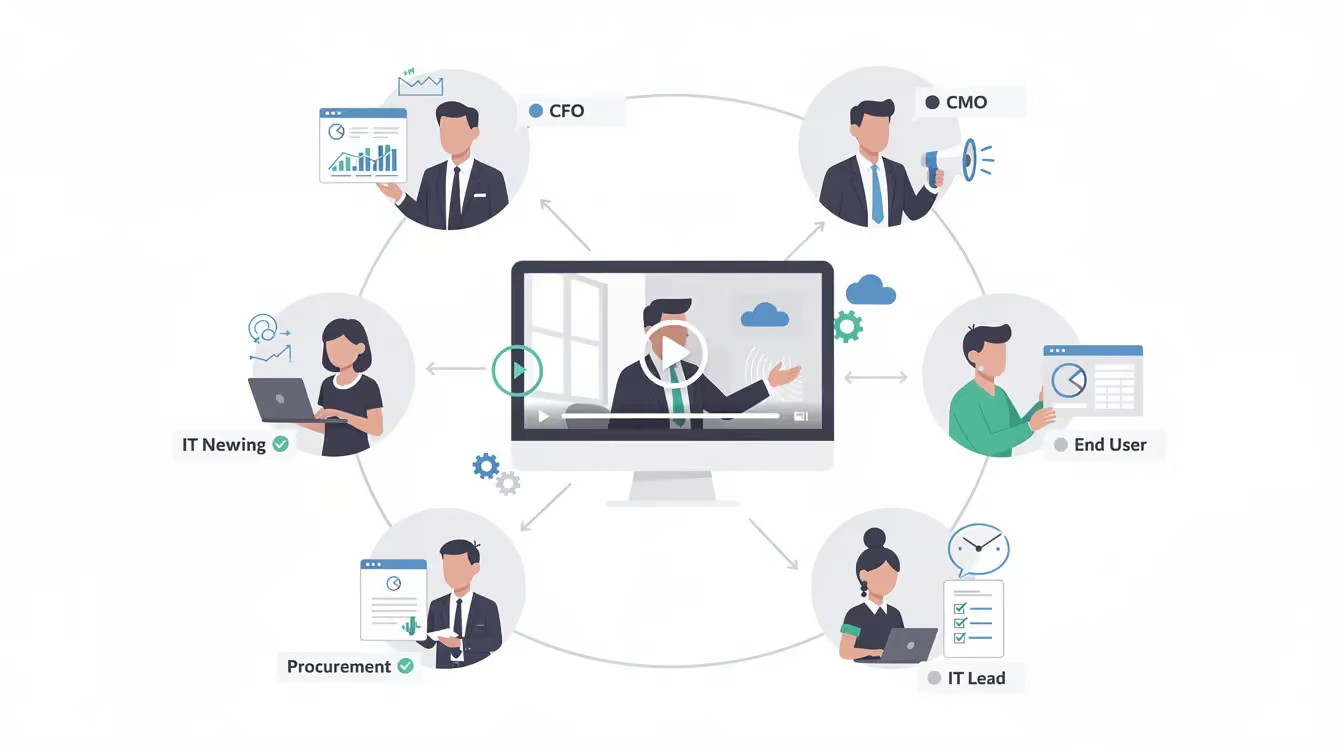
B2B SaaS deals in 2026 typically involve 6 to 10 stakeholders. Each one has different priorities, different objections, and different thresholds for risk. Getting all of them aligned around a purchase decision is rarely straightforward.
Video testimonials help because they do something no sales deck can. They put a real person in front of your prospective customers and let that person make the case for you. That human connection is what moves buying committees forward.
Around 92% of B2B buyers conduct independent research before engaging a vendor, according to HubSpot's 2025 State of Marketing report. They are watching customer success stories, reading written reviews, and comparing options long before your team gets involved. Authentic testimonials meet them where they already are.
Client testimonial videos also work at the specific inflection points where deals stall. Moving a prospect from demo to trial? A satisfied customer from a similar company speaks louder than another follow-up email. Trial to pilot? Feature a real client who describes exactly what implementation looked like. Pilot to signature? Lead with measurable outcomes and multi-year ROI.
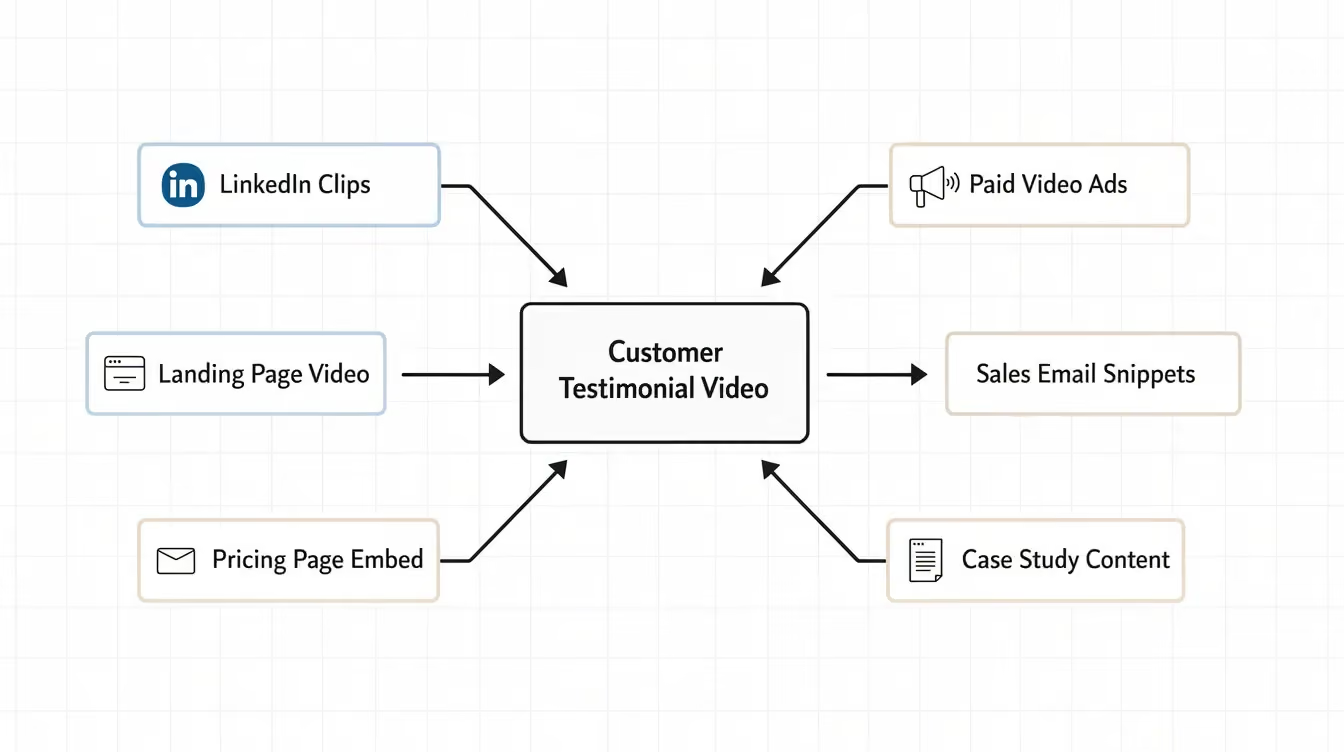
A single well-produced testimonial video can live in your sales playbook for years, embedded across nurture sequences, pricing pages, and outbound campaigns.
The goal is video content that ties directly to deal velocity and pipeline progression.
Identifying the Right SaaS Customers to Feature
Who you feature matters as much as what they say. In niche B2B SaaS markets, a testimonial from the wrong customer can hurt your positioning with the buyers you are trying to reach.
Here is what to look for when building your candidate list:
ICP fit is non-negotiable. The customer should match your ideal customer profile in terms of company size, industry, and use case. A startup story will not resonate with enterprise buyers, and vice versa.
Recognizable logos add instant credibility. If prospects know the company, they trust the testimonial more. Global brands and industry leaders carry weight, especially in competitive evaluations.
Strong, measurable results make the case. Look for customers who can speak to specific outcomes like 40 to 60% efficiency gains, revenue uplifts, or time saved. Vague positive experiences do not move deals.
Camera comfort helps, but it is not everything. Some of your best advocates might be camera-shy. Production approaches like B-roll-heavy edits and remote capture kits work around this without sacrificing quality.
Build a testimonial matrix. Map your candidates across segments (startup, mid-market, enterprise) and verticals (healthcare, fintech, logistics, manufacturing). This gives you strategic coverage so every potential customer sees someone like them. Prioritize customers with strong usage metrics, clear expansion stories, or transformation narratives that show measurable before and after impact.
Timing the ask matters. The best moments to approach a customer are right after a big win, at renewal, or during expansion. Enthusiasm is high, results are fresh, and they are far more likely to say yes.
If you already have written case studies, those are a natural starting point, especially if you are building out a broader B2B case study library alongside your video program.
SaaS-Specific Storytelling Frameworks
Structure is what separates forgettable customer feedback from a compelling narrative that actually influences deals.
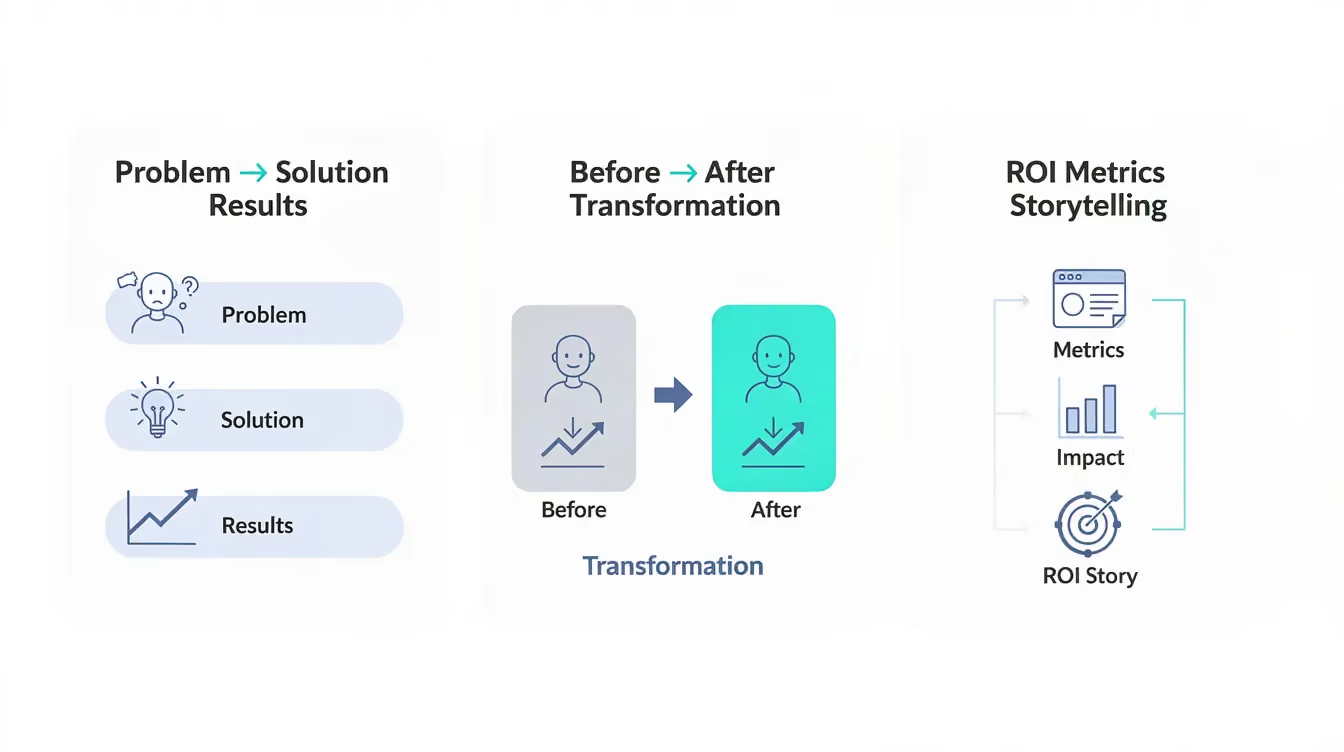
Here are three frameworks that work specifically for B2B SaaS customer stories, and each one can inform your testimonial script before production starts.
Problem-Solution-Results
This is the classic 3-act structure, and it works because it mirrors how buyers think.
Act 1: The problem. What was broken before? Get specific. Example prompt: "Walk me back to early 2024. What was broken in your pipeline reporting?"
Act 2: The solution. How did they find you, and what did implementation look like? Example prompt: "What made you choose this platform over others you evaluated?"
Act 3: The results. What measurable outcomes did they achieve, and when? Example prompt: "How did your forecasting accuracy change by Q1 2025?"
This framework works best for mid-market and enterprise customer success stories where buyers want narrative context plus hard numbers. Include specific timeline mentions for concreteness, like "we went from spreadsheet chaos in 2023 to stable reporting by Q3 2025."
Before-After Story Arcs
This framework leans into emotional connection. Life before the product versus life after, framed around specific workflows your target buyers will recognize.
What "before" should cover:
Manual tasks that consumed hours every week
Missed SLAs or deadlines
Team frustration and churn risk
What "after" should look like:
Saved hours per week with specific numbers
Happier teams and faster launches
Real users describing their day-to-day customer experience
Visual storytelling makes this framework land. Think messy spreadsheets versus clean dashboards. Chaotic Slack threads versus organized workflows. Before-After works especially well for user-centric SaaS tools like support platforms, collaboration software, and RevOps systems where daily work pain is obvious and relatable.
ROI and Quantification Stories
Executive buyers expect hard numbers. Time saved. Revenue influenced. Cost reduced. Risk avoided. Example metrics to surface in your customer interviews:
Lift in qualified opportunities
Reduced onboarding time
Support ticket reduction
Renewal and expansion improvements
A concrete example that lands well on camera: "Pipeline visibility went from weekly CSV uploads to real-time data, cutting forecasting prep by 60% in 2025."
This framework targets late-stage deals and is one of the strongest drivers of video ROI for ABM campaigns aimed at CFOs and CMOs. Use simple counters and motion graphics to make the numbers land visually. Avoid over-scripting. Let real customers state the metrics in their own words for authentic storytelling that feels credible rather than rehearsed.
Technical Considerations for SaaS Testimonial Videos
SaaS testimonial video production needs more than talking heads. Viewers engaged with your content want to see the product in action, understand outcomes visually, and trust that your company is as professional as you claim.
Screen Recordings and Demo Videos
Capturing crisp UI footage is essential for software customer testimonial videos. A few basics:
Record at 1080p or 4K to match current product design
Hide sensitive data like PII or customer names in dashboards before recording
Storyboard the screen recording sequence before you hit record
Match the footage directly to the customer story, showing the exact workflow they describe on camera
Demo videos embedded in testimonials should feel like a natural extension of the story. Keep them short. Five to ten seconds of clean interface footage is often enough to illustrate a point without turning the video into a product walkthrough.
Visualizing Data, Outcomes, and Integrations
Abstract concepts like "faster pipeline velocity" or "automated data enrichment" need visual translation to land with busy buyers.
Use simple counters for metrics like "Productivity +40%" rather than complex graphs that require reading
Show integration icons for tools like Salesforce, HubSpot, Slack, and Snowflake to demonstrate ecosystem fit
Keep visual style aligned with your existing product marketing so everything feels consistent
Visual consistency across your testimonials and product marketing reinforces your value proposition and builds customer satisfaction.
Production Quality for Hybrid and Remote Shoots
Many SaaS companies have distributed teams and customers spread across time zones. Remote recording is standard now, but quality still needs to feel executive-ready.
Best practices for remote tech testimonial production:
Send capture kits including a camera, microphone, and lighting when possible
Guide customers on framing, background, and environment before the shoot
Record locally rather than capturing over low-bitrate video calls
Clear audio and steady framing have more impact on perceived quality than expensive lenses. Subpar production reflects on your brand as a service provider, even if your software is excellent.
Handling Multi-Stakeholder Testimonials in Enterprise SaaS Deals
Enterprise SaaS deals involve champions, economic buyers, security teams, IT leads, and end users. A single client testimonial from one person rarely covers enough ground to satisfy a full buying committee.
Composite testimonials solve this. Instead of one spokesperson, you feature multiple stakeholders from the same customer in a single, tightly edited piece. Each person addresses a different layer of the buying decision:
Champion: Articulates the pain point and why they pushed for change
Economic buyer: Validates the ROI and business case
Technical lead: Explains implementation, integrations, and security
End user: Describes daily adoption and what changed in their workflow
This structure mirrors how real buying committees evaluate software. The prospective customers watching your video will recognize their own roles and hear answers to the exact questions they are carrying into the evaluation.
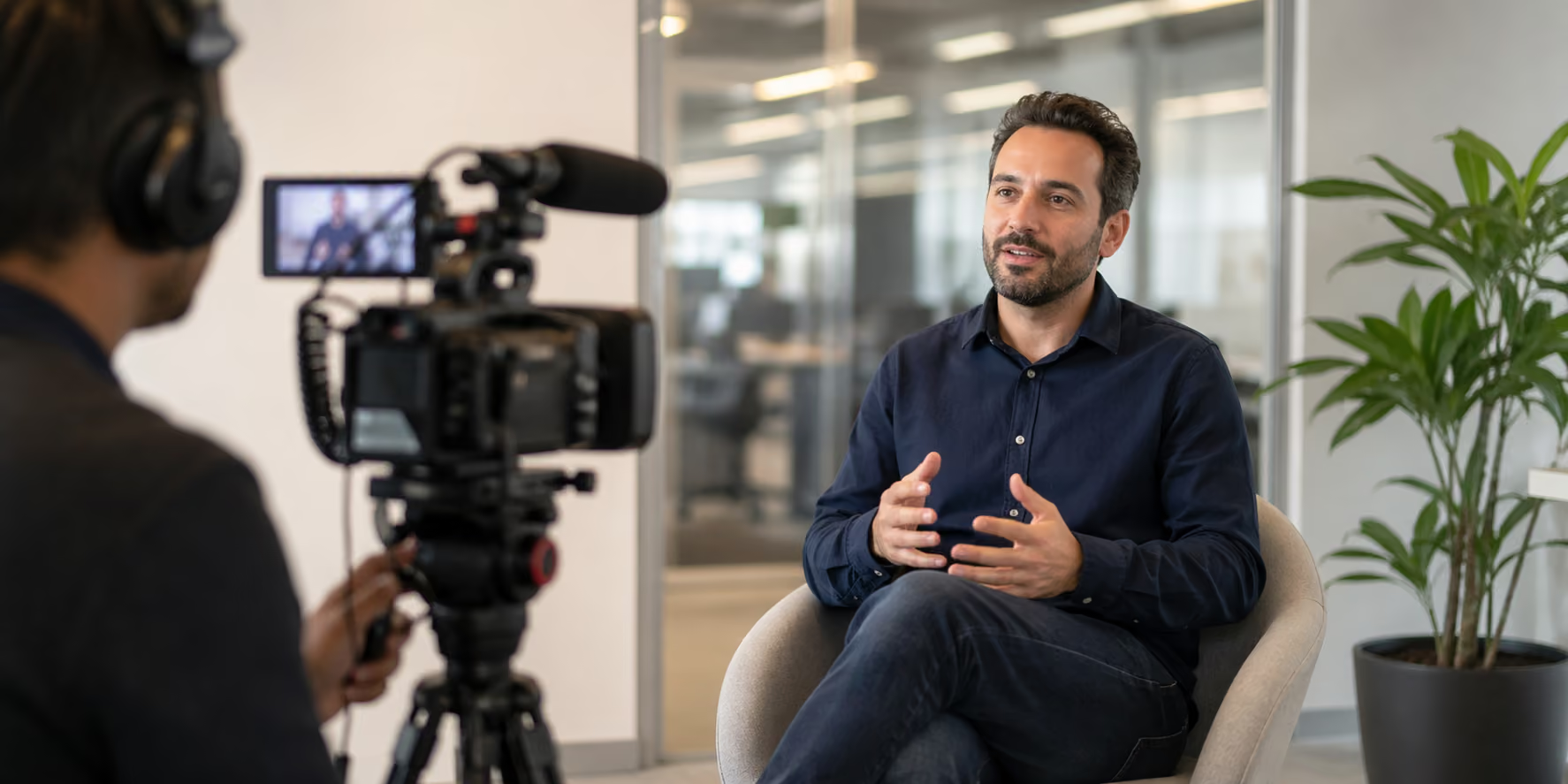
Filming multi-stakeholder videos works best in half-day blocks at the customer's office. You capture multiple customer interviews plus environment B-roll while minimizing disruption to their team. This approach surfaces more candid, authentic on-camera moments than remote calls consistently deliver.
For SaaS companies targeting enterprise accounts, this format is one of the most effective B2B SaaS case study video formats available. It addresses technical, financial, and operational objections in a single asset that sales teams can deploy across the entire deal cycle.
CaseLeap's on-site testimonial service is specifically designed around these multi-stakeholder enterprise shoots. Not sure which format fits your customer? See how on-site vs remote production compares.
Distribution Strategies for SaaS Testimonial Videos
A testimonial video only drives revenue if prospects see it at the right moment in their customer journey. Production is half the work. Distribution is the other half.
Free Trial and Signup Pages
Prospects on trial and signup pages are close to action. Videos here should focus on quick, high-impact proof from satisfied customers.
Place 60-second clips near primary CTAs on your landing page
Use captions and muted auto-play so visitors can scan key quotes without committing to full playback
Personalize by segment where possible, showing different customer stories to visitors from fintech versus healthcare versus logistics
Pricing Pages and ROI Proof
Pricing pages introduce sticker shock, especially for annual or multi-year SaaS contracts. Customer testimonials placed here should speak directly to value realization and measurable results.
Align clips to pricing tiers, for example a startup success story near the base plan and an enterprise transformation near custom pricing
Add on-screen callouts with metrics like "Paid for itself in under 90 days"
Let real customers make the ROI case so your digital marketing efforts feel credible rather than self-promotional
This is one of the most underleveraged placements for client testimonial videos in SaaS.
Sales Sequences and Outbound Campaigns
Sales teams can embed 30 to 90 second customer clips directly into outbound emails, LinkedIn messages, and digital sales rooms.
Map specific testimonial clips to common objections your team encounters:
Security concerns: lead with a compliance-focused customer story
Implementation time: feature a quick-rollout success story with a specific timeline
Switching costs: highlight a real client who migrated from a competitor and describes the process honestly
Build a customer proof library that RevOps maintains so sales teams know exactly where to find approved on-brand assets at every stage. Platforms like Vidyard can host personalized video intros that lead directly into a core testimonial, with Vidyard reporting up to 7.4x higher reply rates for video-based outbound.
For a deeper look at how testimonials in sales actually get used, that is worth a dedicated read.
Using Testimonials Across the SaaS Funnel
Top of Funnel: Customer Stories That Build Trust
TOFU testimonial content should be quick and easy to consume. Think LinkedIn, YouTube pre-roll, homepage hero sections, and paid ads on social media platforms.
Keep clips under 30 to 45 seconds
Focus on category-level pain, not feature walkthroughs
Use bold on-screen quotes for fast-scrolling feeds
Lead with personal experiences, not the product
The goal is trust and relevance with potential customers who are just becoming aware of you.
Mid Funnel: Evaluation and Customer Feedback
Mid-funnel prospects are comparing you to alternatives. Videos here can go deeper.
A 2 to 3 minute SaaS customer success video works well at this stage
Cover implementation details, team workflows, and integration specifics
Highlight vendor support, security reviews, and edge cases
Feature real clients who switched from competitors, focused on outcomes
This is where engaging video content about practical benefits and real world results wins evaluations.
Bottom of Funnel: Client Testimonial Videos That Close Deals
BOFU use cases include legal reviews, security sign-offs, procurement approvals, and executive sponsor alignment.
Focus on risk reduction and multi-year ROI
Include specific metrics and dates
Highlight renewals, expansions, and cross-product adoption
Use clips in QBR decks and board updates
A strong client testimonial at this stage makes the final decision feel obvious to everyone in the room.
Best Testimonial Video Examples: What Makes Them Effective
The best testimonial video examples share a few things in common.
They lead with a specific problem, not a product pitch. The most effective software customer testimonial videos open with a real, recognizable pain point. Buyers watching immediately think "that sounds like us" and keep watching.
They show the product, not just talk about it. A customer describing a workflow improvement while the actual dashboard appears on screen is far more convincing than a talking head alone. Screen recordings and motion graphics turn abstract claims into visible proof.
They include concrete, specific outcomes. Vague positive experiences do not build buying confidence. The best B2B SaaS case study videos lead with numbers and named results, not general praise.
They reflect the real customer journey. The most credible authentic testimonials include honest context about the evaluation process and what changed day to day for real users.
They are built for repurposing from the start. A 90 to 180 second master cut is the foundation, with a video short for social and a longer edit for sales enablement planned from the same shoot.
For a real example of this approach in practice, the Status Solutions testimonial shows how authentic client and storytelling and work together with a system overview to build trust and move decision makers forward.
FAQs
How long should a SaaS testimonial video be for different channels?
For social ads, keep clips to 20 to 30 seconds. Landing pages perform best with 45 to 90 second testimonials. Sales enablement and case study content can run 2 to 3 minutes. Plan multiple cuts from a single shoot so you are not rescheduling customers just to get a shorter version.
What does a typical SaaS testimonial production process look like?
Most productions follow this sequence: discovery and goal setting, customer selection, story planning, filming (remote or on-site recording), editing, and final delivery. Expect 5 to 8 weeks from kickoff to final assets. Align internal stakeholders early to prevent approval delays.
How many testimonial videos does a SaaS company actually need?
Start with 4 to 6 videos covering your core ICP segments, key verticals, and primary use cases. That gives sales teams real world proof for the deals that matter most. Expand the library over time as your go-to-market motion grows. Quality and strategic coverage beat volume every time.
How do we handle customers who are camera-shy or under strict brand guidelines?
Options include off-camera voiceover with B-roll, mixed-media formats using screen recordings and motion graphics, or anonymized stories for confidential situations. A pre-production call with the customer goes a long way toward building comfort and clarifying any messaging boundaries before shoot day.
How do we measure the ROI of SaaS testimonial videos?
Track landing page conversion changes, reply rates in outbound sequences using customer clips, and deal stage progression in your CRM. Tag video touchpoints in your marketing automation so you can see which testimonials appear most often in closed-won deals. Each video compounds in value as more teams adopt it.
SaaS customer testimonial videos are a core revenue tool, not a content side project. The companies winning with customer proof are strategic about who they feature, how they structure the story, and where they deploy each asset across the funnel.
Audit your current proof library. Which segments have no video coverage? Which funnel stages are your sales teams navigating without a strong customer story? Start there.
When you are ready to build a testimonial video program tied directly to the pipeline, visit CaseLeap.
Build trust and accelerate conversions
Contact us today. We'd love to help you supercharge your sales conversions.