Get a Video Gap Analysis for your company · See which videos could have the biggest pipeline impact
See Where Your Competitors Are Winning With Video Get a custom Video Gap Analysis for your company · See which videos could have the biggest pipeline impact
Thanks - our team will review your website and put together your personalized Video Gap Report. Expect it atthe email address you provided within 2 business days.
We'll put together a personalized report showing where video could have the biggest impact, how your competitors are using it, and specific opportunities for your team. You'll get strategic recommendations, not generic advice.
Thank you! Your submission has been received!
Oops! Something went wrong while submitting the form.
SaaS Customer Testimonial Questions That Get Better Stories
SaaS customer testimonial questions that uncover stronger stories, specific results, adoption details, and credible proof.
July 7, 2026
You already know you need customer testimonials. The problem is that most customer testimonial questions were written for products that sell themselves in a single conversation. SaaS does not work that way. Your buyers are comparing integrations, calculating time-to-value, and running the numbers past finance before they commit to anything.
Ask a SaaS customer "what do you like about our product?" and you will get "the team was great." That answer does nothing for a prospect weighing a six-figure annual contract against two other vendors.
This guide covers testimonial interview questions designed specifically for SaaS buyer psychology - onboarding details, workflow impact, and measurable ROI that prospective customers need to hear before they sign.
Why Generic Testimonial Questions Fall Flat for SaaS Customers
SaaS purchasing decisions carry a specific set of concerns that generic testimonial questions never touch:
Adoption risk: Will employees actually use it after the initial rollout?
Integration risk: Will this plug into our existing tech stack without breaking something?
Adoption anxiety: Will the team actually log in after week two?
Time-to-value: How long will it take to produce a meaningful result?
ROI uncertainty: Will results justify the spend when finance reviews it next quarter?
Multi-stakeholder alignment: The CTO cares about API stability while the CFO cares about cost per seat
A satisfied customer saying "easy to use" does not provide social proof that moves potential customers closer to a decision. It does not address a single one of those concerns.
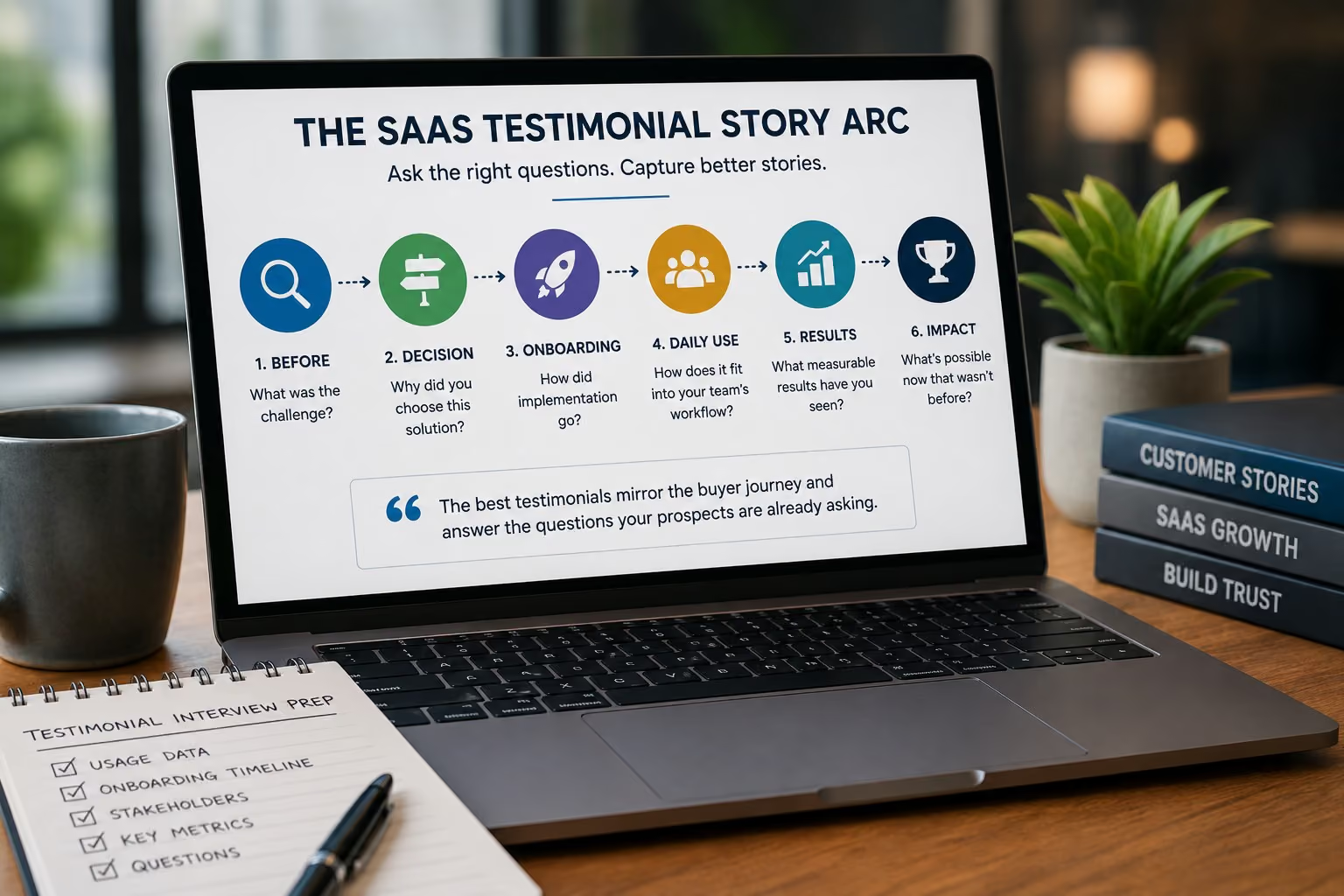
The fix is structural. Your testimonial interview should follow the same phases the buyer went through: discovery, onboarding, daily usage, outcomes, and expansion. When your questions map to that arc, you collect feedback that mirrors the buyer journey and builds trust at every stage instead of floating above it.
What to Gather Before the Interview
Walking into a testimonial interview cold is how you end up with surface-level answers and vague follow up questions that go nowhere. The prep work determines whether the final video sounds like a real story or a polished nothing.
Usage Data and Account History
Pull the customer's usage metrics before the call:
How many active users log in weekly?
What percentage of the team has adopted the product versus seats purchased?
Which features are used daily versus occasionally?
Ask about:
Changes in usage over time
Teams or departments using the platform
Any renewal, expansion, or upgrade history
A customer using three core features daily tells a completely different story than one logging in monthly to pull a report. This data helps you identify areas where the testimonial can go deep instead of staying shallow. When you walk in already knowing the specific details of their usage, you can guide the customer toward confirming them naturally instead of hoping they volunteer something useful.
Onboarding Timeline
Document the key dates:
Contract signed
First login
Initial setup
First workflow completed
First measurable result
Full team rollout
Note where delays happened and where things moved faster than initial expectations. This timeline lets you ask precise questions during the interview, like "your team completed setup in nine days, which is faster than most of our customers - what made that possible?"
That kind of specificity produces detailed responses that potential clients trust far more than open-ended praise.
Any Internal Champions or Stakeholders Involved
Find out who initiated the purchase, who had to approve it, and who uses the product or service day to day.
This shapes who you interview and what you ask them:
A CTO gives you credibility on technical integration
A department head describes workflow impact and customer satisfaction
A finance stakeholder speaks to ROI and cost justification
An executive can speak to business impact and strategic value.
A daily user can describe practical improvements in the work itself.
Asking the right person the right questions is how you build credibility with future customers who hold those same roles. The worst testimonials come from interviewing someone who was not close enough to the decision or the daily usage to give you anything specific.
Questions About the "Before" State
The best SaaS testimonials start with contrast. You need the audience to feel the friction of the old way before you show them the new way. Without that setup, results have no context and the story falls flat.
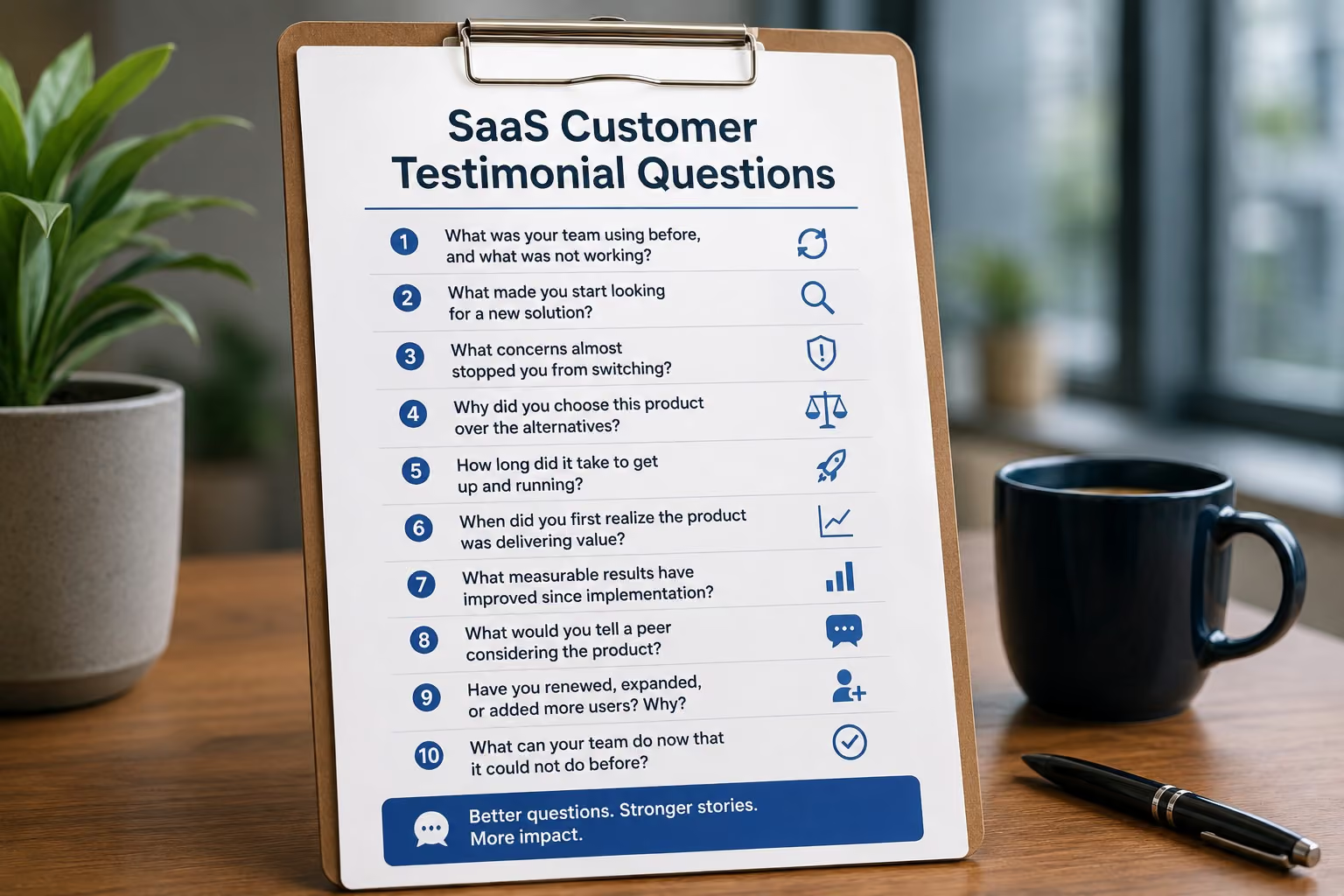
What Were You Using Before, and What Was Not Working?
"What tools or processes were you using before? What specifically was not working?"
"Can you walk me through what a typical day or week looked like with the old approach?"
"What was the tipping point that made you start looking for something new?"
"Who was most affected by the old process?"
"What worried your technical team?"
"What worried leadership or finance?"
Let the customer talk here. The more specific they get about their old process, the more relatable the testimonial becomes for potential customers living that same reality right now. Day-in-the-life details are where the strongest footage comes from - not scripted praise, but genuine frustration with the way things used to work.
What Almost Stopped You From Switching?
This is one of the most powerful questions in a SaaS testimonial interview:
"What concerns or objections almost stopped you from moving forward?"
"Was there pushback from anyone internally? What were their specific worries?"
"What would have happened if you had stayed with the old approach?"
Every prospect has hesitations about cost, migration risk, or team pushback. When an existing customer names those same objections and explains how they got past them, it carries more weight than anything your sales team could say. This question brings objections into the open and lets the customer resolve them on camera - which builds trust with potential leads carrying the exact same concerns.
Why Did You Choose This Product?
"What alternatives did you consider?"
"What ultimately made this product stand out?"
"Was there a feature, capability, or part of the process that influenced the decision?"
"Who needed to feel confident before the purchase could move forward?"
Avoid pushing the customer to criticize competitors by name. The goal is to understand the decision criteria and why your solution matched them.
Questions About Onboarding and Time-to-Value
Time-to-value is the single most persuasive proof point in SaaS marketing. It directly addresses the prospect's unspoken question: "How long until this thing actually works for us?" Powerful testimonials answer that with a specific example, not a generality.
How Long Did It Take to Get Up and Running?
How long did it take to move from signing the contract to using the product?"
"How long did it take to complete your first real workflow?"
"Which part of setup required the most effort?"
"Did anything move faster or more smoothly than expected?"
"Who supported your team during implementation?"
Compare vague and specific answers:
Vague: "Onboarding was easy."
Specific: "We were live in six days and launched our first campaign by day ten."
The second answer gives prospective customers a clearer idea of what implementation could look like for them.
When Did You First See Value?
"When did you first feel confident this was working? What result triggered that?"
"Was the initial value related to cost savings, time saved, revenue, or something else?"
"How much time passed between going live and seeing that first measurable win?"
Encourage customers to describe tangible benefits. "We cut our reporting time by half within three weeks" is a line that belongs on a landing page. "It was great" is a line that belongs nowhere. Push past the first answer - the good stuff always comes after the customer stops being polite and starts being specific.
Questions About Usage, Integration, and Workflow Impact
Once onboarding is covered, you need to show how the product lives inside the customer's daily operations. This is where you demonstrate that adoption is real, not superficial. Video testimonials are especially effective here because they let viewers see genuine enthusiasm when someone describes how their workday actually changed.
How Does This Fit Into Your Existing Stack?
Ask:
"Which systems does the product connect with?"
"Did it replace another tool or work alongside your existing systems?"
"Did your team need custom development or API work?"
"Were there any integration steps that surprised you?"
"How did the integration affect implementation or adoption?"
Specific platform names can make an answer especially useful to prospects with a similar stack. Any technical or product claim should be checked before publication to ensure the testimonial does not create inaccurate expectations.
What Changed in the Day-to-Day Workflow?
Ask:
"What does a typical day or week look like now?"
"Which tasks became faster or easier?"
"What work was reduced, automated, or eliminated?"
"Who uses the product most often?"
"What can your team do now that it could not do before?"
A concrete workflow change often produces one of the strongest lines in the final video:
"I used to spend two hours building the report manually. Now it takes about ten minutes."
How Did the Team Respond?
Ask:
"How widely has the product been adopted?"
"Was anyone hesitant to use it at first?"
"What helped the team build it into their routine?"
"Did any skeptics become active users?"
"Has usage expanded to other teams or departments?"
This section is especially useful when prospects may be worried about employee adoption or change management.
Which Feature Has Made the Biggest Difference?
Ask:
"Which feature do you use most often?"
"Was there a capability you did not expect to rely on?"
"Which feature has had the greatest effect on your workflow?"
"Is there a feature another customer might overlook?"
Feature questions work best after the customer has described the broader problem and outcome. Otherwise, the testimonial can start to sound like a product demonstration instead of a customer story.
Customer Testimonial Questions About Measurable Results
The strongest SaaS testimonials connect the product to a business result. Ask for numbers whenever the customer is comfortable sharing them.
What Metrics Have Improved?
Ask:
"Which metrics changed after implementation?"
"Can you quantify the improvement?"
"What was the result before and after?"
"How much time does the team save each week or month?"
"Has the product affected revenue, retention, conversion, productivity, or customer satisfaction?"
"Which number would you show your CFO to justify the investment?"
Useful results might include:
Hours saved
Faster turnaround times
Reduced operating costs
Increased output
Improved conversion rates
Lower churn
Higher retention
Faster onboarding
Fewer errors
Increased product adoption
Push gently for context. "We saved 15 hours a week" is useful. "We saved 15 hours a week across a five-person operations team" is stronger.
Would You Be Comfortable Sharing a Number on Camera?
Discuss this before recording. Customers may need approval or time to confirm the data.
To make the request easier:
Ask permission during the prep call.
Explain which metrics you hope to discuss.
Let the customer confirm the number internally.
Offer a range or percentage instead of an exact financial figure.
Use language such as "roughly," "approximately," or "more than."
Confirm that the customer approves the final wording before publication.
Never pressure a customer to reveal confidential information. A credible directional result is better than a precise number they are not authorized to share.
Customer Testimonial Questions That Produce Strong Soundbites
A full interview should also produce a few short lines that can work independently on landing pages, social posts, sales decks, and ads.
What Would You Tell a Peer?
Ask:
"What would you tell a peer who was considering this product?"
"How would you describe the value in one sentence?"
"What is the biggest reason you would recommend it?"
"What do you wish you had known before getting started?"
This forces the customer to summarize the story in natural language. Ask it near the end, after they have already reflected on the problem and results.
Have You Renewed or Expanded?
Ask:
"Have you renewed since the initial purchase?"
"Have you added users, teams, features, or locations?"
"What led to that expansion?"
"What does continued use say about the value of the product?"
Expansion is strong evidence of sustained value. A customer saying, "We started with one department and now three teams use it," can be more persuasive than a broad statement of satisfaction.
What Surprised You Most?
Ask:
"What result did you not expect?"
"Was anything easier than you anticipated?"
"Did the product solve a problem you did not originally buy it to solve?"
"Did your team use the platform in a way you had not predicted?"
Unexpected outcomes often make the story more memorable and less scripted.
How to Run the Questions During a Video Testimonial Interview
The questions matter, but the way the interview is conducted has just as much influence on the final result.
Start With Easy Warm-Up Questions
Begin with the customer's role, team, and responsibilities. These questions help the speaker settle in before discussing objections, implementation, and ROI.
A natural sequence is:
Role and company context
The old problem
The decision
Onboarding
Daily use
Measurable results
Recommendation and expansion
Prepare More Questions Than You Expect to Ask
For a typical customer interview:
Prepare 8 to 12 core questions.
Prioritize 5 to 7 based on the direction of the conversation.
Leave room for follow-up questions.
Keep the recording focused enough that the customer does not become fatigued.
The goal is not to ask every question. It is to uncover the strongest story.
Use Follow-Up Questions to Get Specific Answers
The first response is often a summary. The useful detail usually comes next.
Helpful follow-ups include:
"Can you give me an example?"
"What did that look like before?"
"How much time did that take?"
"Who noticed the difference first?"
"What changed because of that?"
"Can you put a number on it?"
"How did that make your job easier?"
These short prompts often produce the most valuable moments in the interview.
Prepare the Customer Without Over-Rehearsing
Send the main topics or questions a few days before recording so the customer can confirm facts and gather relevant metrics. Do not ask them to memorize a script.
Let them know:
"We want this to sound like you. Review the questions and think about a few examples, but please do not prepare a word-for-word statement."
A prepared customer is usually more confident. An over-rehearsed customer can sound less credible.
Ask for Complete Answers
In an edited video, the interviewer may not appear. Encourage the customer to include enough context for the answer to stand on its own.
Instead of:
"About three weeks."
Ask for:
"We started seeing measurable results about three weeks after launch."
This makes the footage much easier to edit and repurpose.
Review Important Claims Before Publishing
Customer stories should sound natural, but factual claims still need review. Confirm:
Product and feature descriptions
Performance metrics
Implementation timelines
Pricing or savings claims
Integration details
Compliance or security statements
Competitor comparisons
The purpose of review is to verify accuracy, not rewrite the customer's experience into marketing language.
When to Bring in Professional Production
If the video will live on landing pages, in ad campaigns, or in sales presentations, the production quality needs to match the stakes. For on-site shoots at your customer's office, professional lighting, sound, and editing make the difference between a testimonial that builds credibility and one that gets skipped. For remote recording sessions, make sure the customer has decent equipment and a quiet space, and always have a backup plan for dropped connections.
If coordinating testimonial interviews, scripting, and production feels like a lot to manage internally, that is because it is. Working with a team that specializes in testimonial video production means your customers get a better on-camera experience and you get a final product that actually moves pipeline and the building blocks of a strong customer proof library.
What testimonial questions should you ask in a SaaS customer testimonial?
Effective SaaS testimonial interview questions cover the customer's prior pain points, why they chose the product, how onboarding went, how the tool fits into their workflow, and specific measurable outcomes like time saved or revenue impact.
How do you get a customer to share a specific metric on camera?
Ask permission to discuss numbers before the interview starts, offer to keep figures general if needed (such as "a significant percentage" instead of an exact number), and have the customer practice the answer once before recording.
What is the best opening question for a SaaS testimonial interview?
A strong opening question asks the customer to describe what their team was doing before they adopted the product, which sets up a natural before-and-after narrative for the rest of the interview.
How many questions should a SaaS testimonial interview include?
Plan for 8 to 12 questions, but expect to use only 4 to 6 of the strongest answers in the final video. Extra questions give the editor more material to choose from.
How do you handle collecting testimonials when a customer had a rough onboarding?
Lean into the honesty. A testimonial that acknowledges bumps but highlights how your team resolved them builds more credibility than one that pretends everything was perfect. Prospective customers decide based on how problems were handled, not whether problems existed. Customers who had a rocky start but stayed are often the most willing to leave feedback because the resolution story is genuinely theirs to tell.
Should you send testimonial questions in advance?
Yes. Sending the main questions in advance gives customers time to gather accurate details and feel more comfortable. Ask them not to write a full script so their answers still sound natural.
What makes a customer testimonial answer persuasive?
The most persuasive answers include a recognizable problem, a specific change, and a credible result. Concrete details such as timelines, workflow examples, adoption numbers, and measurable outcomes are more useful than general praise.
Build trust and accelerate conversions
Contact us today. We'd love to help you supercharge your sales conversions.