Get a Video Gap Analysis for your company · See which videos could have the biggest pipeline impact
See Where Your Competitors Are Winning With Video Get a custom Video Gap Analysis for your company · See which videos could have the biggest pipeline impact
Thanks - our team will review your website and put together your personalized Video Gap Report. Expect it atthe email address you provided within 2 business days.
We'll put together a personalized report showing where video could have the biggest impact, how your competitors are using it, and specific opportunities for your team. You'll get strategic recommendations, not generic advice.
Thank you! Your submission has been received!
Oops! Something went wrong while submitting the form.
Testimonial Video Production Timeline: What to Expect from Start to Finish
How long testimonial video production takes & what affects the timeline
May 28, 2026
A testimonial video production timeline is the structured workflow that takes your project from the first planning conversation to final video delivery.
For most B2B marketing teams, that process takes 4 to 8 weeks. Some remote projects with a tight scope can wrap in 2 to 3 weeks. More complex shoots with multiple locations or a longer approval chain can run longer.
This blog will walk you through every phase of the entire production process, what affects your schedule, and how to plan around real campaign deadlines.
Why Does Timeline Planning Matter for Testimonial Video Projects?
The people you want to feature in your testimonial videos are usually busy. Executives, senior managers, and key customers do not have open calendars. Booking interview time alone can take 1 to 2 weeks, sometimes more depending on the season.
Campaign deadlines make this even harder. If your video needs to support a product launch or trade show, a late delivery does not just delay the asset, it kills its value entirely.
Internal approvals add another layer. Marketing, legal, compliance, and customer success teams may all need to review footage, messaging, or release forms before anything goes live. Each handoff is a potential delay.
Poor planning shows up in the final product too. Rushed shoots mean missed B-roll, thin coverage, and fewer usable soundbites. A testimonial video that feels incomplete can hurt credibility with potential customers instead of building it.
What Is the Typical Testimonial Video Production Timeline?
Understanding the video production process timeline helps you set realistic expectations from day one.
Projects land on the shorter end when the customer is local, approvals are centralized, scope is limited to one video, and brand assets are ready from day one.
Projects run longer when multiple locations are involved, legal or compliance review is required, post production is heavy, or revision rounds are undefined.
Here is a quick reference for the video project timeline by phase:
Discovery and planning stage runs weeks 1 to 2.
Pre production phase covers weeks 2 to 3.
Production happens in weeks 3 to 4.
Post-production and delivery spans weeks 4 to 6.
Phase 1: Discovery and Planning (Weeks 1 to 2)
Goal alignment comes first. Get clear on the target audience, key messages, distribution channels, and what success looks like.
Customer selection is the most critical decision in this phase. You need someone with a genuine story, measurable results, comfort on camera, and actual availability within your timeline. The wrong choice here costs you weeks.
Logistics planning runs in parallel. On-site production means location scouting, site access, and travel coordination. Remote recording means scheduling tech checks and confirming the customer has a suitable setup.
By the end of week 2 you should have: a confirmed customer, signed release forms, key metrics, brand assets, internal messaging approvals, and your target launch date.
Phase 2: Pre-Production (Weeks 2 to 3)
The core work here is interview prep. Rather than a full script, the production team develops an interview guide with open-ended questions designed to draw out natural, specific answers. The goal is to guide the conversation toward usable soundbites without making the customer sound rehearsed.
Scheduling the customer interview is also handled here. This means locking in a specific date and time, confirming the location or remote setup, and aligning crew and equipment availability. Customer schedules are the most common source of delays so get this confirmed early.
The creative brief and shot list get finalized during pre-production too. This covers visual style, background and location framing, lighting approach, and the supporting B roll shots needed to tell the story visually.
Technical planning follows. For on-site shoots this means camera, audio, and lighting gear selection along with crew size. For remote recording this means bandwidth checks, software setup, and a test run with the customer before the actual session.
Legal releases and permissions are finalized here as well. In regulated industries like healthcare or finance this step can add time, so flag it early.
Phase 3: Production (Weeks 3 to 4)
For a standard testimonial video with one customer and one location, expect a half day to a full day on site. Remote recording sessions run shorter, typically one hour plus prep time.
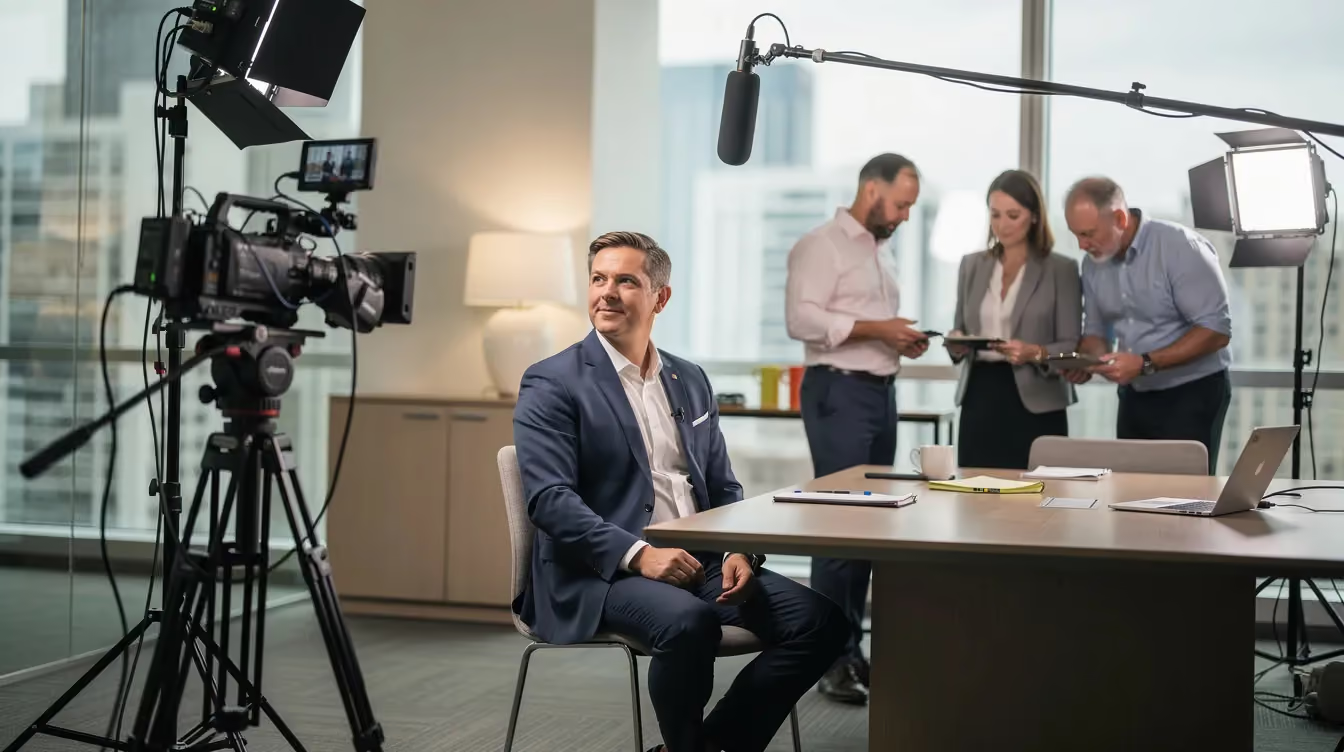
On-site production follows a straightforward sequence. The crew arrives, sets up camera, audio, and lighting, conducts the interview, captures supporting B roll footage, then breaks down equipment and wraps. Interview length typically runs 30 to 60 minutes with the best soundbites usually coming in the first half.
Remote recording is leaner. The production team coordinates tech setup with the customer, confirms lighting and background are acceptable, runs a quick test, then records the session. Quality control happens in real time so any audio or visual issues get flagged and corrected before the session ends.
Multiple locations or multiple interviewees add production days. Each additional customer or site means more scheduling, more travel, more footage to manage, and more complexity in the edit.
Phase 4: Post-Production (Weeks 4 to 6)
The editing process starts with footage review. The editor goes through everything captured on filming day, identifies the best soundbites, and begins assembling the narrative. A rough cut is typically ready within 48 hours of filming for simpler projects.
The first cut goes to the client for review at around the one week mark after production wraps. This is where you assess the story structure, pacing, and whether the key messages land the way you intended.
Two revision rounds are standard. The first covers content and structure: reordering, cutting, or replacing sections. The second covers polish: color correction, audio mixing, graphics, captions, and background music. Each revision round typically takes 2 to 4 days depending on how quickly feedback comes in.
Delays in the review process are the single biggest factor in extending a video project timeline. Shift.AI research shows that content approval bottlenecks are among the top reasons marketing campaigns miss their launch dates. Scattered feedback across multiple stakeholders, late responses, or scope changes after the shoot can add weeks to the schedule. Agree on a review process before production starts.
Final deliverables include the master video file, social cuts for platforms like LinkedIn and Instagram, captions, and any additional format exports needed for landing pages or ads.
What Factors Affect the Testimonial Video Production Timeline?
No two testimonial video projects run on exactly the same schedule. These are the variables that most commonly push a timeline out or pull it in.
Customer availability is the biggest factor. Executives have packed calendars. One customer who cannot film for three weeks shifts everything. Build in buffer time and have a backup customer identified.
Number of interviews multiplies complexity fast. One customer at one location is straightforward. Multiple customers across multiple locations means more scheduling, more travel, more footage, and a longer edit.
Revision rounds and approval chain length are the most underestimated factors. Define who has final sign-off before the project starts and set clear feedback deadlines at each stage.
Production approach affects the whole customer video production schedule. On-site needs location scouting, travel, and crew coordination. Remote is leaner but depends on the customer having a suitable setup and being comfortable on camera.
Brand compliance and legal review add cycles in regulated industries like healthcare and financial services. Flag this in week 1, not week 5.
Story complexity scales the timeline. A single speaker with a clear story moves fast. A multi-stakeholder narrative with screen recordings, multiple locations, and custom graphics takes considerably longer.
On-Site vs Remote: How Does Production Approach Change the Timeline?
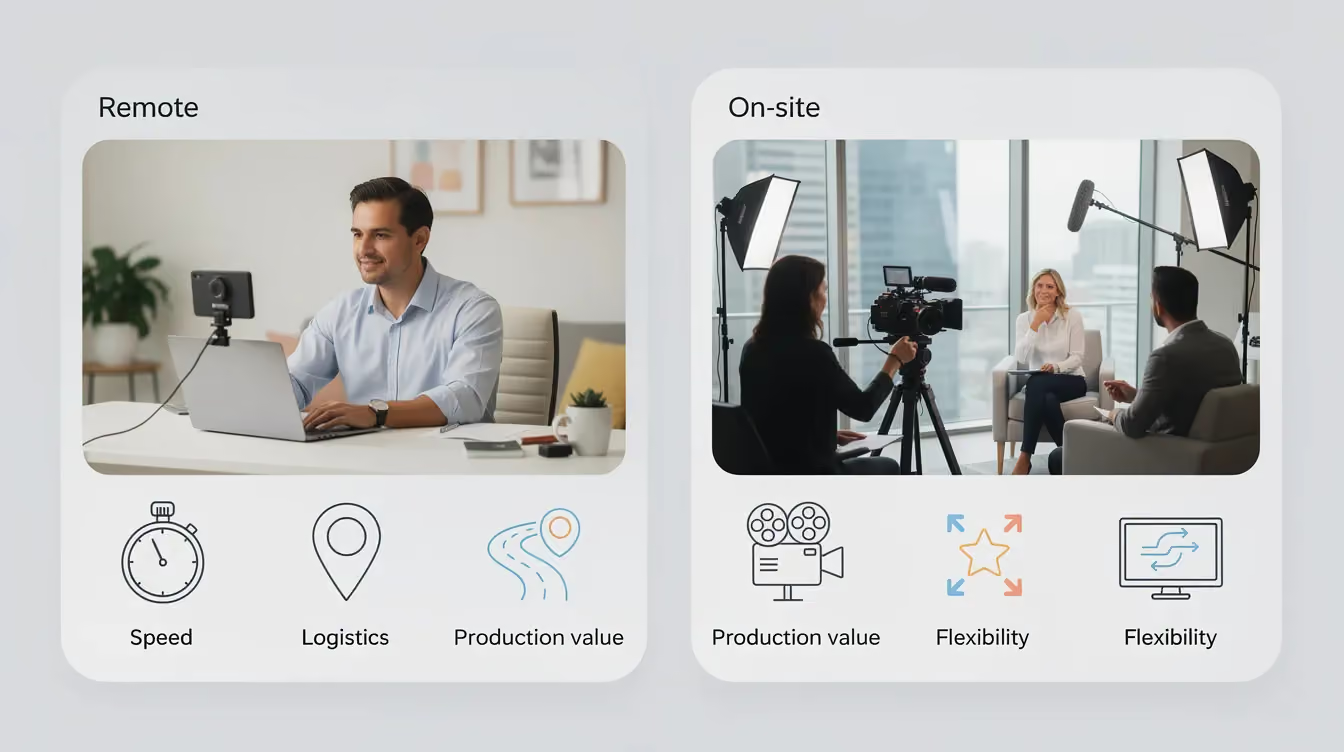
The production approach you choose affects every phase of the schedule, not just filming day. Here is how they compare.
Pre-Production
On-site requires location scouting, site access, travel logistics, gear rental, and crew coordination. Remote needs a tech check, software setup, and a background and lighting review. Remote pre-production is lighter and moves faster.
Production Day
On-site runs half a day to a full day including setup, the interview, B roll capture, and wrap. Remote sessions typically take one hour plus prep. On-site gives you richer visuals and more B roll. Remote gives you speed.
Post-Production
Both approaches follow the same editing process. The difference is footage volume. On-site generates more raw material to sort through. Remote footage is simpler to manage but may need more audio and lighting cleanup.
Which Is Faster Overall?
Remote is generally faster by one to two weeks when the customer is not local and logistics need to be minimal. On-site can match that pace when the customer is nearby and pre-production is tight.
How Can You Accelerate a Testimonial Video Timeline When Needed?
Here is what actually moves the needle when you need to compress the schedule.
Remote recording is the fastest lever. It eliminates travel, location logistics, and crew coordination overhead. A remote session can often be scheduled within the same week and cuts the overall timeline by one to two weeks compared to on-site production.
Streamlining approvals before kickoff makes the biggest difference in post production speed. Identify all decision-makers upfront. Agree on who has final sign-off. Get brand, legal, and compliance stakeholders aligned on messaging before filming starts so the review process does not stall after the first cut lands.
Reducing scope is the most underused option. One strong testimonial video will always outperform three rushed ones. Limit the project to one customer, one location, minimal graphics, and two social cuts. Fewer deliverables means faster editing, fewer revision rounds, and cleaner final delivery.
Rush production is an option with most professional production companies but it comes with tradeoffs. Expect premium pricing, a smaller crew, shorter shoot time, and limited revision rounds. Rush timelines only work when the brief is fully locked before day one.
A realistic fast track looks like this:
Week 1: Discovery, pre-production, and customer confirmation
Week 2: Filming or remote recording plus early edit assembly
Week 3: Revisions and final delivery
Before locking your timeline, it helps to understand what each approach actually costs. See our full breakdown of testimonial video production costs.
What Does a Realistic Testimonial Video Project Look Like Week by Week?
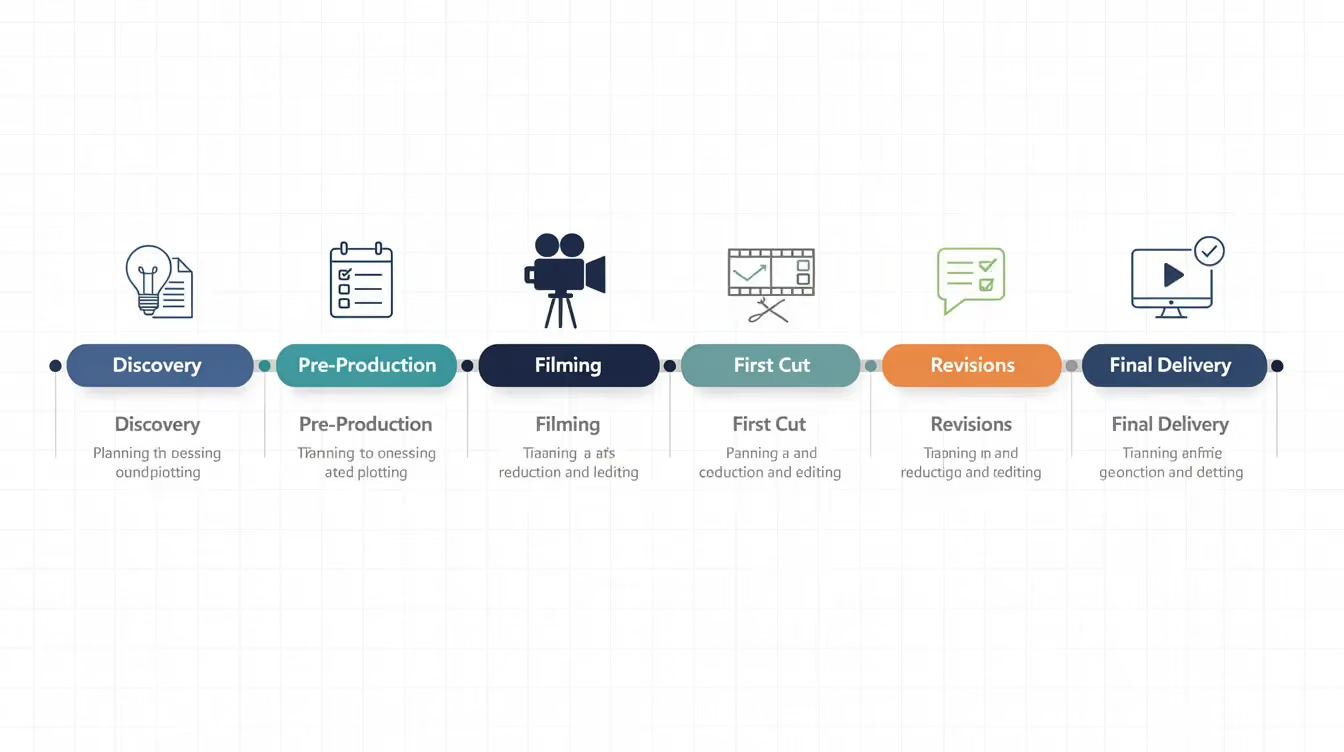
Here is what a 6-week testimonial video project looks like for a marketing director planning around a product launch.
Week 1: Discovery and Planning
The kickoff call happens. Goals, key messages, and target audience are aligned. The production team identifies customer candidates and sends outreach. Release forms go out. Brand assets and proof points are collected.
Week 2: Pre-Production
The interview guide and creative brief are finalized. The shot list is built. Location or remote setup is confirmed. Crew and equipment are arranged. A tech check runs with the customer if recording remotely. Internal messaging approvals are secured.
Week 3: Production
For on-site filming, the crew arrives, sets up, conducts the interview, captures supporting B roll, and wraps. For remote recording, the session is scheduled, tested, and recorded. Footage transfer begins the same day.
Week 4: First Cut
The editor reviews all footage and assembles the first cut. The production team does an internal review before sending to the client. The first cut lands with the client by end of week 4.
Week 5: Revisions and Polish
Client feedback comes in. Content edits are made first: structure, pacing, soundbite selection. Then polish: color correction, audio mixing, captions, background music, and graphics. Social cuts are produced in parallel.
Week 6: Final Delivery
Final approval is received. The master file is exported. All formats, captions, and social cuts are delivered. Usage rights and final assets are handed over.
Milestone checkpoints to track:
End of week 1: customer confirmed, story locked
End of week 2: interview guide and shoot schedule finalized
End of week 3: filming complete, footage transferred
End of week 4: first cut in client hands
End of week 5: revisions resolved
End of week 6: final assets delivered
What Should You Have Ready Before the Project Starts?
Starting a testimonial video project before you are actually ready is the fastest way to delay it. Have these in place before kickoff:
A confirmed customer with a signed release form and a locked availability window
Key messages, proof points, and measurable results you want the video to highlight
Your internal approval chain identified with a clear final sign-off owner
Brand assets packaged and ready: logos, guidelines, color references, and video examples
A distribution plan that defines where the video will live and what formats you need
If your project includes written case studies alongside the video, factor that into your customer outreach and timeline from the start.
FAQs
How long does a testimonial video take to produce?
Knowing how long to produce a testimonial video helps you plan around real campaign deadlines. Most video testimonials take 4 to 8 weeks from kickoff to final delivery.
This covers discovery, pre-production, filming, editing, revisions, and final deliverables. Remote projects with a limited scope and fast approvals can be completed in 2 to 3 weeks. The biggest variable is usually customer availability and how quickly internal stakeholders review and approve the content.
What is the fastest turnaround for a professional testimonial video?
The fastest realistic turnaround for a professional testimonial video is 2 to 3 weeks. This requires remote recording, a tight scope limited to one customer and one video, pre-aligned approvals, and a production team with immediate availability. Some production companies offer rush options for simple remote testimonials in 5 to 7 business days but expect premium pricing and minimal revision rounds.
What is included in the post production phase of a testimonial video?
Post production covers footage review, first cut assembly, client revision rounds, color correction, audio mixing, captions, background music, graphics, and final export. Most projects include two revision rounds as standard. Final deliverables typically include a master video file, social cuts for platforms like LinkedIn and Instagram, and caption files. The entire post production phase usually takes 2 to 3 weeks depending on feedback speed and project complexity.
How does customer availability affect the testimonial video production timeline?
Customer availability is the single most unpredictable variable in any testimonial video project timeline. Executives and senior stakeholders often need 1 to 2 weeks of advance notice minimum. Busy seasons, travel schedules, and competing priorities can push availability out further. The best way to manage this is to confirm the customer and lock in a filming date before the project officially kicks off. Having a backup customer identified is also a smart risk management move.
What is the difference between on-site and remote testimonial video production timelines?
On-site production requires more pre-production time for location scouting, travel logistics, and crew coordination. Filming days are longer, typically half a day to a full day. Remote production has lighter pre-production requirements and shorter session times, usually one hour plus prep. Remote is generally faster by one to two weeks overall. On-site tends to produce higher production value with richer B roll and more visual context. The right choice depends on your timeline, budget, and the kind of final video you need.
Ready to Plan Your Testimonial Video Project?
CaseLeap manages the entire testimonial video production process for B2B marketing teams -- from customer coordination and interview prep to filming and final delivery. We handle the schedule so you can focus on the launch.