Get a Video Gap Analysis for your company · See which videos could have the biggest pipeline impact
See Where Your Competitors Are Winning With Video Get a custom Video Gap Analysis for your company · See which videos could have the biggest pipeline impact
Thanks - our team will review your website and put together your personalized Video Gap Report. Expect it atthe email address you provided within 2 business days.
We'll put together a personalized report showing where video could have the biggest impact, how your competitors are using it, and specific opportunities for your team. You'll get strategic recommendations, not generic advice.
Thank you! Your submission has been received!
Oops! Something went wrong while submitting the form.
Financial services is one of the hardest industries to market in.
Buyers are skeptical by nature - because there's usually a lot at stake. Claims get scrutinized. Making trust what actually drives buying decisions forward. That is why social proof and online reputation carry more weight here than in almost any other vertical.
That is where financial services testimonial videos come in.
A well-produced customer testimonial video puts a real person, with a real title, at a real firm, on camera saying your product delivered. It is one of the most effective tools for turning prospects into buyers and improving conversion rates without adding more marketing spend. Potential clients watching that are not seeing marketing. They are seeing themselves.
But this vertical is different. Compliance requirements, legal approval chains, and regulatory rules like FINRA and the SEC Marketing Rule create friction that most video production vendors are not equipped to handle. This covers all of it.
Why Trust Is the Core Purchase Driver in Financial Services
In financial services, the buying decision is almost never about features. It is about confidence.
Confidence that they chose the right partner.
Sales cycles here are long because there are more stakeholders, more scrutiny, and more risk attached to every vendor decision. A marketing claim from a company about itself carries almost no weight at that stage.
Buyers move when they hear it from a peer. Someone with the same title, at a similar firm, sharing their real experiences in their own words. That emotional connection is exactly what client testimonial videos are built to deliver.
Powerful client video testimonials are harder to fake than written ones. A real person on camera, speaking in their own voice, with their name and title visible, carries a level of credibility that text simply cannot match. Body language, tone, and specificity foster trust in ways a written blurb never will.
Three things make a financial services buyer trust a video testimonial:
Relevance: The speaker needs to reflect the buyer. Same segment, similar firm size, comparable role.
Specificity: "We reduced reconciliation time by three hours a week" converts. "It transformed our workflow" does not.
Production quality: How something looks is part of the message. Poor testimonial video production signals the wrong thing about your brand.
FINRA, SEC, and Compliance: What You Need to Know Before Production
Most video vendors will ask what story you want to tell. The right vendor will also ask what your compliance team needs to approve it. In financial services, both questions have to be answered together because the customer experience your video creates is only valuable if it can actually go live.
The SEC Marketing Rule: What Changed in 2022
The SEC Marketing Rule that took effect in November 2022 was a significant shift for registered investment advisers. For the first time, advisors were permitted to use SEC compliant video testimonials and endorsements in marketing materials, including video.
The rule has specific requirements. Powerful testimonials must include clear disclosures. Compensation arrangements must be disclosed. Advisors must confirm that the person giving the testimonial is not a disqualified individual. Financial advisor testimonials are now possible, but doing them correctly requires knowing where and how disclosures need to appear in the video.
FINRA Rule 2210: What Broker-Dealers Need to Watch
For broker-dealers, FINRA Rule 2210 governs how testimonial videos can be used in advertising. The standard is fairness and balance. A testimonial video cannot imply that a client experience is typical without data to support it, and cannot reference past performance without appropriate context.
This does not mean you cannot produce a compelling video. It means the script and final cut need a compliance review before they go live. Compliance concerns caught after production are exponentially more expensive to fix than ones caught before filming begins.
Performance Claims vs. Client Outcome Stories
This is where most financial services marketers get tripped up.
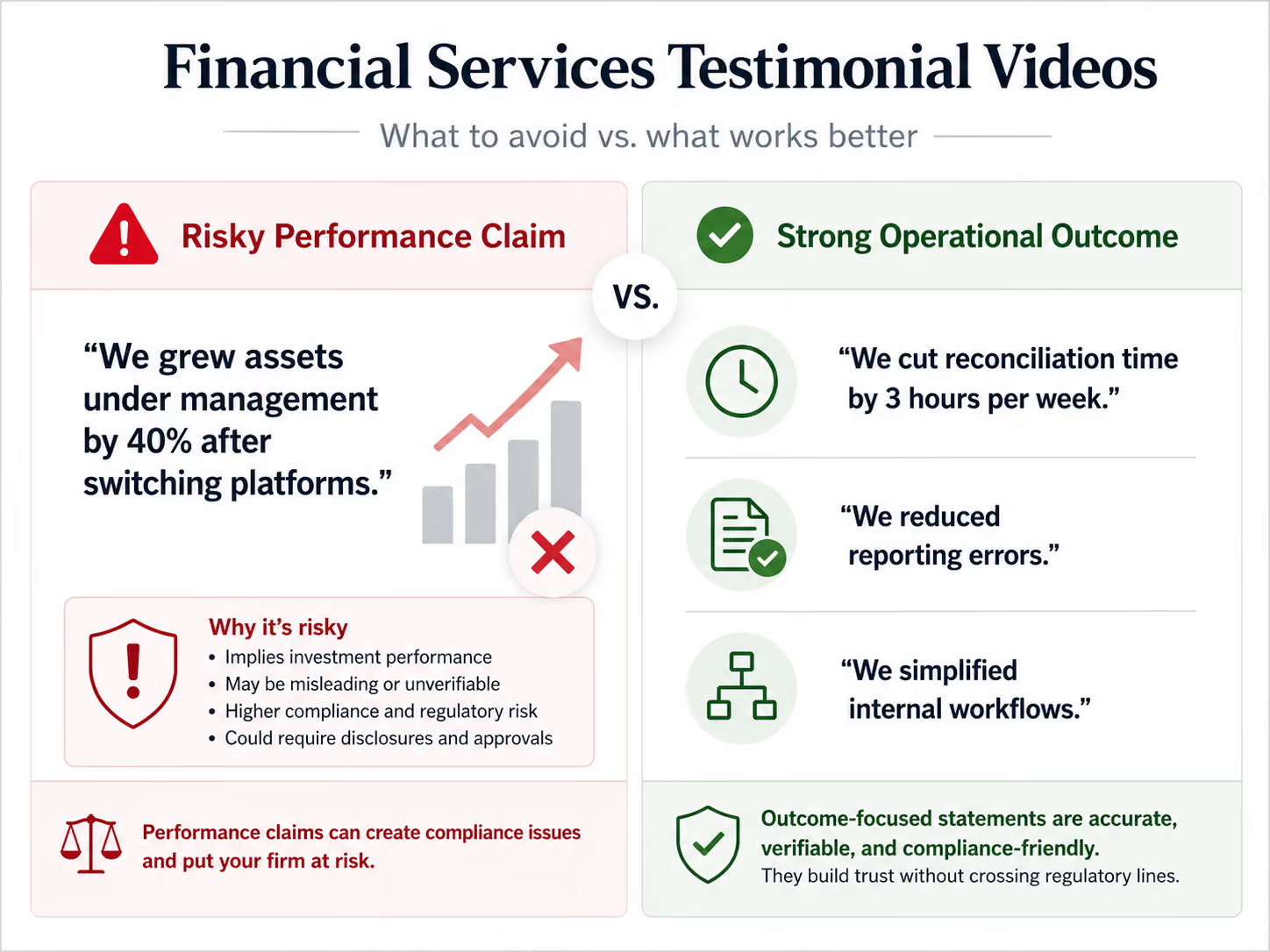
A performance claim: "We grew assets under management by 40% after switching platforms."
A client outcome story: "Our team eliminated manual reporting and cut reconciliation time by three hours a week."
The first triggers serious SEC regulations scrutiny. The second almost always passes review. Authentic storytelling rooted in operational outcomes is also more persuasive. B2B buyers care about efficiency, accuracy, and risk reduction. Frame your client success stories around measurable outcomes like time saved, errors reduced, or processes simplified.
When coaching clients for fintech testimonial videos or banking customer videos, guide them toward process outcomes rather than return figures. It protects everyone and produces better content.
Plan for disclosure language from the start. On-screen text, end-card disclaimers, or both are typically required for public-facing financial services testimonial videos. Adding them as an afterthought disrupts the design and delays approval. Build them into the creative brief before post-production begins.
Where Financial Services Testimonial Videos Work Best
Financial services is not a single vertical. The testimonial strategy for a fintech SaaS company looks different from the one for a regional bank or an RIA firm.
Fintech and Banking Software
This is one of the strongest use cases. Fintech companies are selling complex, high-stakes software to risk-averse buyers. IT leaders, COOs, and heads of digital transformation are not going to approve a six-figure platform switch based on a product demo alone.
Banking customer videos featuring real implementation stories told by real operations leaders answer the question every buyer has: did this actually work for someone like me? Your happy customers become brand advocates the moment they say yes to being on camera. The real value benefits show up immediately when prospects see video testimonial examples from firms just like theirs.
Wealth Management and RIA Firms
The 2022 SEC rule change made financial advisor testimonials possible in a way they never were before. Advisor-to-advisor testimonials are one of the most powerful trust signals in this segment, whether the goal is client acquisition or advisor recruitment. The audience determines the tone and the compliance framing, so understand who you are targeting before scripting begins.
B2B Financial Services Case Studies: Video vs. Written
For complex sales with multiple stakeholders, a full B2B financial services case study video is often more effective than a short clip alone.
The strongest programs use both formats in a scalable way. Shoot the video first and derive the written version from the transcript.
Our guide on B2B case study examples covers what strong financial services case study videos actually look like.
Selecting the Right Customers
Getting a client on camera is hard in any industry. Getting customers to agree to a testimonial video is genuinely hard. Three things work against you:
Competitive sensitivity: Many firms are camera-shy and do not want competitors knowing what vendors or technology they use.
Regulatory caution: Legal teams default to no. It is their job.
Relationship risk: Some clients worry that publicly endorsing a vendor implies a formal recommendation.
Start with your strongest relationships, not your most impressive logos. A vocal advocate with a pragmatic legal team is a faster path than a prominent client with a cautious one. Look at who has left positive reviews, participated in user communities, or already agreed to be a sales reference.
When you make the ask, lead with what is in it for them. Dedicated professionals with extensive video testimonial services experience know that the ask lands better when it leads with mutual benefit. Offer full approval rights over the final cut. This removes the biggest objection legal teams have.
If the video feels like too large a first step, start with a written quote or short written case study.
If legal says no initially, come back with a compliance-friendly scope of work. Offer to involve their legal team in the script review before any filming happens. If full video approval is still off the table, propose alternatives: an anonymized testimonial, a role-based story with title only, or a written case study with a video quote as a secondary asset.
Storytelling Approaches That Work in Financial Services
Compliance shapes what you can say. Storytelling shapes whether anyone cares.
Start with the problem, not the product. Buyers in this vertical are skeptical of anything that feels like a pitch. Let them see their own situation reflected before you introduce any solution. The structured narrative that works consistently is situation, complication, resolution. In that order.
Operational outcomes outperform financial returns for two reasons. First, compliance. Second, relatability. Not every prospect will hit the same return numbers your client did. But almost every financial services firm shares the same pain points: manual reporting, slow reconciliation, or compliance documentation burden. A simple before-and-after framing makes those outcomes immediately relatable. When a client says "we cut our month-end close from five days to two," every operations leader watching does the math for their own team immediately.
Authenticity is crucial. Bringing authenticity to your client stories is what separates an engaging testimonial from a forgettable one. Coach your clients toward conversational language, not corporate speak.
On length, let distribution drive the decision:
90 to 120 seconds for primary website and marketing use, typically interview-style with b-roll support
30 to 45 seconds for social media and sales outreach
2 to 3 minutes for late-stage sales enablement
Plan for all three versions from the start. It costs nothing extra in production and multiplies the value of every shoot.
Production and Approval in Regulated Environments
On-Site vs. Remote
On-site production delivers stronger credibility signals. Filming inside the client's actual office communicates authenticity that a neutral remote setup cannot fully replicate. For flagship testimonial videos anchoring a major campaign or landing page, on-site is usually the stronger choice.
Remote production is faster to schedule, easier for conservative legal teams to approve, and removes the logistical complexity of getting a crew into a regulated facility. Delivering high quality customer video testimonials remotely is now entirely achievable with leading remote video technology. Financial services leans toward remote more than most other verticals for exactly these reasons.
If filming on-site, data security is a condition of access, not a courtesy. NDAs should be signed by every crew member before entering the building. No screens, whiteboards, or documents with client data should be visible in any frame.
The Approval Workflow
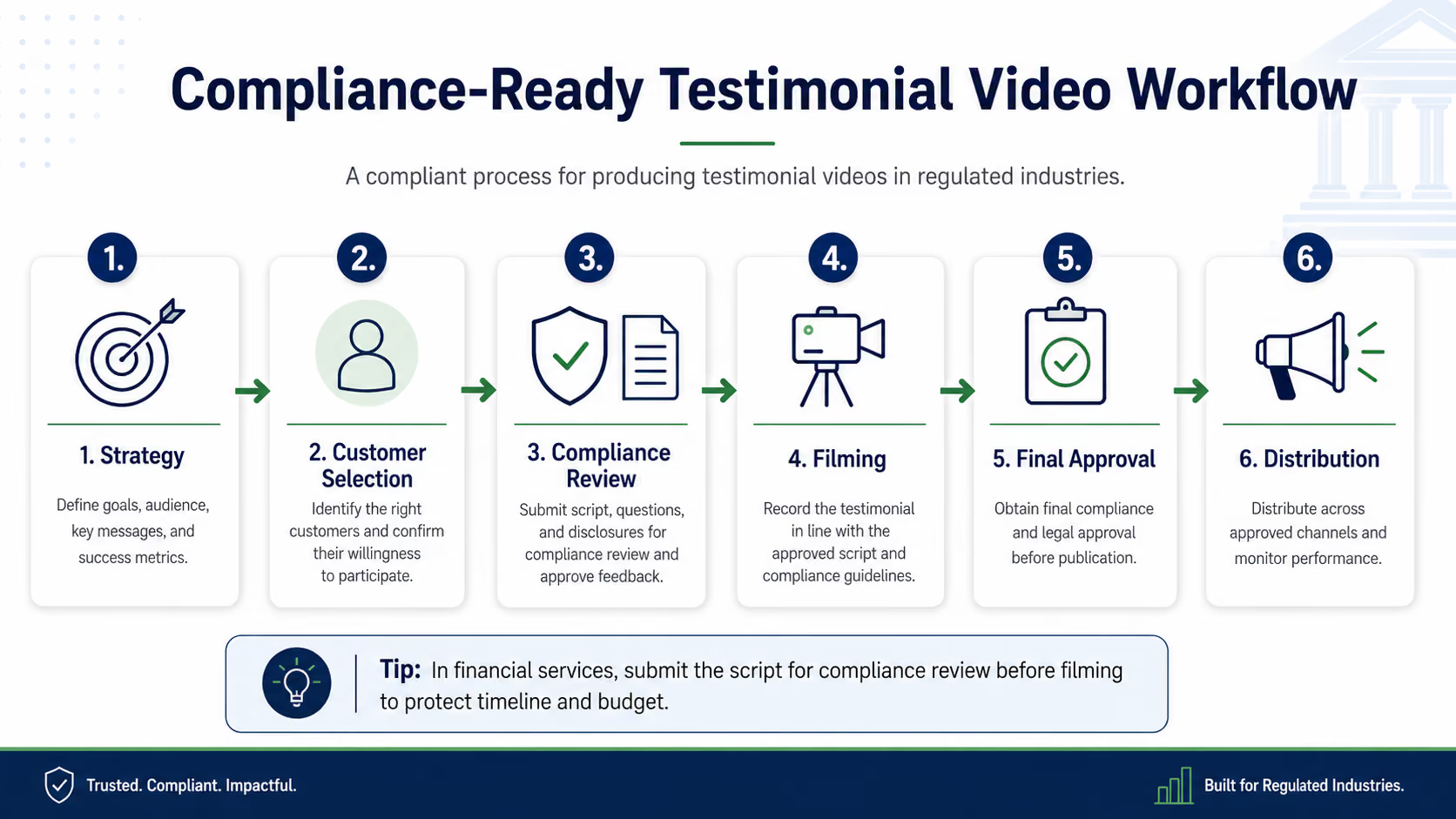
Most industries have one approval chain. Financial services has two. Marketing approves the story and creative. Compliance and legal approve the claims, disclosures, and language. These often run sequentially, which means every revision from legal goes back through marketing before anything goes live.
Add a minimum of two to three weeks to whatever timeline you would use for a standard B2B testimonial video. For enterprise firms with multiple legal reviewers, four weeks is more realistic.
The single most effective way to protect your timeline is to submit the script for compliance review before filming. If a client says something on camera that compliance cannot approve, your options are to reshoot or cut. Neither is good. Both are avoidable.
When submitting for final approval, send a locked cut that already includes disclosure overlays, lower thirds, and required on-screen text. Compliance reviewers need to see exactly how the final video will appear to a viewer. Build a five business day review window into every project plan and communicate it at kickoff.
Activating Your Financial Services Testimonial Videos
Producing the video is half the work. Placement determines whether it generates pipeline or collects dust.
On your website, industry-specific landing pages and product pages are the strongest homes. A fintech testimonial video on a banking software product page gives a skeptical buyer peer validation at exactly the right moment. The more specific the testimonial, the more targeted its placement should be. Engagement video content placed at the right stage of the buyer journey does more work than any static page copy.
On LinkedIn, you can target by job title, firm type, seniority, and industry with enough precision to get a CFO-level banking customer video in front of CFO-level prospects at similar institutions. Done right, this kind of targeting significantly improves conversion rates testimonials and builds your online reputation with exactly the right audience.
In sales, match the testimonial to the prospect. A community bank prospect should receive a banking customer video featuring a community bank. A 30 to 45 second clip that speaks directly to the prospect's pain point outperforms a two-page capability overview every time.
Before anything goes live, confirm:
All public-facing placements include required disclosure language
Paid placements follow both platform policies and applicable financial regulations
Email distribution includes required regulatory footers
For a deeper look at tracking testimonial video impact on pipeline, our guide oncustomer testimonial video ROI covers the measurement framework in detail.
Financial Services Testimonial Videos Are Worth the Effort
Financial services testimonial videos take more effort than a standard client story. The compliance requirements are real. The approval chains are longer. The client conversations require more finesse.
But the payoff is proportionally higher. In an industry where trust is the primary purchase driver, a well-produced peer story built around unique service offerings and real client outcomes is one of the most powerful sales assets you can have. Done right, it builds credibility, strengthens your online reputation, and gives prospects the proof they need to move forward with confidence.
The firms that build a library of financial video testimonial services covering different firm types, buyer roles, and outcome stories end up with a genuine competitive advantage. Better conversations, shorter sales cycles, and deals that close with more confidence on both sides.
Ready to create compliant client stories for financial services? CaseLeap helps teams plan, produce, and repurpose testimonial videos that build trust while respecting approval, disclosure, and compliance requirements. Let's get started
FAQs
Are financial advisor testimonials legal under current SEC rules?
Yes, financial advisor testimonials are legal under the SEC Marketing Rule that took effect in November 2022. Registered investment advisers can use client testimonials and endorsements in video marketing provided they include required disclosures, identify any compensation arrangement, and confirm the person giving the testimonial is not a disqualified individual. Prior to 2022, testimonials were prohibited for advisers entirely.
What compliance rules apply to financial services testimonial videos?
Financial services testimonial videos are governed by FINRA Rule 2210 for broker-dealers and the SEC Marketing Rule for registered investment advisers. Both require that testimonial content be fair, balanced, and free of misleading performance claims. FTC endorsement guidelines apply across all firm types. Compliance review should happen before filming begins, not after.
How do you get financial services clients to agree to a testimonial video?
Lead with mutual benefit and offer full approval rights over the final video before anything goes live. Identify clients who are already vocal advocates rather than starting cold. If video feels like too large a first step, begin with a written quote and escalate once the content relationship is established. Our guide on how to get customers to agree covers the full approach.
What should a financial services testimonial video include?
A financial services testimonial video should include the speaker's full name, title, and firm type on screen, specific operational outcomes rather than financial return claims, and required regulatory disclosure language as on-screen text or end-card copy. Operational details like time saved, process improvements, or risk reduction are more compliant and more persuasive than performance figures. Our guide on B2B testimonial video best practices and B2B case study examples cover every element in depth.
How long does it take to produce a financial services testimonial video?
Plan for six to ten weeks from kickoff to final delivery. The extended timeline is driven by the dual approval chain requiring both marketing and compliance sign-off, plus pre-production script review before filming begins. Remote recording can reduce scheduling lead time but compliance review windows remain consistent regardless of format. Building the full approval process into the timeline from day one is the most reliable way to hit your delivery date.
Build trust and accelerate conversions
Contact us today. We'd love to help you supercharge your sales conversions.